


Boost Regulators Guide: How Step-Up Converters Work Today
 313
313Introduction
Boost regulators, also known as step-up converters, are important DC-DC power circuits that convert a low input voltage to a higher level of output at a stable voltage. They can be found almost in every current electronic product, LED drivers and IoT sensors, automotive modules and portable battery systems. This guide explains how boost converters work today, what performance specs matter, and how to choose the right one for your electronic design.
What Is a Boost Regulator?
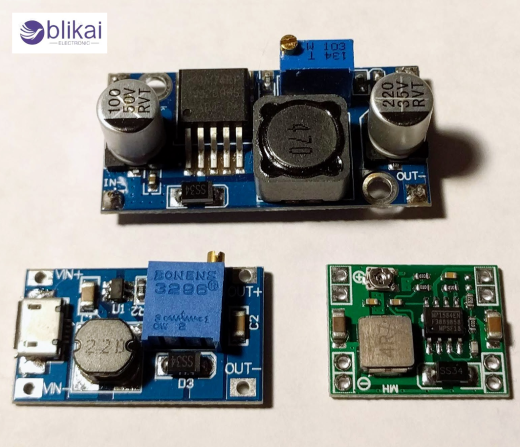
A boost regulator is a device that converts DC-DC step-up converter, which increases input voltage to a higher value and keeps the output at a constant level, which is necessary in devices that require a constant voltage despite unstable or low supply sources. It enables compact battery systems, efficient LEDs, solar electronics, and any circuit requiring more voltage than the available source can provide.
How Does a Boost Regulator Work?
The principle of a boost converter is that energy is temporarily induced in an inductor and then, with the aid of controlled switching, the energy may be expelled at a higher voltage. A MOSFET switch, diode, and capacitor shape this energy flow, while a feedback loop regulates output. This switching action allows a reliable voltage step-up without needing bulky transformers.
What Core Components Make Up a Boost Converter?
In an average boost regulator, an inductor, MOSFET switch, Schottky diode or synchronous MOSFET, output capacitor and control IC with a closed-loop feedback system are used, each, which affects efficiency, stability, ripple and.
What Happens During Each Switching Cycle in a Step-Up Converter?
During the “on” cycle, the inductor stores energy as current increases; during the “off” cycle, that stored energy is forced through the diode into the output capacitor, raising the voltage above the input. The repeated action of this sequence will create a steady increasing output level.
What Are the Key Performance Parameters?
Boost regulators are required to trade efficiency, switching, thermal, and electrical stability. Knowledge of the governing specs would aid in the safe and reliable operation of various loads and supply conditions.
Which Factors Determine Boost Regulator Efficiency?
Efficiency depends on MOSFET Rds(on), inductor resistance, diode forward voltage, switching losses, and board layout. Synchronous designs reduce diode loss, often achieving >95% efficiency in optimized applications.
How Do Ripple, Frequency, and Load Affect Output Performance?
An increase in switching frequency will decrease the size of the inductor, but with more switching losses, heavier loads will increase ripple and may result in droop. Larger capacitors, lower ESR, and good control loop tuning help minimize ripple and ensure stable regulation.
What Types of Boost Regulators Are Common Today?
Various boost topologies can be used in both small portable applications and high-power industry circuits. The choice of the type will define the performance, efficiency, and complexity of the design.
Non-Synchronous vs. Synchronous Boost Converters
The non-synchronous converters utilize a diode, and therefore, they are simpler but less efficient, whereas the synchronous converters substitute the diode with a MOSFET which helps in reducing losses and enhancing heavy-load operation, which is required in battery systems and portable electronics.
Integrated Boost IC vs. Discrete Designs
Integrated ICs combine the controller and key components for compact, ready-to-use solutions, whereas discrete designs allow custom high-power performance, larger inductors, heat spreading, and flexible component selection for demanding loads.
Where Are Boost Regulators Used in Modern Electronics?
LED Backlighting and Display Modules
Boost regulators supply the higher voltages needed to drive multiple LEDs in series for LCD backlights, digital signage, and handheld displays, ensuring uniform brightness and stable illumination even as input battery voltage fluctuates during discharge cycles.
Portable and Battery-Powered Devices
Step-up converters are widely used in phones, wearables, flashlights, cameras, and power banks because they maintain consistent output voltage even when lithium or alkaline batteries drop below the device’s required operating level, improving runtime and reliability.
IoT Sensors and Low-Power Wireless Modules
A significant number of IoT gadgets utilize small lithium cells or energy-harvesting sources, complicating the need to use a boost converter to supply higher voltage rails to power microcontrollers, RF chips, and sensors that have higher voltage requirements, as well as low quiescent current to achieve the maximum battery life.
Solar-Powered Electronics and Energy Harvesting
Boost regulators enable solar panels to work well even under low-light environments by increasing the fluctuating or low solar energy to the regulated voltage required to charge batteries, data loggers, remote sensors, as well as off-grid monitoring systems.
Automotive Electronics and On-Board Systems
Modern vehicles use boost converters to power LED lighting, infotainment systems, ADAS sensors, and communication modules, supplying higher-voltage rails from the car’s 12 V or 24 V battery environment while maintaining noise immunity in high-EMI conditions.
Communication and RF Circuits
A lot of RF amplifiers, LNA stages and communication modules have stable higher voltage rails to provide optimal signal gain and noise characteristics, so boost regulators are necessary to provide stable RF transmission power and noise characteristics.
Supercapacitor, Backup, and Emergency Systems
Boost converters allow supercapacitors and backup modules to provide a high regulated voltage despite substantial decays in the voltage stored in them, to provide continuous power to memory backup, RTCs, emergency lighting and small UPS systems.
What Problems Do Boost Regulators Commonly Cause?
High frequency switching. This type of converter can cause electrical noise, EMI, voltage overshoot and instability. These problems are highly minimized through the appropriate selection of components and PCB design.
Why Do Boost Converters Generate Noise or EMI?
Fast switching of inductor currents radiates and conducts noise; lack of proper grounding, long traces and inappropriate shielding are contributors to EMI which may affect adjacent analog, RF or communication circuits.
Why Does Output Overshoot or Instability Happen?
Overshoot occurs when the feedback loop reacts too slowly or compensation is mis-tuned; insufficient output capacitance or high-ESR components worsen this effect, potentially overstressing downstream circuits.
How Do You Select the Right Boost Regulator?
The selection of the appropriate boost converter must be a compromise of a voltage range, power to be delivered, efficiency goals, temperature considerations and PCB size.
What Specs Matter Most When Choosing a Step-Up Converter?
The important parameters are input range, maximum output voltage, highest switch current, efficiency curve, maximum switching frequency, thermal resistance, protection characteristics, and the ability to operate synchronously in order to achieve greater efficiency.
Conclusion
Boost regulators play an essential role in today’s electronic systems by delivering stable, efficient step-up power conversion across a wide range of applications—from portable gadgets and IoT sensors to automotive modules and industrial equipment. The fact that they can make reliable voltage when powered by low or intermittent sources makes them very important in designs that are energy efficient, have extended battery life and integrate well in a compact system. By understanding how boost converters operate, the parameters that influence performance, and the factors that guide device selection, engineers can build power systems that are more stable, more efficient, and better suited to the increasingly complex demands of modern electronics.
FAQ
Can a boost converter both step up and regulate voltage?
Yes, boost converters regulate output while increasing voltage through closed-loop control.
Is a boost converter the same as a DC-DC step-up module?
A module is a packaged ready-to-use boost circuit, while a boost converter refers to the underlying topology.
Why does the output voltage drop under heavy load?
Inductor saturation, MOSFET current limits, and insufficient switch current capability restrict output.
Can boost regulators work with lithium batteries safely?
Yes, as long as undervoltage lockout (UVLO) and proper protection circuits are included to avoid over-discharge.
Some images are sourced online. Please contact us for removal if any copyright concerns arise.





