


How to Test an Alternator: Complete Electrical Guide
 207
207What Is an Alternator?
Function of an Alternator
An Alternator is an electromechanical device that converts mechanical power generated by the engine to electrical power. The crankshaft turns a serpentine belt, which in turn powers the alternator to provide power for all electrical requirements and to charge the battery. Without an alternator that is working properly, you'll be unable to produce electricity at all except from the battery's stored electricity. Without a battery, you won't be able to drive your car.
How an Alternator Works
The working of an alternator is by electromagnetic induction. The rotor spins, and the magnetic field cuts through the stator winding, generating alternating current as the rotor turns in relation to the stator winding. Although automotive electrical systems are all direct current, a rectifier diode converts AC power to DC. The voltage regulator controls the current to the rotor field to ensure a safe operating voltage range on the charging voltage of 13.8 to 14.8 volts.
Signs of a Bad Alternator
Common Warning Signs
There are a few indications of alternator failure. Some drivers will see their headlights dim or flicker, power windows take longer to open and close, see dashboard battery lights, experience weak AC, see electrical accessories malfunction, or hear unusual whining noises from the engine compartment. The battery can fail to charge sufficiently, causing hard starting or frequent battery failures, as charging performance decreases. The electrical system may not be able to deliver enough power to the engine in extreme cases, causing the engine to stall.
Alternator vs Battery Symptoms
Many alternator and battery issues give the same symptoms, and it can be hard to diagnose without testing. A faulty battery generally difficult to hold a charge and will result in slow engine cranking when fully charged. However, if an alternator is failing, the vehicle may start up when it first comes to life; however, it can't keep the battery charged when the vehicle is in motion. A test that will help determine if the problem lies with the battery or the alternator is to measure the voltage of the battery when the engine is off, and the voltage when the engine is on and the alternator is operating.
Tools Needed to Test an Alternator
Digital Multimeter
The most common instrument used for testing an alternator is a digital multimeter. Accurately measures (DC) voltage, resistance, continuity, and diode operation. In many cases, even a simple meter will give just enough information to diagnose most charging system problems.
Clamp Meter
A clamp meter is used to measure electrical current through the cable to the alternator, without cutting into the wires. This will let the technicians check if the alternator is generating enough current when in use and will let them know if it is operating correctly and within the alternator manufacturer's specifications.
Safety Precautions Before Testing
Preparing the Vehicle for Testing
If the engine is to be operated, make sure the vehicle is on level ground, apply the parking brake and provide good ventilation before testing an alternator. Check the battery terminals for corrosion, make sure the battery connections are tight, and ensure that the drive belt has no excessive wear and is properly tensioned. When testing, do not allow hands, tools or loose clothing to come in contact with rotating belts or pulleys.
How to Test an Alternator with a Multimeter
Engine Off Voltage Test
Begin by setting the multimeter to DC voltage and connecting the probes directly to the battery terminals. With the engine off, a healthy battery should typically read between 12.4 and 12.8 volts. If the reading is below 12.2 volts, this could be a sign of a discharged battery; if it is a lot lower, it could mean battery degradation. Battery condition can affect alternator testing, so it is important to take care of battery problems before testing the alternator.
Engine Running Voltage Test
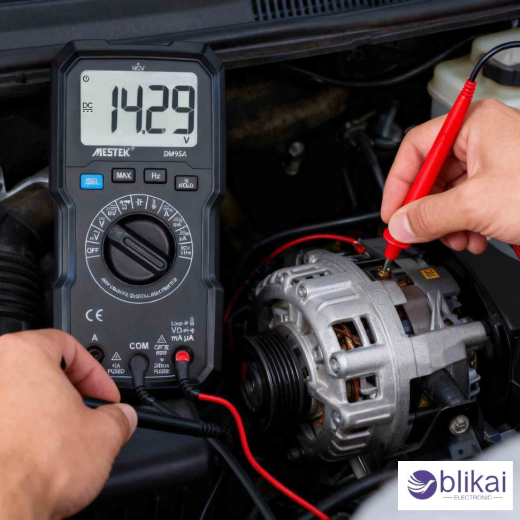
Turn the engine on and again measure the voltage between the battery terminals. The ideal output voltage from a healthy alternator is 13.8–14.8V. If the voltage stays close to the battery's resting voltage, the alternator might not be charging properly. Readings over 15 volts, on the other hand, can suggest that the voltage regulator is faulty and is letting too much voltage into the battery.
Load Testing
When the engine is running, operate heavy electrical loads like headlights, air conditioning, heated rear window and blower motor. Check battery voltage during the simultaneous use of these accessories. The voltage should be good and greater than about 13.5 volts when under load in a healthy alternator. If there are large voltage drops, they can be due to the charging capacity not being sufficient, internal components being worn or high electrical demands.
Interpreting Results
Normal charging voltage generally falls between 13.8 and 14.8 volts. If the values are lower than this, the brushes are likely worn, the stator windings are damaged, the diodes are faulty, or the belt has slipped. If the reading is too high, it indicates a failure of the voltage regulator. A good sign of a healthy charging system is a steady voltage at all speeds and loads.
Advanced Alternator Testing Methods
Testing Output Current
Output current testing is a more comprehensive evaluation of the alternator. Technicians can use a clamp meter around the alternator's output cable to measure the charging current when electrical loads are applied. Alternators can have a range of output levels: from 70 to more than 250 amps, depending on the design of the vehicle. When electrical demand is high, the measured output should be close to the manufacturer's specifications. If the output is low, it could be due to internal wear, winding damage, or rectifier issues.
Testing Alternator Diodes
Rectifier diodes are responsible for converting alternating current into direct current. When a diode fails, charging efficiency decreases, and excessive AC ripple may enter the electrical system. Each diode can be tested with a multimeter to determine that it is functioning properly in the forward and reverse directions using the diode test function. A good diode allows current to flow in one direction but not in the opposite direction. Faulty diodes can cause battery leakage, charging fluctuations and interference in electronic sensitive modules.
Testing the Voltage Regulator
The voltage regulator controls the alternator output by adjusting the rotor excitation current. To evaluate regulator performance, monitor charging voltage while varying engine speed and electrical load. The voltage should be fairly constant under various operating conditions. The charging voltage may vary too much or be too high or too low from the recommended voltage, and the regulator may need replacing. The modern alternators often have the regulator built into the alternator casing, requiring the complete alternator replacement in some instances.
Common Alternator Problems and Troubleshooting
Worn Brushes
Slip rings are used to allow brushes to conduct electricity to the rotating rotor. As time goes on, the friction wears the brushes, decreasing electrical contact and charging performance. One of the most frequent issues with alternators in older cars is worn brushes.
Faulty Bearings
Alternator bearings are used to keep the rotor rotating and operate at high speeds smoothly. Worn bearings generate grinding, squealing and whining sounds. The consequences of ignoring the failure of the bearings may ultimately result in misalignment of the rotor and internal damage.
Broken or Slipping Belt
The engine power is transferred to the alternator pulley by the drive belt. A damaged, loose or broken belt decreases the alternator speed and charging efficiency. The condition of the belt should always be included in any charging system diagnosis.
Wiring and Connection Issues
Loose connections, corroded terminals or broken cables may cause a voltage drop, which can simulate an alternator failure. Thorough examination of the charging circuit wiring is very important before replacing the costly parts.
Rectifier Failure
A faulty rectifier assembly will not allow efficient AC to DC conversion, may result in low charging voltage, battery drain and electrical noise. Alternators that are in constant exposure to high temperatures and vibrations are particularly prone to rectifier failure.
FAQ
How do I know if my alternator or battery is bad?
Use a battery voltmeter for volt readings when the car is not running and the charging voltmeter when the car is running. These values can be compared to determine if this is a charging system or a battery issue.
Can a faulty alternator drain a battery overnight?
Yes. Faulty rectifier diodes can cause some parasitic currents to drain the battery even while the vehicle is not running.
Can I test an alternator at home?
Yes. A digital multimeter is all that is required to make simple alternator voltage tests, and many common charging system problems can be easily discovered.
Conclusion
Knowing how to test an alternator is a key part of determining problems in the vehicle's charging system. Using a multimeter and the systematic testing procedure, it is easy to determine quickly if the alternator, voltage regulator, rectifier diodes, or related wiring is working properly. By inspecting the charging system regularly, unexpected breakdowns can be avoided, the life of the battery can be increased, and the operation of electronic systems in modern vehicles can be ensured. Be it a professional technician or a car owner who loves to do their own work, knowing how to test an alternator is crucial for saving time, money, and ensuring the reliability of your vehicle.
Some images are sourced online. Please contact us for removal if any copyright concerns arise.





