


RFID Chip Overview: Types, Features & Applications
 209
209Introduction
RFID chips are an essential electronic element that is applied in wireless identification and information transfer in contemporary automation, tracking, and IoT systems. RFID chips are much more efficient, accurate, and scalable than traditional identification technologies since they allow contactless communication between tagged objects and the RFID readers. They have found extensive application in logistics, manufacturing, healthcare, retail, transportation, and smart infrastructure, and instant and dependable object identification is a necessity.
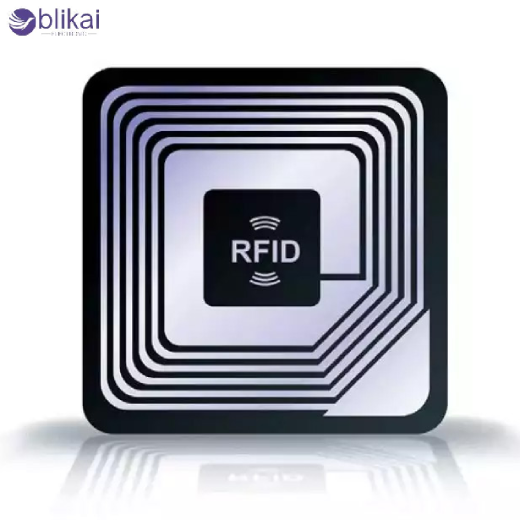
What Is an RFID Chip?
The RFID chip is a microchip, which is the IC, that has the shape of a computer chip and is used to store information and transmit it wirelessly through radio frequency signals. Most of the applications have an RFID tag or transponder that comprises an RFID chip and an antenna. The chip usually has memory, a control logic and an RF interface, which enables it to accept commands sent by an RFID reader and send back stored information. In comparison with the barcodes or QR codes, RFID chips do not require a line of sight scanning, and the chips can be read when they are non-metallic, thus they are more adaptable and effective in a complicated setting.
How Does an RFID Chip Work?
RFID chips are used depending on the frequency of operation, whereby RFID chips can be used through electromagnetic coupling or transmission of radio waves through the air. An RFID reader sends a radio signal, which activates or energizes the RFID chip and provides a communication path where data can be exchanged.
Basic Working Principle of RFID Chips
An RFID reader produces an RF field, and the RFID chip detects the signal when it is within the distance of the antenna. Passive RFID chips use the energy within this field to energize their internal circuitry, and active chips have an internal battery. The chip then modulates the signal by altering the charge it puts on its antenna or by transmitting information that can be read and decoded by the reader.
Passive vs Active RFID Chip Operation
Passive RFID chips completely depend on the reader's power, which causes them to be small in size, long-lasting, and cheap. Active RFID chips feature an internal battery that provides power for transmitting signals, giving them longer read times, higher reliability of data, and other sensing capabilities, but at a high cost and short battery life.
Types of RFID Chips
The RFID chips can be categorized according to the source of power, functionality and operating frequency. Every type is targeted at certain technical and commercial needs.
Passive RFID Chips
Passive RFID chips do not have an internal source of power. They are cheap, durable, and easy to use because of their simple design and can be used in large volumes, including access cards, retail labels, library systems, and asset identification. Their read range is low but adequate for most short to medium range applications.
Active RFID Chips
Active RFID chips have a battery to energize their RF transmission and onboard electronics. This allows for extended read ranges, often exceeding tens or hundreds of meters, and supports real-time location tracking. The active RFID chips have found application in the logistics, vehicle tracking and industrial monitoring systems.
Semi-Passive RFID Chips
A battery-assisted passive RFID chip is a semi-passive chip that has a battery as the source of internal circuitry power, but where the reader still provides communication. The hybrid methodology enhances the sensitivity and stability, thus the semi-passive RFID chips are applicable to sensor-based tags and extreme conditions.
RFID Chips by Frequency Band
The RFID chips work in various frequency bands, which have their own peculiarities. Low-frequency (LF) RFID chips have poor read range and high interference immunity. The RFID chips used in smart cards and NFC systems are in the form of High Frequency (HF) chips. The Ultra-High Frequency (UHF) RFID chips have large read ranges and high data transfer speeds that are suitable for supply chain management. Microwave RFID chips are useful in high-speed communication, but they must be controlled carefully in the environment.
Key Features of RFID Chips
Learning about the main technical peculiarities of RFID chips is an important step in designing the system and selecting the components.
Memory Types and Capacity
RFID chips can be based on read-only memory, write-once-read-many (WORM) memory or read/write EEPROM. Memory capacity can be in various sizes depending on the application requirements, which include simple identification numbers and larger ones that can hold configuration and logging data.
Read Range and Sensitivity
The maximum read range is dependent on the operating frequency, the design of the antenna, the amount of power that the reader produces and the environmental factors. RFID chips with high sensitivity are capable of working in very demanding conditions that have attenuation.
Data Transfer Speed
The rate at which data is transferred differs with frequency ranges, where UHF and microwave RFID chips have had higher rates of transfer. Quickness in data communication enhances throughput in applications that need multiple tags to be identified quickly.
Security and Encryption Features
Password protection, mutual authentication, encryption, and anti-collision protocols are the security measures that are incorporated in the modern RFID chips. These characteristics are essential when sensitive data is involved or there are many tags.
Power Consumption Characteristics
One of the characteristics of RFID chip design is power efficiency. Passive RFID chips are specifically designed to operate on very low power, whereas active and semi-passive chips compromise between power usage and performance and functionality.
RFID Chip Applications
The RFID chips have a broad spectrum of applications in industries since they are flexible and can be scaled.
Inventory and Asset Tracking
RFID chips are used in logistics and warehouses to count inventory automatically, provide real-time visibility of assets and enhance efficiency in the supply chain. They save human labor and also decrease human error.
Access Control and Identification
RFID chips find favor in access cards, staff badges and transport tickets, and these recognize individuals within a minute or so without any form of physical contact.
Industrial Automation
RFID chips are used to monitor workpieces, control the flow of production and conduct predictive maintenance in manufacturing systems. RFID identification enhances traceability and control of processes.
Healthcare and Medical Devices
RFID chips in healthcare settings aid in the identification of patients, the monitoring of medical equipment used, and the adherence to the applicable regulatory requirements, which has improved patient safety and operational efficiency.
Retail and Smart Packaging
The RFID chips are used by retailers to prevent theft, ensure accuracy in inventory and verify the products. Smart package solutions also employ RFID chips to track and secure brands.
IoT and Smart Systems
RFID chips are an important part of the IoT ecosystems as they can be used to identify objects and share their data in smart cities, transport networks, and computerized infrastructure.
Advantages of RFID Chips
The RFID chips also provide non-contact features, huge data capture capability, the capacity to read several tags simultaneously and automated system consistency.
Disadvantages of RFID Chips
Issues surrounding challenges are that it is more expensive than barcodes, there is a possibility that it will be affected by other signals (metal or liquids), and it has some privacy and security issues.
RFID Chip vs NFC Chip
Although NFC chips represent a small part of RFID, they are designed to be used in secure communication over a short range. RFID chips generally have a higher read range and a wider range of industrial use, whereas NFC chips are usually utilized in consumer electronics and mobile payments.
How to Choose the Right RFID Chip
The process of picking the right RFID chip entails consideration of the operating frequency, memory capacity, security measures, read range, environmental sustenance as well as compatibility with the system. Application-specific requirements should guide the selection process to ensure reliable performance and cost efficiency.
FAQ
How long does an RFID chip last?
Passive RFID chips should have a lifetime of more than 10-20 years because they contain neither a battery nor moving components. Active RFID chips have a battery life that is limited and lasts between 3 and 7 years under the condition of usage conditions.
Can RFID chips be reused?
Yes. RFID chips, which have read/write memory, can be reused and reprogrammed several times. RFID read-only devices do not have any modularity and are designed to identify objects fixedly.
What is the maximum reading distance of an RFID chip?
The distance of reading is subject to the type and frequency of the chip. The range of HF RFID chips is short, the UHF RFID chips are usually within 5-15 meters, and the active RFID chips can go more than 100 meters under open environment.
Are RFID chips secure?
Contemporary RFID chips can be safe if encryption, authentication, and access control are employed. Security level is affected by the design of the chip and configuration of the system, and therefore, an appropriate choice is essential in cases of sensitive data applications.
Some images are sourced online. Please contact us for removal if any copyright concerns arise.





