


5080 Graphics Card: Architecture, Specs & Performance Explained
 247
247Introduction to the 5080 Graphics Card
The 5080 graphics card is the new generation of powerful graphics cards that meet the growing computational requirements of modern games, professional visualization, and AI-based workloads. As graphics pipelines become more complex and software relies more heavily on parallel computation, the role of the GPU has expanded far beyond simple rasterization. The 5080 GPU targets users who require high throughput, low latency, and strong performance-per-watt characteristics, including enthusiasts gaming at 4K or higher resolutions, content creators working with real-time rendering engines, and engineers running compute-heavy simulations.
GPU Architecture Overview of the 5080
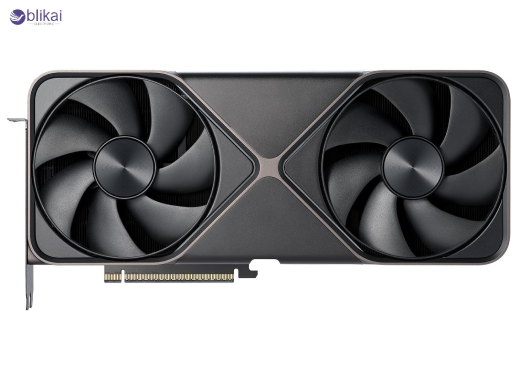
The 5080 graphics card is architecturally designed for the modern massively parallel processing architecture with a focus on efficiency, scalability and heterogeneous computing. The core architecture integrates thousands of programmable processing units organized into clusters that allow simultaneous execution of graphics, compute, and AI-related tasks. The 5080 architecture, compared to past generations, is more geared toward minimizing instruction latency, better use of cache, and facilitating more data transfer between processing blocks. The use of an advanced semiconductor manufacturing process allows for higher transistor density, which directly contributes to increased computational resources while keeping power consumption under control. Architectural refinements also improve scheduling efficiency, allowing the GPU to dynamically allocate workloads across different execution units based on task type and priority.
Streaming Multiprocessors and Core Design
The fundamental building blocks of the 5080 GPU are its streaming multiprocessors, which contain arrays of shader cores responsible for executing vertex, pixel, and compute instructions. Each multiprocessor is optimized to handle a wide variety of workloads, from traditional graphics shading to general-purpose GPU computing. Improvements in instruction-level parallelism and pipeline depth allow each core to execute more operations per clock cycle than previous designs. Enhanced register files and local memory structures reduce bottlenecks caused by frequent data access, resulting in more consistent performance under sustained load.
Ray Tracing and AI Acceleration Architecture
The ray tracing and AI acceleration hardware are one of the unique features of the 5080 graphics card. Specialized ray tracing units accelerate bounding volume hierarchy traversal and ray–triangle intersection tests, enabling real-time lighting, reflections, and shadows with significantly lower performance overhead compared to software-based approaches. With these are the AI acceleration cores, which are meant to process the images with the use of matrix and tensor operations effectively, and which are essential when it comes to image upscaling, noise reduction, and machine learning inference. The 5080 GPU can provide better visual quality and computational power by delegating these computations to specialised hardware, without reducing the frame rates or responsiveness.
Memory Architecture and VRAM Configuration
The graphics card memory subsystem of the 5080 graphics card is very critical in its total performance, especially when working on high-resolution and high-data-content programs. Graphics memory is often high-speed, which is built upon sophisticated GDDR technology, and is capable of delivering bandwidth to thousands of processing cores at once. The large memory bus and large memory clock speeds lead to large memory bandwidth, which decreases the chances of a bottleneck when rendering very large textures or when working on complex datasets. The multi-level hierarchy of the cache used in the GPU also reduces access to the external memory, as the data of common usage is stored at a closer distance to the cores. The method enhances efficient bandwidth, lowers latency, and increases performance stability between various workloads.
Clock Speeds, Power Consumption, and Thermal Design
The 5080 graphics card has an optimization to Clock speed that balances crude performance with energy consumption and heat limitations. Base and boost frequencies are dynamically set according to the intensity of work, power availability and temperature. The high-end power management algorithms enable the GPU to run at higher frequencies where the thermal headroom is available and reduce speeds during the light load in order to save energy. The overall power of the board corresponds not only to the core of the graphics card but also to modules of memory, and power supply units.
Interface Standards and Connectivity
The 5080 graphics card allows modern interface standards, which can support high data throughput and wide compatibility with modern systems. The high bandwidth PCI Express interface makes the communication between the CPU and the GPU high, which is especially significant to the data-intensive compute work and the real-time streaming of assets. Display connectivity normally consists of numerous high-resolution outputs that can power up a 4K display and beyond at elevated refresh rates. Advanced display standards support. Advanced display standards permit the GPU to support features including high dynamic range, variable refresh rate, and multi-monitor configurations, and are therefore appropriate in immersive gaming environments and also professional visualization workstations.
Performance Benchmarks and Real-World Results
The 5080 graphics card has been shown in synthetic benchmarks to show significant performance gains in graphics and compute performance relative to the previous-generation GPUs. These benchmarks are the raw shader throughput, memory bandwidth usage and ray tracing efficiency benchmarks in controlled conditions. The reality performance, however, tells us more about the abilities of the GPU as it is how the architecture manages the mixed and complex workloads. In modern games, the 5080 delivers high frame rates at 1440p and 4K resolutions, particularly when advanced rendering features are enabled. Applied to professional work, e.g., video editing and 3D rendering, the GPU stimulates processes such as encoding, preview rendering and simulation to experience faster processing time and foster workflow.
Overclocking Potential and System Requirements
To determine the potential of the 5080 graphics card to be used in overclocking, it will rely on the quality of silicon, the cooling system and the power delivery system. Several designs give the headroom that can be used to raise the core and memory frequency, enabling enthusiasts to get more performance. But overclocking generates more power and heat, requiring sufficient cooling and a powerful power supply as well. The 5080 has system requirements of a compatible motherboard with adequate PCIe bandwidth, a quality power supply that can provide consistent power to the system, and a well-ventilated chassis to handle the heat.
Applications and Use Cases
The 5080 graphics card is versatile, thus applicable to a wide variety of applications. In the gaming industry, it allows high-resolution and high-frequency gaming, and it has built-in advanced visual effects. To video editors and 3D designers, the generic use of the GPU by video editing and 3D software industries can enhance rendering, encoding, and previewing in real time. Its parallel architecture and AI-accelerating units allow efficient inference and analysis in AI and data processing. The compute abilities of the GPU are also useful to engineers and researchers in executing simulations, occasional modeling and visualization tasks that demand a large amount of processing power.
Reliability, Lifespan, and Component Quality
High-end graphics cards also require reliability, especially in professional and long-term use applications. The graphics card is manufactured with high-quality components consisting of strong voltage regulation modules and strong PCB material. Good thermal management lowers the level of stress on components, prolonging their operational life. Support of drivers in the long term and updates of firmware also contribute to preserving stability and compatibility with new programs that make the GPU more useful and relevant over a long period.
Future-Proofing and Software Ecosystem
The 5080 graphics card has a firm attachment to its long-term value based on its software ecosystem and the support of the new standards. Compatibility with modern graphics APIs and compute frameworks ensures that the GPU can take advantage of new features and optimizations as software evolves. Continued driver updates improve performance, fix bugs, and enhance compatibility with new games and applications. This proactive strategy assists in future-proofing the GPU, which makes it an option for a user who intends to use their systems over a long period of time.
FAQs
How much VRAM does the 5080 GPU need for 4K gaming?
In the case of 4K gaming, the VRAM capacity should be high and have enough memory bandwidth to process massive textures and complex scenes without compromising performance.
Is the 5080 graphics card worth upgrading to?
The upgrade to the 5080 is worth considering to users who are moving on the older generations of GPUs and need better performance, efficiency, and are in need of the ability to support more modern rendering and AI features.
How power-hungry is the 5080 compared to older GPUs?
Although it has a higher performance, the 5080 graphics card is also intended to provide an improved performance-per-watt in performance and is more power-efficient compared to a number of older models under similar workloads.
Does the 5080 support advanced ray tracing and AI features?
Yes, 5080 has its own hardware to process visual effects and AI accelerations, which allows the use of advanced visual effects and is effective in artificial intelligence.
Conclusion
The graphics card, 5080, is a considerable innovation in the world of graphics cards, fusing architecture effectiveness, fast memory, and particular acceleration hardware to provide powerful performance on gaming, business, and computational tasks. It is well-balanced and can be used by users who need versatility and long-term investment as opposed to specialization. Through awareness of the architecture, specifications and performance attributes of 5080 GPU, consumers and system developers can make knowledgeable choices, one that meets the present requirements and future expectations as well.
Some images are sourced online. Please contact us for removal if any copyright concerns arise.





