


Why Use an RFI Filter? Functions, Types & Applications
 385
385Introduction
The current electronic devices work in more sophisticated environments that are full of signals of power lines, wireless networks, communication systems, and industrial equipment. These signals are usually overlapping or colliding with each other, thus leading to performance problems, data errors, or even the device may fail altogether. Radio frequency Interference (RFI) is one typical form of interference, and its cause is the undesired radio signal that interferes with the intended use of electronic circuits. To curb this issue, engineers employ RFI filters, which are specialized parts that tend to reduce unwanted radio frequencies but not filter the desired signals, which proceed without being distorted. Through this guide, we will discuss the meaning of RFI filters, their mechanisms, needs, different types of filters, and general applications in the modern electronic world.
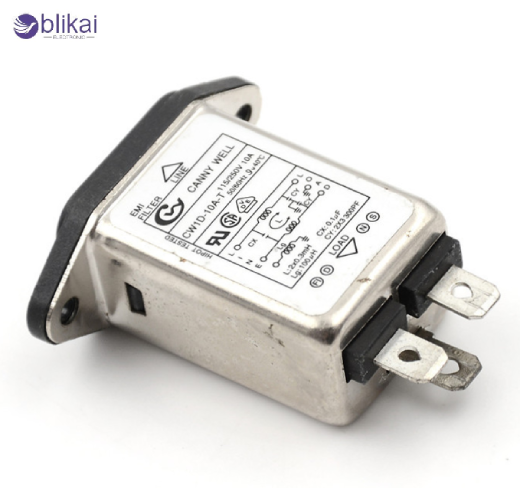
What Is an RFI Filter?
An RFI filter is a special electronic element or circuit that severely cuts radio frequency interference of electrical systems or blocks it out entirely. RFI interference may be in the form of a buzzing sound in the audio equipment, flickering or distorting video signals, faulty sensors, and inefficient communication systems.
Basic definition: Essentially, the purpose of an RFI filter is to prevent the unwanted high-frequency noise, but not the desired power or signal.
RFI vs. EMI filters: Although the two terms are sometimes used interchangeably, EMI (Electromagnetic Interference) filters deal with a greater range of electromagnetic noise and therefore deal with both the conducted and the radiated interference and a wide frequency range. RFI filters, however, are instead concentrated on the radio frequency spectrum, which is typically tens of kilohertz to several gigahertz.
Usage areas: The filters are used extensively in consumer electronics such as televisions, computers and audio systems, industrial machines, communications modules, automobile electronics and aerospace systems, allowing for the verification of the stability of the performance and adherence to the regulatory requirements.
Why Use an RFI Filter?
Problems Caused by RFI
RFI can lead to multiple operational issues in electronic devices, including:
- Noise in the speakers, headphones and audio systems, which influences the listening experience.
- Blinking screens, warped images or unstable action of visual devices.
- Sensors give inaccurate readings, thus leading to the malfunction of control systems.
- Violations of regulatory EMC (Electromagnetic Compatibility) standards may render the sale of devices in some geographical locations legally forbidden.
Advantages of Using RFI Filters
The adoption of RFI filters offers several key benefits:
Enhanced device performance: Due to the elimination of unwanted noise, RFI filters enhance the accurate operation and efficiency of sensitive circuits.
Improved reliability: Devices experience fewer unexpected failures caused by interference.
Regulatory compliance: Filters are used to ensure that manufacturers comply with strict EMC and safety requirements that are necessary in the global markets.
Extended device lifespan: Withdrawing the adverse high-frequency noise will lessen the tension on internal features and enhance the endurance.
Compliance With EMC Standards
EMC regulations are enforced by organizations like the FCC (USA) and CE (Europe), and CISPR (International) to ensure that the devices do not cause harmful interference, as well as being resistant to environmental noise. Incorporation of RFI filters in products assists the designers in being in compliance and avoiding expensive redesign and recalls.
How Does an RFI Filter Work?
RFI filters are based on the idea of absorbing or blocking frequencies with high frequencies, whereas permitting lower frequencies to pass through without impediment. These filters are normally made up of capacitors, inductors and ferrite materials which are put to a certain configuration to give perfect suppression.
Capacitors: Divert noise to ground that is at high frequencies so that it does not get to sensitive components.
Inductors: Impede the flow of high-frequency signals while allowing low-frequency current to pass through.
Ferrites: Take in the high-frequency energy and convert it to heat, whereby it is converted to heat, and the energy absorbed is removed efficiently.
Example in Circuits
This can be achieved by an RFI filter at the AC input of a power supply to block outside noise when it is caused externally by the mains. In the same way, it also prevents the leakage of any noise created internally into the power grid, causing damage to other devices and overall stability of the system.
Types of RFI Filters
1. Power Line RFI Filters
These are AC and DC filters intended to be installed on power lines and are typically installed in industrial machines, medical devices and domestic appliances. They offer both common mode (line to ground) and differential mode (between line and neutral) noise suppression, which makes the power supply to the devices connected clean.
2. PCB-Mounted RFI Filters
These small filters are simply soldered onto circuit boards and thus are vital to mobile phones, IoTs, communication modules, and tiny electronic systems. Although small in size, they offer efficient noise suppression, and signal integrity is preserved in them.
3. Feedthrough Capacitors and Filters
Feedthrough filters can be placed in panels or enclosures to ensure that RFI does not pass through bulkhead connections. They offer a high attenuation at very high frequencies, which is why they are suitable for the application in military equipment, aerospace systems and high-frequency communication devices.
4. Connector and Cable RFI Filters
These are ferrite beads, clamp-on filters and specially engineered connectors that inhibit RFI in signal lines, data cables and USB connections. They are basic and are cheap consumer electronics protection mechanisms that do not need significant changes in design.
Applications of RFI Filters
Consumer Electronics
TVs, radios, and speakers: Improve the sound and video quality of sounds removal of buzzing, hums and distortion of the signal.
Computers and laptops: Ensure stable operation by filtering noise on USB lines, power lines, and internal circuits.
Gaming consoles: Reduce latency and interference, maintaining smooth gameplay and high-quality audio.
Industrial Equipment
Motor drives and PLCs: Maintain precise control in automation systems by suppressing noise that could cause misoperation.
Medical devices: Check that life safety equipment is not affected by electromagnetic interference.
Factory automation: Minimize the downtimes and maintenance expenses through the avoidance of faults that are related to interference.
Communication Systems
Mobile phones and wireless devices: Preserve signal integrity for voice and data communication.
GPS receivers: Increase positioning accuracy by limiting the interference with the adjacent RF sources.
Networking equipment: Improve network router, switch and server errors.
Automotive and Aerospace
Vehicles: Protect sensitive ECU (Engine Control Unit) circuits and improve reliability of electronic systems.
Aircraft avionics: Maintain safety-critical communications and navigation systems free from interference.
Navigation systems: Offer adequate work in land and air transport.
How to Select the Right RFI Filter
When choosing an RFI filter, it is important to take into consideration the following factors:
- Voltage and Current Ratings: Ensure the filter can handle the operating conditions of your circuit.
- Frequency Range: Confirm the filter effectively attenuates the unwanted frequencies present in your application.
- Attenuation Performance: Test the attenuation at all frequencies to determine that there is proper attenuation.
- Size and Mounting: Choose between PCB-mounted, chassis-mounted, or connector-type filters based on space and installation requirements.
- Compliance: Check that the filter is able to comply with the relevant EMC/EMI standards for your target market.
Installation and Best Practices
Placement: Filters should be placed as near to the source of interference as possible to be effective.
Grounding: Proper grounding is important in order to provide efficient noise suppression.
Shielding: Filters should be used to further reduce electromagnetic interference, and this is done with shielded cables.
Avoid loops: Loops in wiring shall not be used because they result in the reintroduction of noise to the system, which cancels the effects of the filter.
RFI Filter vs. EMI Filter
While related, RFI filters and EMI filters are optimized for slightly different purposes:
|
Feature |
RFI Filter |
EMI Filter |
|
Focus Frequency Range |
Radio frequencies (kHz to GHz) |
Broad spectrum (low to high freq.) |
|
Applications |
Communication, consumer electronics |
Industrial, military, automotive |
|
Key Purpose |
Suppress RF signals only |
Suppress both RF and other EMI noise |
|
Typical Components |
Capacitors, inductors, ferrites |
Capacitors, inductors, ferrites, shielding |
|
Common Usage Location |
Power lines, signal lines, PCBs |
Entire electronic device enclosures, circuits |
|
Goal |
Reduce high-frequency radio noise |
Ensure overall electromagnetic compatibility |
The difference in knowing these differences served to guide a designer to choose the correct filter to use in the application and prevent overdesign or non-performance.
FAQs About RFI Filters
What is the difference between RFI and EMI?
EMI encompasses low and high-frequency noise as well as all electromagnetic interference. RFI is radio frequency spectrum interference affecting wireless communications and sensitive electronic circuits in particular.
Can RFI filters improve audio or video quality?
Yes. They eliminate unwanted buzzing, humming and signal distortion in audio systems, televisions and display systems, resulting in a cleaner and more reliable performance.
Do RFI filters wear out over time?
Passive filters that primarily involve the use of capacitors and inductors tend to last long. But extreme temperature, humidity or mechanical load can cause a gradual performance reduction.
How can I test if an RFI filter is working?
Measure noise levels in the circuit with an oscilloscope or spectrum analyzer before and after the filter has been installed. When the unwanted signals are reduced significantly, it shows that the system is functioning correctly.
Conclusion
RFI filters play a very important role in the performance, safety and compliance of electronic devices. They also do away with unwanted radiofrequency interference that may lead to malfunction, noise, or failure to communicate. RFI filters are used in consumer electronics and aerospace systems to allow the equipment to work well in the presence of high noise levels. The role of RFI filters in the realization of electromagnetic compatibility will only continue to increase as electronic systems evolve to be more sophisticated and interconnected.
Some images are sourced online. Please contact us for removal if any copyright concerns arise.





