


What does a Mass Air Flow Sensor Do? (Explained)
 364
364Are you referring to the Mass Air Flow (MAF) sensor? Even though it's a small piece, it packs quite a punch. Engine control units (ECUs) use it to determine how much air is flowing into them. Keeping everything balanced is made possible through the ECU's ability to adjust fuel flow. Is there too much air? There is not enough fuel. Everything runs smoothly when there is the right ratio. You'll notice that your engine struggles if it's messed up - poor fuel economy, rough idle, you name it. Is this guy in need of maintenance or repair? Maintaining a smooth running car requires it.
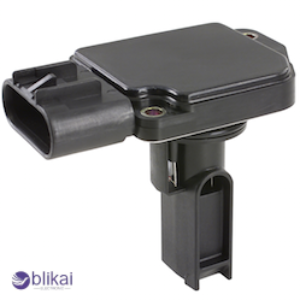
What is a Mass Air Flow Sensor?
How does the Mass Air Flow (MAF) sensor work? There's nothing little about it, but it does a lot of work. An engine's intake air is measured by this device. After that, it instructs the engine control unit (ECU) on how much fuel to add. A hot-wire is one type, and a vane is another. What is the hot-wire? As a result, it heats up. Cooling occurs as air flows past the wire. A perfect air-fuel ratio results when the ECU reads this information, adjusts, and booms. What type of vane is it? With the movement of the flap, the ECU receives data. Engine gets the fuel it needs.
Without the MAF sensor? Things get tricky. In this case, the engine is unable to determine the appropriate air-fuel mixture, resulting in a drop in fuel economy. The car will stall, idle rough, and have bad acceleration. Everything runs smoothly when the sensor is working - better acceleration, better fuel economy, and fewer emissions. Despite its small size, it is vital to keeping things in balance. The MAF sensor needs to be checked, right? You won't regret it
How Does a Mass Air Flow Sensor Work?
A Mass Air Flow (MAF) sensor works by measuring the volume of air entering the engine. The engine control unit (ECU) needs this information to maintain the correct air-fuel ratio, which is crucial for optimal engine performance, fuel efficiency, and emissions control. If the engine doesn’t get the right amount of air and fuel, it can run poorly, waste fuel, or even cause damage. The MAF sensor provides the ECU with the data it needs to adjust fuel injection and maintain engine balance.
There are two main types of MAF sensors: hot-wire and vane. In a hot-wire MAF sensor, there’s a thin wire heated by electricity. As air flows through the sensor, it cools the wire down. The hotter the wire, the less current it needs to maintain temperature. The ECU monitors this change in resistance, which corresponds to the amount of air flowing into the engine. More air means more cooling, and the ECU adjusts the fuel accordingly.
For the vane type, a small flap is positioned inside the airflow path. As air passes through, it pushes the flap open. The more air that flows, the more the flap moves. This motion changes the voltage signal sent to the ECU, allowing it to adjust fuel delivery. Both types of MAF sensors play a crucial role in ensuring the right fuel-air mixture is delivered to the engine. Without accurate readings, the engine can't operate efficiently, leading to poor performance or higher emissions.
Signs of a Faulty MAF Sensor
Mass Air Flow (MAF) sensors can cause several noticeable issues with the performance of your vehicle. Sensor malfunctions cause the engine control unit (ECU) to adjust the fuel-air mixture improperly. An engine that performs poorly is often the result of a faulty MAF sensor. The engine may stall at low speeds when the engine is idling rough, hesitant while accelerating, or even hesitate while accelerating. Inaccurate data about air-fuel ratios affect the efficiency of the engine in this way.
MAF sensors that fail to function properly can also reduce fuel economy. The ECU might burn more fuel than necessary if faulty readings prevent it from properly balancing fuel and air. When your MAF sensor malfunctions, you may find yourself at the gas station more often. In addition, a malfunctioning MAF sensor can cause the "Check Engine" light to illuminate. Activating the diagnostic system means you will see a warning light if the sensor sends an incorrect signal to the ECU.
Having a malfunctioning or severely damaged MAF sensor can cause erratic or poor acceleration, affecting how quickly your vehicle responds to throttle inputs. Pressing the gas pedal may feel sluggish or unresponsive. When a MAF sensor fails, engine misfires, stalling, and even spark plugs or catalytic converters can occur. By monitoring these symptoms regularly, you'll be able to catch the problem before it worsens.
Clean or Replace a Mass Air Flow Sensor
It is relatively straightforward to clean or replace a Mass Air Flow (MAF) sensor, but it requires care to avoid further damage. Clean your MAF sensor if it's dirty and causing poor performance in your engine. You can follow this detailed guide:
Cleaning the MAF Sensor
Locate the Sensor: Finding the MAF sensor is the first step. In most cases, it is located between the air filter and the throttle body. Check your vehicle's manual for specific instructions on how to remove bolts or screws.
Disconnect the Battery: First and foremost, safety. If you plan to work on your car's electrical system, disconnect the negative terminal of the battery first. In this way, the car's components are protected from electrical damage.
Remove the MAF Sensor: Remove the electrical connector from the MAF sensor. Make sure you are gentle with the sensor, as force could damage it. The MAF sensor should be unscrewed from its housing after that. Keep a record of how it was installed so you can make sure it's the same way when it's time to put it back together.
Clean the Sensor: Many auto parts stores sell a specialized cleaner for MAF sensors. Sensors can be damaged by carburetor cleaners and other harsh chemicals. If your sensor has wires or a sensor plate, spray the cleaner onto them. Reinstall it after it has dried completely. Sensors can be affected by oils from your skin, so avoid touching them with your fingers.
Reassemble and Test: Once the sensor has dried, reverse the removal process and reinstall it. Replacing the sensor's housing and reconnecting the battery requires reconnecting the electrical plug as well as the sensor's electrical plug. Check the performance of the engine after starting it. In the event that the issue persists, it may be necessary to replace the sensor.
Replacing the MAF Sensor
If cleaning doesn’t solve the problem, it may be time to replace the MAF sensor. Here’s how you do it:
Purchase a Replacement: The MAF sensor should be made as per the exact model. If you want your vehicle to be compatible, you'll need a direct replacement.
Remove the Old Sensor: The faulty MAF sensor should be unplugged from the electrical connector after the battery has been disconnected. Remove it from its housing by unscrewing it.
Install the New Sensor: The new MAF sensor should be positioned and oriented similarly to the old one. The electrical connector should be plugged in and secured using screws.
Test the Vehicle:
The new sensor should be installed on the car once the battery is connected and the engine is started. The engine should perform better, such as idling and acceleration being smoother. The "Check Engine" light may need to be reset using an OBD-II scanner or by disconnecting the battery.
Final Verdict
There is nothing small about the MAF sensor, but it is mighty. Fuel efficiency is improved by tracking how much air your engine is receiving. However, it becomes dirty and old over time. Whenever that happens, things go sideways—poor performance, rough idling, poor fuel economy. It doesn't take much to make a difference. Are you still having trouble? It needs to be replaced. The job is simple, but it pays off big. Your car will thank you for taking care of its MAF sensor by driving better and requiring fewer repairs. Make sure it runs smoothly by keeping it clean.
Some images are sourced online. Please contact us for removal if any copyright concerns arise.





