


AA vs AAA Battery: Differences
 816
816What Is an AA Battery?
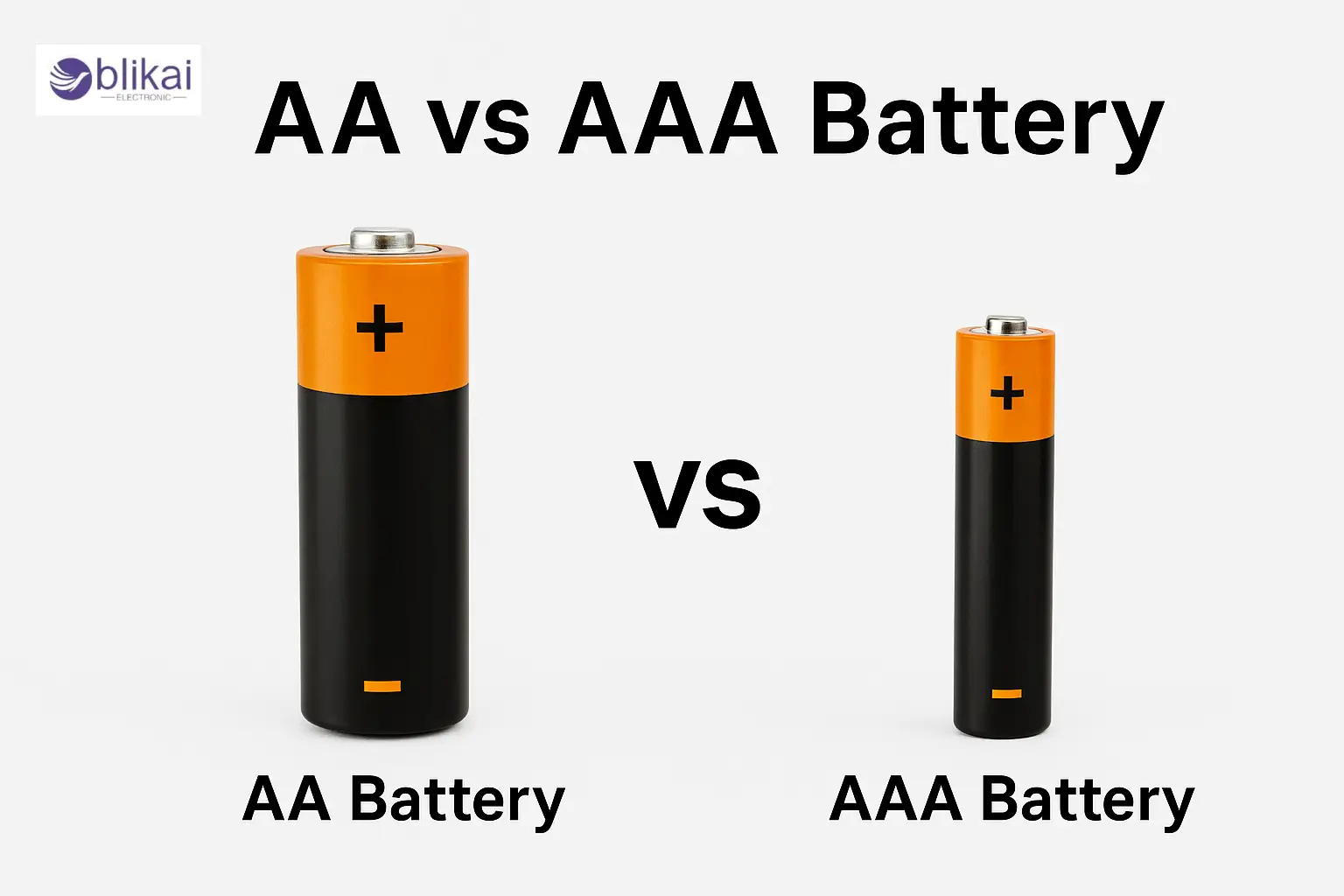
One of the most common types of cylindrical battery is AA batteries, which are used in domestic and electricity appliances. Most of them are generally disposable (alkaline) or rechargeable (NiMH or lithium-ion). They also possess a better capacitance compared to the AAA batteries; hence are in a position to store more energy, and this is what makes them go through the devices with high chances of having a lengthy life.
What Is an AAA Battery?
AAA batteries are thinner and smaller. Its voltage is also typically 1.5V., but with low energy capacity compared to AA batteries. They are optimized to fit in small electronic devices with space constraints, like wireless mice, small-sized clocks, remote controls, and LED penlights. AA batteries, as well, whilst being smaller in size, are also playing a key role in ensuring a consistent performance of the devices. The AAA batteries are also available either in the form of a disposable battery or a rechargeable one, just like with the AA batteries.
Specification Comparison Table
What Is the Capacity Between an AA and an AAA Battery?
All AA batteries will automatically be bigger in comparison with AAA batteries and carry a longer lifespan before they should be replaced. For example, the power capacity of an AA battery of alkaline type is likely to be 1800 to 2800mAh compared to the AAA battery with a power capacity of 800 to 1200mAh. This difference means that AA batteries may be used in high-drain applications such as digital cameras, portable games consoles/portable flashlights, and AAA batteries may be used in low-drain applications such as TV remotes, small clocks or wireless computer peripherals, etc.
Do AA and AAA Batteries Perform Differently Under Load?
Different performance of the AA and AAA batteries will be different as per the energy requirements of the machine. The quality of AA batteries is generally higher, hence they have the ability to produce more energy over a longer range. This is what makes them good in high-drain applications like digital cameras, portable game consoles, and large flashlights when reliability of performance is required. On the other hand, AAA batteries are weaker; they are applied to low-draw gadgets like televisions, remote controls, clocks, and wireless mice. Devices with high drainage drain AAA batteries quickly and could in no way be used with such a battery, as its performance could be poor or it could break down and give up abruptly.
Is It Possible to Recharge AA and AAA Batteries?
Both AA and AAA batteries are available in rechargeable forms, including NiMH and lithium-ion types, but performance varies. The rechargeable AA batteries have higher chances of storing energy, and therefore they last longer on a charge; hence, they would be better suited to be used on high-drain electronics, and they are often used.
What Battery Will Be the Most Suitable for My Device?
The approximate dimensions of a tool, power requirements, and the recommendations of the manufacturers are the most fundamental parameters that drive the determination of the choice between AA and AAA batteries. The batteries of AA are larger and have more capacity, hence they can fit in energy-consuming and long-running devices like digital cameras, flashlights and toys. The AAAs are smaller and thinner and should fit in smaller devices that consume less energy, like remote controls in televisions, wireless mice, and miniature clocks. Before buying, at all times, verify the battery compartment or the user manual of the device.
Is It Possible to Replace AA With AAA or the Other Way Round?
One should not replace AA with AAA or vice versa because those have varying sizes, capacities and stability when a load is applied to them. Although both have a similar voltage (1.5V), the reduced capacity of AAA batteries is not dependable to supply high-drain devices and tools intended to be used with AA batteries, which may result in either device failure or reduced life. On the other hand, there is no physical possibility of putting AA batteries into a machine that normally takes AAA batteries, and it could cause harm to the battery compartment. In case of a lack of replacement options, battery adapters or other rechargeable solutions that were created precisely on the principle of safe substitution can be used.
How Can I Extend the Life of AA and AAA Batteries?
To begin with, it is necessary to keep the cool and dry state of the batteries at which the direct sunlight or high and low temperatures have no influence on the capacity, as the direct effect of the heat is the accelerated memory chemical decay. To avoid any leakage or self-discharge, which may damage the battery and the gadget, remove batteries from devices that will not be used frequently. This could also be advanced by the use of quality batteries and the replacement of the battery before it is finished. One more helpful suggestion is that the type of battery (alkaline, NiMH, or a lithium-ion one) should be selected based on the specifications of the device in terms of power, since that method will enable offering the same number of units of power and minimize the chances of the battery being exhausted.
Are Rechargeable Batteries a Better Option for Frequent Use?
Well, it is very convenient that there exists a rechargeable type of battery, e.g., NiMH or lithium-ion based batteries, because these types of batteries may be regularly worked with, and these kinds of batteries may save money as well as the environment. The disposable batteries can be reused hundreds of times, which is far more sustainable when compared to disposable batteries. To ensure that they get the maximum benefit, give them a full charge before initial use, do not overcharge them and charge them partially when they are not in use over a long period. Rechargeable batteries can greatly increase the operating time and reduce the amount of waste when used in conjunction with appropriate use and storage of the device, which is why they are best suited to high-drain or high-usage electronics.
Conclusion
AA batteries are bigger with more capacity, offer high capacity, and are appropriate when dealing with high-drain devices or high drain devices, like digital cameras, flashlights, and toys. The AAA batteries are smaller and lighter than the AAA and can be used in low-drain or miniaturized devices, including remote controls, small clocks, wireless mice, etc. They both have the same nominal (1.5V) output, but the size, energy capacity, and use of each inhibit their interchangeability in most machines.
Also, the type of battery used can have a large influence on the cost and environmental impact. Rechargeable batteries are suitable for frequent use since they provide long-term economy as well as waste reduction, whereas disposable batteries are suitable for occasional or emergency use. Being informed on the approximate differences, peculiarities of their character, and performance, you will be able to make the right decisions as the devices will be working sufficiently and reasonably with the flow of time.
FAQ
Can AAA batteries be substituted for AA batteries?
No. The AAA batteries are smaller, and they are unable to drive the high-drain devices like the AA battery. As a consequence of this, the method could cause the failure of the device because of an insufficient power supply from its battery.
Are rechargeable AA and AAA batteries worth it?
Yes. Rechargeable NiMH or lithium-ion batteries save money, reduce waste, and perform better under frequent use, especially for high-drain electronics, while maintaining consistent power output.
Some images are sourced online. Please contact us for removal if any copyright concerns arise.





