


RG6 Coaxial Cable Guide: Structure, Impedance & Applications
 492
492What Is an RG6 Coaxial Cable?
RG6 coaxial cable is a 75 ohm radio frequency cable that is used to transmit high-frequency signals with minimum loss and high electromagnetic interactions. The name RG is based on Radio Guide, an old U.S. military standard, and the number 6 denotes its physical structure and electrical properties. RG6 cable is currently the most common coaxial cable employed in cable television, satellite systems, broadband internet and RF signal distribution because it provides balanced operation at low costs, and can be fully supported with modern communication equipment.
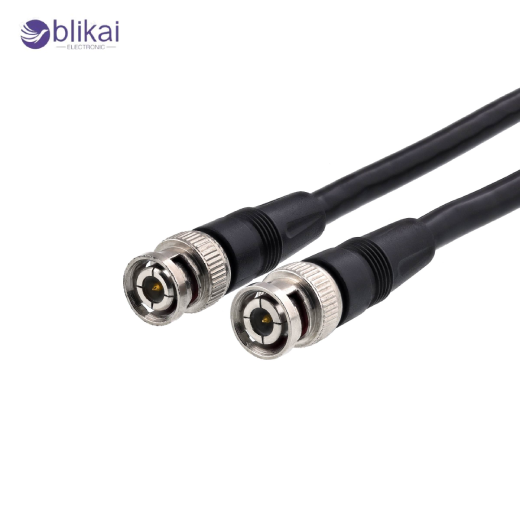
Basic Structure of RG6 Coaxial Cable
The concentration of the RG6 coaxial cable is a concentric layered design whereby the signal flows efficiently and also remains undisturbed by the external noise. Each of these layers has a particular electrical and mechanical application that has a direct impact on signal integrity.
Center Conductor
RG6 center conductor is normally 18 AWG, and it is typically made of solid copper or copper-clad steel (CCS). The copper conductors are solid and offer less DC resistance and are used in broadband internet and RF systems; at the same time, the CCS conductors are used in cable TV installations where cost-effectiveness and mechanical strength are more important.
Dielectric Insulation
The foam polyethylene dielectric insulation surrounds the center conductor. This coating is to ensure that there is no variation of the distance between the conductor and shield, something that is essential when it comes to maintaining the characteristic impedance at a constant of 75 ohms. The foamed structure also minimizes capacitance and signal attenuation at high frequencies.
Shielding Layer
RG6 cables employ an aluminum foil shielding that is coupled with a foil made of aluminum. The shielding may be single, dual or quad shield depending on the environment. This shielding will help prevent the electromagnetic interference (EMI) and radio frequency interference (RFI), which is particularly needed in high-density residential or commercial installations.
Outer Jacket
The outer jacket is normally composed of PVC and used indoors, and polyethylene (PE) and used outdoors and on the ground. The jacket guards against physical damage, moisture, ultraviolet and change of temperature on the cable.
RG6 Cable Impedance Explained
Impedance is the counter opposition that a cable poses to alternating current at a particular frequency. RG6 coaxial cable is developed with the highest characteristic impedance of 75 ohms, that is perfect for transmitting video, RF and broadband signals. This is because the impedance inside the source, cable, and load should be similar to reduce the signal reflections, standing waves, and power loss to deliver cleaner signals over long distances.
Electrical Specifications of RG6 Cable
RG6 is designed to support frequencies of around 3 GHz, so it is suitable for the present-day digital TV, satellite and internet services. Common attenuation 1000 MHz is approximately 6-7 dB per 100 feet, which is a reasonable compromise between cable thickness and signal performance. Small capacitance and constant impedance will guarantee the good quality of signals over a broad frequency band.
|
Parameter |
Typical Value |
|
Characteristic Impedance |
75 Ω |
|
Center Conductor |
18 AWG Copper / Copper-Clad Steel |
|
Dielectric Material |
Foam Polyethylene |
|
Capacitance |
~16.2 pF/ft |
|
Maximum Frequency |
Up to 3 GHz |
|
Signal Attenuation (1000 MHz) |
~6.5 dB / 100 ft |
|
Shielding |
Single / Dual / Quad Shield |
|
Jacket Material |
PVC or PE |
RG6 vs Other Coaxial Cables
RG6 vs RG59
RG59 is finer and more bendable than RG6, yet it has much more signal loss in the higher frequencies. RG6 is the better option when it comes to longer lengths, HD video and broadband applications; RG59 is restricted to short CCTV installations.
RG6 vs RG11
RG11 offers lower attenuation and longer transmission distances than RG6 but is thicker, stiffer, and more difficult to install. RG6 is usually selected for residential applications and light commercial, while RG11 is selected for long-distance backbone applications.
|
Feature |
RG59 |
RG6 |
RG11 |
|
Impedance |
75 Ω |
75 Ω |
75 Ω |
|
Center Conductor |
20–22 AWG |
18 AWG |
14 AWG |
|
Signal Loss |
High |
Medium |
Low |
|
Max Distance |
Short |
Medium |
Long |
|
Flexibility |
High |
Medium |
Low |
|
Typical Applications |
Short CCTV runs |
TV, Internet, CCTV |
Long CATV runs |
Common Applications of RG6 Coaxial Cable
Cable Television (CATV) Systems
RG6 coaxial cable is most commonly used in cable television distribution systems due to its 75-ohm impedance and low attenuation at high frequencies. It incorporates both analog and digital television signals, HD channels, and new QAM-based transmission, that make it the choice of residential or business CATV installations.
Satellite TV Installations
RG6 coaxial cable is also used to connect satellite dishes, LNBs and receivers in satellite TV systems. RG6 is best used for medium distances in order to transmit satellite signals with high frequency, up to several gigahertz, and DC power to the LNB to ensure reliability.
Broadband Internet and Cable Modems
RG6 is commonly made use of in cable internet links using DOCSIS standards. Its constant impedance and high shielding contribute to signal integrity between the network of the service provider and the cable modem, and ensure the internet speed remains constant and the noise in high-bandwidth data transmission is low.
CCTV and Security Camera Systems
RG6 coaxial cable is most often used with CCTV and HD analog security cameras to provide quality and length of cable. RG6 is less prone to noise and signal loss as compared to RG59, and is better suited to large buildings and outdoor surveillance systems.
RF Signal Distribution Systems
RF distribution RFG6 is commonly applied to antenna systems, signal splitters, and signal amplifiers. Its impedance of 75 ohms is similar to most RF video and broadcast equipment, and it can distribute signals readily with minor reflection and distortion.
Home Theater and AV Systems
In audio-video systems and home theater, RG6 coaxial cable is utilized in digital audio, composite video and subwoofer. Its shielding characteristic prevents interference with other electrical devices nearby, making the signal clarity better.
Indoor vs Outdoor RG6 Cable
The RG6 indoor cables are equipped with PVC jackets and are made to be utilized in controlled environments, and the RG6 outdoor cables' jackets are crafted with UV-resistant and waterproof PE. Outdoor installations often require grounding and weather-sealed connectors to ensure long-term reliability and electrical safety.
RG6 Shielding Types and Their Uses
RG6 single-shield suffices where there is low-interference, whereas dual-shield is usually employed in a domestic installation. Quad-shield RG6 offers better EMI immunity and is advised in those areas where RF interference is high, or there are extensive cable runs anywhere proximate to power lines.
How to Choose the Right RG6 Cable
The right selection of RG6 cable is determined by the frequency of the signal, the place of installation, cable length, or the need for shielding. The internet and RF applications belong to solid copper conductors, whereas quad-shield designs are preferable in noisy environments.
Installation Tips for RG6 Coaxial Cable
The installation should be done properly with the right bending radius, no sharp kinking of the conductor, high-quality F-type connectors to be used, and grounding should be done properly. Signal degradation is normally caused by poor termination and overbending.
Advantages of RG6 Cable
RG6 has low signal loss, high EMI resistance, broad compatibility and a cost-effective performance in most residential and commercial applications.
Disadvantages of RG6 Cable
RG6 is not as appropriate in very long runs as RG11 and is less flexible and thicker than RG59.
FAQs About RG6 Coaxial Cable
Can RG6 Cable Be Used for the Internet?
RG6 cable is commonly used for cable internet connections, especially in DOCSIS-based systems. Installation of the internet is recommended to be done using solid copper RG6 cables, as they have lower resistance and they support RF signals as well as DC power delivery.
Does Quad-Shield RG6 Improve Signal Quality?
Quad-shield RG6 does not enhance any signal, but rather enhances the resistance to electromagnetic and radio frequency interference. This is particularly useful in places where the electrical noise is great, e.g., apartment buildings or industries.
What Type of Connector Is Used with RG6?
RG6 cables are normally fitted with F-type connector joints, including compression-type connector joints, which give them better mechanical strength and signal integrity. The appropriate type of connector can be used to ensure minimal signal loss.
Conclusion
The RG6 coaxial cable is still used in the transmission of 75 ohm signals in the industry as the cable has the best structure, has a constant impedance, and has a wide range of applications. RG6 provides a good performance in terms of modern communication and video systems when it is selected and installed appropriately.
Some images are sourced online. Please contact us for removal if any copyright concerns arise.





