


Bluetooth Module Guide: Features, Specifications & Applications
 286
286Introduction to Bluetooth Modules
A Bluetooth module is a small, wireless communication chip that provides interchange of short-distance data between electronic devices. Combining RF circuits, baseband processing, and protocol stacks, Bluetooth modules make it easier to design wireless systems and also shorten development.
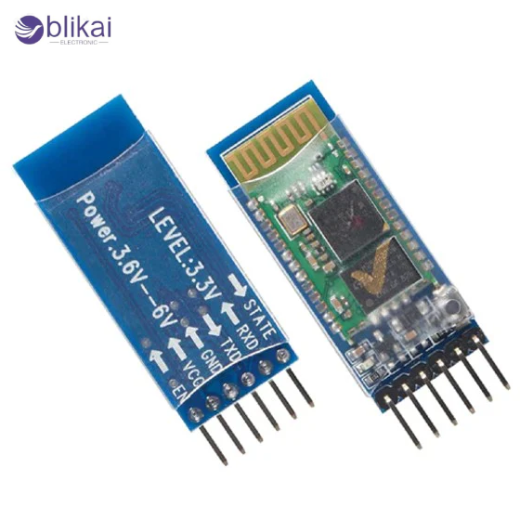
How a Bluetooth Module Works
The Bluetooth modules can be used in the 2.4 GHz ISM band, and they use frequency-hopping spread spectrum to minimize interference. The module is used to facilitate pairing, authentication and data transmission via Bluetooth protocol stack, enabling a host microcontroller to interface via simple interfaces like UART or SPI. This design abstraction allows designers to include wireless connectivity without RF insight, which is on the deep side.
Types of Bluetooth Modules
Classic Bluetooth Modules
Old-fashioned Bluetooth modules have been developed to support continuous data streaming and faster throughput. They are usually employed in sound devices, serial data substitution and legacy wireless peripherals. The modules may furnish profiles, such as SPP, A2DP and HFP, and this is why they may also be applied to the speakers, headsets and industrial data links.
Bluetooth Low Energy (BLE) Modules
BLE modules target a very high level of low power consumption and intermittence. They perfectly fit battery-powered gadgets like sensors, wearables and smart house items. BLE has a lightweight, low-latency, high-battery-life optimized protocol that is necessary in today's IoT applications.
Dual-Mode Bluetooth Modules
Dual-mode modules support both Classic Bluetooth and BLE in a single device. This flexibility allows products to communicate with older Bluetooth devices while supporting low-energy operation for newer applications. Dual-mode solutions are often used in multifunction consumer electronics.
Key Features of Bluetooth Modules
The Bluetooth modules provide reliable short wireless communications, low power, and simple integration of the system. The common specifications are adjustable transmission power, sleep, built-in antennas or external antenna support, and in-board security. These capabilities render Bluetooth modules very flexible in various electronic design needs.
Bluetooth Module Specifications Explained
Bluetooth Versions
Bluetooth modules are available in 4.0, 4.2, 5.0, 5.1 and 5.2. The models are more recent and have better range, data rate, positioning accuracy and coexistence with other wireless technologies. Considerably popular is Bluetooth 5.x when it comes to IoT and smart device design.
Operating Voltage and Current
The majority of Bluetooth modules can run on low voltages, usually spanning 1.8 V to 3.6 V, and current is dependent on the mode, with sleep currents of microamperes and transmit active currents in the amperes. Power specifications are very crucial when coming up with battery-operated products.
Frequency Band and RF Characteristics
Bluetooth modules work within the 2.4 GHz ISM band and have several channels to reduce interference. Communication range and reliability are directly proportional to output power, receiver sensitivity and antenna design.
Host Interfaces
Common interfaces include UART, SPI, I²C, and USB. UART is the most universal because it is a simple one and is compatible with microcontrollers. The interface selection has an impact on the firmware design and the performance of the system.
Bluetooth Module Applications
Consumer Electronics
Bluetooth devices are commonly used in phones, wireless headphones, keyboards and controllers. They facilitate connection without cables and enhance convenience to the users without high power consumption.
IoT and Smart Home Systems
Some examples of Bluetooth modules used in IoT applications would be sensors, smart locks, lighting, and home automation hubs. The fact that BLE consumes a low amount of energy makes it suitable to be utilized in long-term usage in smart environments.
Industrial and Automation Equipment
The industrial Bluetooth modules support wireless monitoring, configuration and data logging. They reduce wiring complexity and improve flexibility in factory automation and equipment diagnostics.
Medical and Healthcare Devices
Bluetooth modules are used in wearable health monitors, medical sensors, and diagnostic equipment. They have low power consumption and secure data transmission that is important in healthcare applications.
Advantages of Bluetooth Modules
Low Power Consumption
Bluetooth modules and BLE in particular are meant to be used with minimal power consumption and therefore are suitable in battery-operated devices such as wearables, smart sensors and IoT nodes. Sleep modes and energy-efficient protocols extend device lifespan.
Easy Integration
These modules make wireless design easier as it manages RF, baseband, and protocol stack. The developers can then link them to microcontrollers through UART, SPI, or I2C and save development time and complexity.
Compact and Cost-Effective
They have small self-contained modules, which lowers PCB complexity and the number of components. Mass production and this small size make them an inexpensive option for commercial and industrial products.
Reduced Wiring and Enhanced Mobility
Bluetooth modules, which are a replacement for wired connections with wireless connections, minimize the use of cables, enhance the portability of devices, and allow design flexibility of products, particularly in consumer electronics and smart home use.
Disadvantages of Bluetooth Modules
Short Communication Range
Bluetooth modules have a range of 10-100 meters, depending on the version, power of the output, and conditions. Walls, obstacles, and interference have the potential to decrease the range of usefulness, making it inapplicable to broad spaces.
Lower Data Rates
The bandwidth of Bluetooth is less compared to WiFi. Classic Bluetooth is limited to approximately 3 Mbps, whereas BLE specializes in the low-rate sensor data, and it is not suitable for high-speed streaming or large file transfer.
Potential Interference
Bluetooth operates at the already used 2.4 GHz ISM band, and thus can be interfered with by WiFi, microwaves, and other such devices. A frequency-hopping-based module mitigates this, but in a dense environment, reliability can still be compromised.
Security Concerns
Though the latest version of Bluetooth has encryption and authentication, not all gadgets are resistant to eavesdropping, spoofing, and unauthorized access due to improper implementation. Sensitive programs require security practices.
How to Choose the Right Bluetooth Module
The choice of the appropriate Bluetooth module is determined by the requirements of the application that may include range, power, data rate, profiles, etc. Antenna choice, firmware support and regulatory certifications such as FCC, CE and RoHS should also be considered by the designers in making sure that the market complies.
Bluetooth Module vs Other Wireless Modules
Bluetooth modules have a low consumption of power compared to WiFi modules, and they are easier to incorporate but have a lower bandwidth. Bluetooth has an advantage over Zigbee or LoRa in that it is smartphone compatible, but has a shorter range. Bluetooth is usually the most appropriate for personal gadgets and short-range IoT communication.
Future Trends in Bluetooth Module Technology
Bluetooth technology is also developing and has better positioning, mesh networking and improvement on security. The use of Bluetooth 5.x and future standards will increase the role of future Bluetooth modules in industrial IoT, smart cities, and connected healthcare devices.
FAQs
How far can a Bluetooth module transmit?
Average distance is 10-100 meters, varying with the version of Bluetooth, power output and the antenna design.
Are Bluetooth modules secure?
Yes, Bluetooth modules in the modern world have the ability to utilize encryption, authentication and secure pairing.
Some images are sourced online. Please contact us for removal if any copyright concerns arise.





