


Bluetooth Transmitter Module: Working Principle & Applications
 256
256What Is a Bluetooth Transmitter Module?
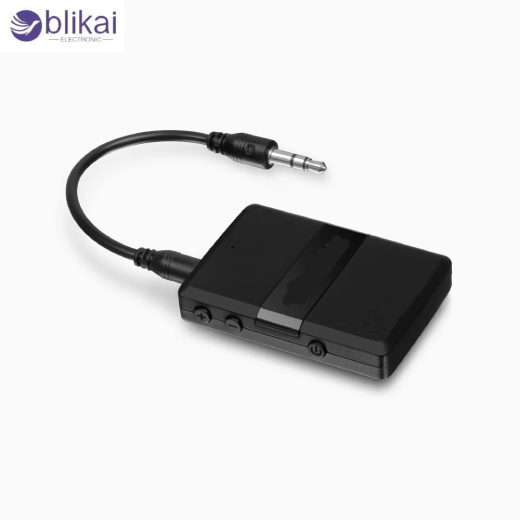
A Bluetooth transmitter module is an electronic module that transforms digital or analog input signals into wireless signals that can be sent over Bluetooth and sent to a paired Bluetooth receiver. Transmitter modules are used to encode, modulate and transmit signals, unlike Bluetooth receivers that receive only the signal. Some advanced modules integrate both transmitting and receiving functions, but dedicated transmitter modules are commonly used in audio streaming, sensor data broadcasting, and wireless control systems.
How Does a Bluetooth Transmitter Module Work?
Basic Working Principle of Bluetooth Transmission
Bluetooth transmitter modules work on the 2.4 GHz frequency band, and they employ frequency-hopping spread spectrum (FHSS) to minimize interference with other wireless devices, which also aids in reducing interference at the same frequency. The data to be transferred is first coded on the basis of the Bluetooth protocol stack, as an RF signal and finally sent through an antenna in small bursts in several frequency channels to achieve dependable and secure wireless communication.
Signal Flow Inside a Bluetooth Transmitter Module
Internal signal flow is normally started by the input of audio or digital data, processed by a baseband controller or a microcontroller. Processing of the signal is subsequently followed by packetizing, modulation and amplification by the RF transmitter stage. Lastly, an integrated or external antenna radiates the RF signal to the receiving Bluetooth device.
Bluetooth Protocols and Profiles Used
Depending on the application, Bluetooth transmitter modules use many different protocols, including Bluetooth Classic to support data and audio streaming continuously, and Bluetooth Low Energy (BLE) to support low-power data transfer. A2DP is used in streaming audio, SPP is used in serial data communication, HID is used in input devices and proprietary profiles are used in industrial or IoT applications.
Key Components of a Bluetooth Transmitter Module
RF Transmitter and Antenna
The high-frequency signal necessary in wireless transmission is produced in the RF transmitter and is amplified; then the antenna emits the signal towards free space. The design of antennas, be it PCB trace or chip antenna, external antenna, has a direct influence on the transmission range, signal stability, and the performance in general.
Microcontroller and Baseband Processor
The integrated Bluetooth SoC or microcontroller is used to work with protocol processing, data encoding, pairing control, and communication control. Modern modules often integrate the MCU, baseband processor, and RF circuitry into a single chip to reduce size, cost, and power consumption.
Power Management Circuit
Power management circuits control the amount of power and maximize power consumption via sleep and dynamic power management. The power design is of particular importance to battery-powered hardware and other IoT devices that have to work for a long lifetime.
Main Types of Bluetooth Transmitter Modules
Bluetooth Classic Transmitter Modules
Bluetooth Classic transmitter modules have a higher data rate and constant communication, thus, they are suited to audio streaming, file transfer and human interface devices. They are widely applied in speakers, headphones and multimedia systems.
Bluetooth Low Energy (BLE) Transmitter Modules
BLE transmitter modules are concerned with minimal power usage and intermittent data transfer. The modules are common in wearable devices, wireless sensors, smart meters, and nodes of IoT, where energy efficiency is a priority consideration.
Audio Bluetooth Transmitter Modules
Bluetooth transmitter modules that are specific to audio are designed to be high-quality sound transmitters and have low latency. They are often applied to TV audio adapters, car audio systems and wireless music transmitters.
Key Specifications to Consider When Choosing a Bluetooth Transmitter Module
Transmission Range and Output Power
Output power is categorized by Bluetooth transmitter as Class 1, Class 2 or Class 3, which dictates the range of the relay. Class 1 modules may extend up to 100 meters on an open space area, whereas Class 2 and Class 3 modules are applicable in short-range applications.
Data Rate and Latency
The major specifications are data throughput and data latency, particularly in audio and real-time control systems. Bluetooth Classic typically has a higher data rate, and BLE has low-latency and power-saving sensor applications.
Power Consumption
Portable and battery-operated devices require low standby current and low energy usage when running. When choosing a module, sleep current, transmit current and average power consumption are the parameters that designers tend to compare.
Frequency Band and Compliance
Most of the Bluetooth transmitter modules operate within the 2.4 GHz band and are required to comply with regulation standards such as FCC, EU and RoHS. Certification makes it easy to approve products, and also accelerates time-to-market.
Common Applications of Bluetooth Transmitter Modules
Consumer Electronics
Bluetooth transmitter modules are popular with TVs, wireless headphones, speakers, game controllers, and smart home devices, so far that they can transmit audio and data without the need of physical connection.
Industrial and IoT Applications
Bluetooth transmitter modules in the industrial setting facilitate wireless data gathering, equipment systems monitoring, and complete control. BLE modules are particularly known to be widely used in sensor networks in IoT, as they do not consume high power.
Automotive Electronics
Car audio systems, hands-free communication, wireless diagnostics and infotainment systems are some of the automotive systems that need the reliability of short-range wireless connections.
Medical and Healthcare Devices
Wearable health monitors, wireless diagnostic devices, and patient tracking systems are some of the medical devices that use Bluetooth transmitter modules to safely and effectively transmit data.
Advantages of Bluetooth Transmitter Modules
Low Power Consumption
Bluetooth transmitter modules are also energy efficient in use, particularly where they are operated under Bluetooth Low Energy. This enables gadgets to work for longer durations on a modest battery, and these modules are perfect in small-scale electronics, wearable products and IoT sensor nodes.
Compact Size and Easy Integration
The majority of Bluetooth transmitter modules combine RF functionality, baseband processing, and antenna interfaces in a small size. Such a high degree of integration makes PCB design and creation easier, minimizes the number of components, and the time to product development when developing electronic products.
Wide Compatibility and Standardization
Bluetooth is a universally accepted standard of wireless technology that ensures good interoperability between gadgets made by other manufacturing companies. The modules of Bluetooth transmitters can also be wired to smartphones, tablets and laptops and embedded systems with no proprietary receiver.
Cost-Effective Wireless Solution
Bluetooth transmitter modules have a low total system cost when compared with other wireless communication technologies like Wi-Fi or cellular modules. They are affordable, which means they can be used in large volume consumer electronics and other industries that are sensitive to expenses.
Disadvantages of Bluetooth Transmitter Modules
Limited Transmission Range
Bluetooth transmitter modules are mostly aimed at short-range communication. Even Class 1 high-power modules are usually restricted to approximately 100 meters in the open air, and this may not be adequate in long-distance wireless communications.
Susceptibility to RF Interference
Using the 2.4GHz ISM band, Bluetooth transmitter modules may be affected by Wi-Fi networks, microwave ovens, and other wireless devices. This interference may affect signal stability and data reliability in dense RF environments.
Restricted Data Throughput
Bluetooth transmitter modules cannot compete with Wi-Fi or wired connection bandwidth, although they are effective in the case of audio streaming and low-to-moderate data rates. This restricts the large data transfer or high-definition video transmission.
Dependency on Pairing and Protocol Compatibility
Bluetooth communication is based on matching processes and compatibility of protocols in the devices. Connection problems or poor functionality can also occur due to differences in Bluetooth version, profile or firmware implementation.
Bluetooth Transmitter Module vs Bluetooth Transceiver
A Bluetooth transmitter module is developed mainly to transmit signals in one direction, whereas a Bluetooth transceiver is in a position to transmit and receive. The transceivers are more flexible but can use more power and have complexity, whereas transmitter-only modules are suitable in simple and low-cost applications.
Design Tips for Integrating Bluetooth Transmitter Modules
Antenna Layout and PCB Design Considerations
It is important to note that proper PCB layout, impedance matching, and ground clearance around the antenna are important to ensure optimum RF performance. The positioning of the antennas may considerably lower the range of the transmission and signal stability.
Power Supply and Noise Reduction
The design of the stable power supply will be that with effective filtering and decoupling capacitors to reduce noise and avoid RF interference, which will enhance the overall reliability of the transmission.
Firmware and Pairing Optimization
The user experience and minimized connection failures in practical real-world uses of the firmware are all made through efficient firmware design, quick pairing mechanisms, and better connection maintenance.
Future Trends in Bluetooth Transmitter Modules
Future Bluetooth transmitter modules will only get enhanced with Bluetooth 5.x and above, with longer range, high data throughput, lower latency, as well as better coexistence with other wireless technologies. The innovations will additionally increase the use of smart homes, industrial IoT, automotive electronics, and wearable devices.
FAQ
Can a Bluetooth transmitter module support both audio and data transmission?
Yes, with the protocols and profiles that it supports, it can be used with many modules that can support both audio and data.
Is BLE suitable for audio transmission?
BLE is predominantly aimed at low-power data transfer, although newer standards are slowly making it possible to use low-power audio applications.
Some images are sourced online. Please contact us for removal if any copyright concerns arise.





