


DC Voltage Regulator: Types, Circuits & Applications Guide
 9
9What Is a DC Voltage Regulator?
A DC voltage regulator is an electronic circuit or integrated circuit (IC) device that is used to maintain a fixed output voltage as the input voltage (and output current) varies, and it does this by using a feedback loop to compare the output voltage to a reference voltage, allowing the regulator to regulate the output voltage and provide a constant output voltage to other components in the system, like microcontrollers, sensors, processors and communications hardware, ensuring the system or components operate within the rated voltage range.
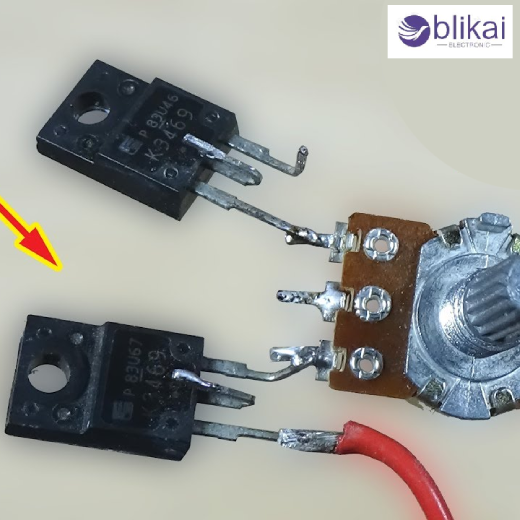
How DC Voltage Regulators Work
DC voltage regulators operate by comparing the output voltage with a reference voltage via a feedback loop and, in the case of an error voltage, the error amplifier provides a correction voltage to the control element (usually a transistor or MOSFET) to control the pass element by varying the power dissipation (linear regulators) or by turning the pass element on and off to vary the duty cycle (switching regulators) to ensure a constant output voltage despite changes in the input voltage and load current.
Main Types of DC Voltage Regulators
Linear Voltage Regulators
Linear regulators dissipate the excess voltage and are simple, low noise and thus suitable for low noise and analog circuits.
Switching Voltage Regulators
Switching regulators use switching at high frequencies and energy storage components to provide high efficiency and are thus ideal for power-sensitive applications.
Low Dropout (LDO) Regulators
Linear regulators that can provide regulation with a very low input/output voltage difference (low dropout (LDO) regulators) are well-suited for battery operation.
Fixed vs Adjustable Regulators
Fixed regulators provide a fixed output voltage, while adjustable regulators can be adjusted to provide any desired output voltage by choosing external resistors.
Common DC Voltage Regulator Circuits
Series Regulator Circuit
A series regulator stabilises voltage by dynamically varying its resistance with a pass transistor that is in series with the load.
Shunt Regulator Circuit
A shunt regulator stabilises voltage by shunting away the excess current.
Buck Converter Circuit
Buck converters efficiently step down voltage using switching elements and inductors.
Boost Converter Circuit
Boost converters increase input voltage to a higher output level using energy storage components.
Buck-Boost Converter Circuit
Buck-boost converters can either increase or decrease voltage depending on system requirements.
Key Components Used in Regulator Circuits
DC voltage regulators use a combination of active and passive components including diodes which rectify the AC input and provide reverse voltage protection, capacitors which serve to filter the AC signal or smooth the ripple, inductors which are used to store energy in switching regulators, resistors for voltage division and feedback and semiconductor components, such as transistors or integrated circuits (ICs), which perform the primary regulation and control.
Key Performance Parameters
The performance of DC voltage regulators is characterised by a number of key parameters, including output accuracy, which defines the closeness of the output voltage to the target value, load regulation and line regulation which describe how the output is maintained under different load and input conditions, efficiency, which is a measure of the power conversion effectiveness, ripple and noise which are measures of the output signal quality of the regulator and thermal performance which defines how the regulator deals with heat dissipation and impacts on reliability and lifetime.
Linear vs Switching Regulators: Comparison
Linear regulators are valued for their simplicity, low noise and ease of integration and are ideal for analog and RF applications, but have low efficiency when the input and output voltages are significantly different, on the other hand, switching regulators are highly efficient and ideal for high-power/high-current or battery-powered applications but are more complex, require additional components such as inductors and can and introduce electromagnetic interference which must be considered in the design process.
Advantages and Disadvantages of DC Voltage Regulators
The advantages of DC voltage regulators include stability, protection from voltage spikes and fluctuations, efficiency (for switching regulators) and versatility in design, while the disadvantages include heat dissipation problems for linear regulators, complexity (for switching regulators), noise and the need to select and place components properly for efficiency.
Applications of DC Voltage Regulators
DC voltage regulators are common in consumer electronics (such as mobile phones, tablet computers and laptops), automotive electronics (such as engine control units and entertainment systems), industrial electronics (such as PLCs and motor drives), communication electronics (such as routers and base stations) and renewable energy electronics (such as solar inverters and battery management systems) where it's important to maintain a stable voltage for the device to operate properly.
How to Choose the Right DC Voltage Regulator
The input and output voltage ranges and current, efficiency, heat dissipation, size limitations, noise sensitivity and cost, and whether a linear or switching regulator will be the optimal choice for the particular application in terms of performance and design trade-offs should all be considered when making a choice.
Design Tips and Best Practices
Good design practices for DC voltage regulators include careful PCB layout to reduce noise and interference, appropriate selection of capacitors and inductors to ensure stability, good thermal management (such as thermal vias and heat sinks) and compensation of the feedback loop to keep it stable and perform well under the anticipated operating conditions.
Troubleshooting Common Issues
The usual problems that occur with DC voltage regulator circuits are thermal issues due to high power dissipation, instability in the output voltage due to poor feedback design or compensation, excessive ripple in the output voltage due to poor filtering, and the circuit not starting up due to incorrect component values or PCB layout, which can be prevented with good design and testing.
Future Trends in Voltage Regulation
Future developments in DC voltage regulators will see more integration with advanced power management ICs, increasing efficiency with higher frequency and control techniques, miniaturisation for a smaller size and better thermal transfer to deal with the new challenges of more complex electronic systems, especially in IoT, electric vehicles and high-performance computing.
Real IC Comparison: RT6254BHGJ6F vs RT7273GQW
|
Parameter |
||
|
Topology |
Synchronous Buck Converter |
Multi-output Buck Regulator |
|
Input Voltage Range |
Wide input range (typ. up to 18V class) |
Wide input range (system PMIC level) |
|
Output Capability |
Single output |
Multiple output rails |
|
Output Current |
Up to ~4A (typical class) |
Multiple channels, moderate per rail |
|
Efficiency |
High efficiency synchronous design |
Very high system efficiency |
|
Switching Frequency |
Mid-frequency operation |
High-frequency operation |
|
Package Type |
Compact SOT/WDFN class |
QFN multi-pin PMIC package |
|
Integration Level |
Moderate integration |
High integration PMIC |
|
Best Application |
IoT, embedded, small power rails |
CPU/SoC power management systems |
Conclusion
DC voltage regulators are key elements in modern electronic systems, providing efficient, stable and reliable power supply for various applications, and with an understanding of the operation, types, circuit designs and specifications of DC voltage regulators, the best regulators can be implemented for different applications, enhancing system performance, product lifetime and addressing the challenges of increasing complexity of electronic systems.
FAQ
Linear vs switching regulator: what is the difference?
Linear regulators have low noise but low efficiency, switching regulators have high efficiency but high noise.
Why is a voltage regulator important?
It safeguards devices and guarantees the reliable functioning of the circuit.
What is dropout voltage?
It is the voltage difference between the input and output needed for an LDO (low-dropout) regulator to operate.
Some images are sourced online. Please contact us for removal if any copyright concerns arise.





