


IoT Components Explained: Sensors, MCUs & Connectivity
 498
498What Are IoT Components?
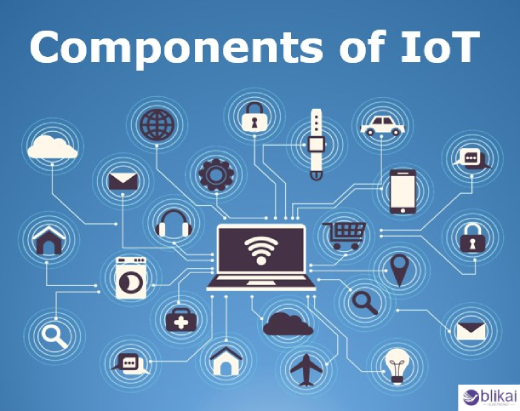
IoT components are the electronic elementary building blocks that allow physical devices to sense real-world data, process it locally and communicate it over networks to monitor, automate, or analyze it. Contrary to the traditional embedded systems, which are used in isolation, the hardware of the IoT is intended to work as part of a distributed system, focusing on the connectivity, low power consumption, and longevity.
IoT Sensors – Data Acquisition Components
What Is an IoT Sensor?
An IoT sensor is a piece of electronics that measures the change in physical conditions and transforms these measurements into electrical signals that can be interpreted in the digital system. In IoT applications, sensors act as the primary interface between the physical world and digital infrastructure. They may output analog signals requiring analog-to-digital conversion or provide digital data directly through standardized communication interfaces.
Common Types of IoT Sensors
IoT systems are based on a broad selection of sensor types, based on the needs of the application. Smart homes, agriculture, and HVAC monitoring make extensive use of temperature and humidity sensors, whereas pressure and gas sensors are critical in industrial safety and environmental monitoring. Occupancy detection and security systems make use of motion and proximity sensors, whereas ambient light measurement, image capture, and optical communication make use of optical and light sensors. Multi-sensing Environmental sensors can combine several sensing components, which can be temperature, humidity, air quality and barometric pressure at the same time, which lowers system complexity and power usage.
Sensor Interfaces and Signal Conditioning
The MCUs should also be interfaced with sensor outputs in a correct way in order to obtain the right data. Typical interfaces are analog voltage, I2C, SPI and UART, with varying trade-offs in performance, immunity to noise, and number of pins. Systems like signal conditioning, amplifiers, filters and reference voltage sources are normally called on to adjust sensor outputs to match MCU input requirements. Improvements in noise immunity, measurement accuracy and system stability, particularly in electrically noisy industrial operating conditions, or in low-level analog sensing applications, are provided by proper signal conditioning.
Microcontrollers (MCUs) in IoT Systems
What Is an IoT MCU?
An Internet of Things microcontroller unit is a low-power microcontroller that is designed to be used in embedded sensing, control, and communication applications in connected devices. Unlike general-purpose CPUs, MCUs integrate processing cores, memory, peripherals, and communication interfaces onto a single chip, enabling compact and energy-efficient designs. MCUs in IoT systems are used, among other functions, to perform sensor polling, preprocess the data, protocol processing, and manage the power consumption.
Popular MCU Architectures for IoT
The ARM Cortex-M microcontrollers are capturing the IoT market due to their performance and power efficiency balance, and support of the ecosystem. RISC-V MCUs are progressing into use as open-source options with the benefits of customisation and cost. The most common IoT MCU families are ESP32, used in wireless-enabled systems; STM32, used in industrial and professional systems; AVR, used in simple control; and PIC, used in legacy and cost-sensitive systems.
Key MCU Features for IoT Applications
IoT design MCU systems need to be able to run on low power by having numerous sleep modes and effective wake-up systems. Integrated flash and RAM determine firmware complexity and data buffering capacity, while peripherals such as ADCs, timers, and communication controllers reduce the need for external components.
IoT Connectivity Components and Technologies
What Is IoT Connectivity?
IoT connectivity is the hardware and protocols that facilitate the transmission of data to devices outside of their local environment. The elements of connectivity define the manner in which data is transmitted, as well as the frequency with which it is communicated and the power used. The choice of the right connectivity solution is between range, bandwidth, latency, power consumption, and network availability.
Short-Range IoT Communication Technologies
Consumer and indoor IoT applications use short-range communication technologies like Wi-Fi, Bluetooth, Zigbee, and NFC. Wi-Fi has high data rates and direct internet access, and consumes more power; it is appropriate for mains-powered gadgets. BLE is designed to operate on low power and is commonly found in wearable devices and smart accessories. Mesh networking is supported by Zigbee and Thread, which can be used to ensure consistent communication in building and smart home automation systems. Close-range identification and configuration are possible with NFC and RFID.
Long-Range IoT Communication Technologies
The IoT has a long-range connectivity that enables the devices to make actions across cities, rural and remote environments. Cellular IoT technologies such as NB-IoT and LTE-M provide licensed-spectrum reliability with moderate power consumption, while LPWAN technologies like LoRaWAN and Sigfox prioritize ultra-low power and long-range communication at low data rates. IoT networks based on satellites can be deployed to provide connectivity to unreachable locations, and some of the most common applications of IoT are asset tracking, maritime tracking, and environmental tracking in remote places.
Power Management Components in IoT Devices
Managing power is a very sensitive area in the design of IoT hardware, especially where the devices are battery-powered and energy-based. Regulators, DC-DC converters, battery management ICs, and power switches are some of the components that allow control of the voltage levels and reduce the energy loss. Power design efficiency is known to lengthen the life of the devices, cut down the cost of maintenance and allow it to perform independently over time. Duty cycling, dynamic voltage scaling, and deep sleep modes are some of the common techniques of system optimization with regard to minimizing power consumption.
Supporting IoT Components
Besides sensors, MCUs, and connectivity modules, the IoT devices are built on the support of other components to improve functionality and reliability. Non-volatile memory stores firmware and configuration data, while security chips provide hardware-based authentication and encryption. Local interaction and status indication are possible by use of local user interface features like LEDs, displays, and buttons. IoT systems can be physically operated through actuators such as relays, motors, solenoids, and so on, depending on what sensors detect or a remote command.
How IoT Components Work Together in Real Applications
Smart Home IoT Devices
Smart home devices integrate sensors, MCUs, and wireless connectivity to automate lighting, climate control, and security. For example, a smart thermostat uses temperature sensors to monitor ambient conditions, an MCU to process control algorithms, and Wi-Fi connectivity to communicate with cloud platforms and mobile applications.
Industrial IoT (IIoT) Systems
The IoT systems in the industrial environment are focused on stability, precision, and durability. Sensors and MCUs used in industry have a broad temperature operation and other rugged environmental concerns, and the connectivity options can be both wired and wireless protocols. Predictive maintenance and process automation are examples of IIoT applications that depend on correct data acquisition and the safe use of communication in order to make every process work most efficiently.
Wearable and Healthcare IoT Devices
IoT wearable and healthcare devices focus on miniaturization, power consumption, and safety to the user. Physiological parameters, including heart rate and movement, are monitored by sensors, whereas low-power MCUs are used to process the data on board. Bluetooth Low Energy provides the possibility to be connected to smartphones and medical platforms, where constant monitoring can be conducted without having to replace the battery on a regular basis.
How to Choose the Right IoT Components
The choice of the IoT components demands a methodical analysis of the needs in the application, such as sensing accuracy, processing capabilities, communication range and power budget. Designers have to put in mind the environmental conditions, compliance with regulations, availability of components and long-term lifecycle support. There must be a trade-off between performance and cost, especially in a large-scale implementation where the selection of components has a direct bearing on the overall cost of the system.
Common Challenges in IoT Hardware Design
The challenges that the IoT hardware design faces are the need to minimize the power usage without compromising reliable connectivity, the need to provide data security at the component level, and the need to eliminate wireless interference. These challenges require component integration and optimization at the system level in order to deal with them. Scalability and future-proofing should also be taken into consideration in order to understand changing criteria and application needs.
Future Trends in IoT Components
The concept of AI will be progressively implemented in future IoT components, allowing edge intelligence and will no longer be dependent on cloud processing. The integration of semiconductors is causing the creation of System-in- Package and highly integrated SoCs that are smaller and consume less power. The development of wireless technologies and hardware-based security solutions will also increase the capabilities of IoT devices and their resistance.
FAQ
Which sensors are most commonly used in IoT?
Temperature, humidity, motion, pressure, light, and environmental sensors are the most typical examples of IoT sensors, as they can be integrated in a wide variety of consumer, industrial, and commercial processes.
What type of microcontroller is best for IoT?
The most suitable microcontroller in IoT applications is determined by the need in the application, but most IoT applications rely on ARM Cortex-M and ESP32-based microcontrollers due to their low power use, bundled peripherals, and robust ecosystem offerings.
What is the difference between MCU and SoC in IoT?
Whereas an MCU is concerned with real-time control and low-power operation, an SoC includes more processing cores, memory and other connectivity capabilities, and is more highly performing at the price of complexity and power consumption.
Conclusion
The components that are used in IoT are the basis of connected systems, allowing sensing, processing, and communication at the level of devices. Understanding how sensors, MCUs, and connectivity modules interact allows designers to build efficient, scalable, and reliable IoT solutions. With the development of IoT technology, optimization on the component levels, as well as being more informed about the hardware choice, will continue to be a crucial element in providing a high-performance and secure connected device.
Some images are sourced online. Please contact us for removal if any copyright concerns arise.





