


Magnetic Sensor Guide: Types, Working & Applications
 520
520Introduction to Magnetic Sensors
Magnetic sensors are essential electrical elements that are utilized in detecting and gauging magnetic fields or alterations in the magnetic flux, and transforming the physical phenomena to suitable electrical signals utilized as control and monitoring signals, as well as the acquisition of data. With the ongoing trend in the direction of electronics of increasing amounts of automation, intelligence and connection, magnetic sensors have become essential to non-contact sensing, high reliability, and environmental robustness applications.
What Is a Magnetic Sensor?
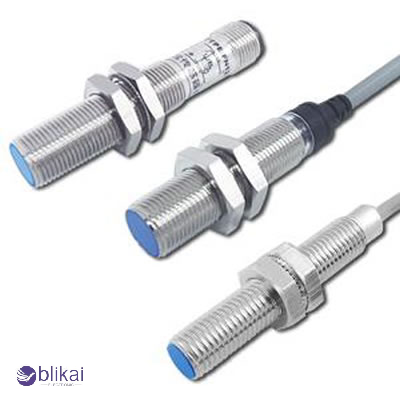
A magnetic sensor is an electronic device that responds to an external magnetic field and outputs an electrical signal proportional to the field’s strength, direction, or variation. Magnetic sensors do not require physical contact or a line of sight, as might be required in mechanical switches or optical sensors, and as a result can be used in dusty or oily environments as well as closed spaces.
How Magnetic Sensors Work
The magnetic sensors can work based on the principle of interaction of the magnetic fields with certain materials or semiconductor structures that show the changes in electrical characteristics predictably when they interact with magnetism. Depending on the sensing principle, a magnetic field may induce a voltage across a conductor (Hall effect), alter the resistance of a material (magnetoresistance), drive a core into saturation (fluxgate), or mechanically close contacts (reed switch). The amplification, filtering and signal conditioning circuits of these physical responses are used to generate a stable analog or digital signal that can be used by microcontrollers, PLCs, or control ICs to make specific and repeatable measurements in real-world systems.
Main Types of Magnetic Sensors
There are various types of magnetic sensors that are designed to meet a particular performance need, cost objective, and working environment.
Hall Effect Sensors
The most common magnetic sensors are Hall effect sensors, as they are simple to use, have a long life, and can be used with the conventional CMOS process. They work through the production of transverse voltage when a current-carrying semiconductor is subjected to a perpendicular magnetic field, and the strength of the field is proportional to the output voltage. Linear hall sensors are used in analog measurements, and digital hall sensors are used in on-off measurements with embedded comparators, which is why hall sensors are recommended in speed sensing, position detection, current measurement, and proximity switching in automotive, industrial and consumer electronics.
Magnetoresistive Sensors (AMR, GMR, TMR)
MR sensors, Magnetoresistive detectors, have a sensitivity much greater than Hall effect devices, as they rely on variations in electrical resistance in response to the orientation or strength of a magnetic field. Anisotropic magnetoresistance (AMR) sensors are stable with moderate sensitivity, giant magnetoresistance (GMR) sensors have high sensitivity in low-field applications, and tunnel magnetoresistance (TMR) sensors have the highest sensitivity and signal-to-noise ratio. Such sensors have found extensive application in high-resolution position sensing in precision positioning, angle measurements and electronic compasses in addition to automotive and industrial systems that demand high resolutions and accuracy.
Fluxgate Sensors
Fluxgate sensors are developed to keep an extremely high degree of accuracy in extremely weak magnetic fields, such as the Earth's magnetic field. They use a ferromagnetic core driven into saturation by an excitation coil, with external magnetic fields altering the core’s symmetry and inducing measurable signals in secondary windings. Although larger and more complex than semiconductor-based sensors, fluxgate sensors provide exceptional sensitivity and stability, making them suitable for geophysical surveys, navigation systems, aerospace instrumentation, and scientific research where precise low-field measurement is critical.
Reed Switches
Reed switches are magnetically actuated electromechanical devices consisting of ferromagnetic contacts sealed in a glass envelope that close or open in the presence of a magnetic field. They offer simple operation, zero power consumption in standby, and high isolation, but are limited by mechanical wear, slower response times, and sensitivity to vibration. Reed switches are commonly used in door and window sensors, safety interlocks, fluid level detection, and basic position-sensing applications where simplicity and cost are more important than speed or precision.
Inductive Magnetic Sensors
Inductive magnetic sensors are used to identify metallic objects and the change of the magnetic field in electromagnetic induction and eddy currents. By passing the conductive target through the magnetic field of the sensor, an oscillation feature or the inductance of the sensing circuit is changed, and position or presence can be detected. The sensors are very robust, resistant to contaminants and can be used in the harsh industrial environment, hence they are ideal for proximity sensing, machine tooling, conveyor systems and also industrial automation applications.
Key Performance Parameters of Magnetic Sensors
Some of the parameters of a magnetic sensor performance include sensitivity, resolution, measure range, linearity, hysteresis, and temperature stability. The ability to detect the change in the magnetic field that is as small as the resolution is called sensitivity. Linearity is a factor that influences accuracy over the operating range, hysteresis is a factor that influences repeatability and temperature properties are a factor that influences long-term stability and drift. These parameters are needed to make the right decision on the sensor to apply in a given application, especially in a precision or safety-critical system.
Common Applications of Magnetic Sensors
Magnetic sensors find application in industries that are numerous in nature as they are versatile, reliable and operate without contact.
Automotive Applications
Car systems such as the speed of wheels, crankshaft position, camshaft position, electronic motor control, current sensing systems and safety systems such as ABS, ESC and TPMS use magnetic sensors. They are able to operate under extreme temperatures, vibration, and contamination, which makes them suited for contemporary cars, including electric and hybrid cars.
Industrial Automation
The automation of industries is based on the use of magnetic sensors in proximity detection, position feedback, motion control, and robotic systems. Their strength and resistance to dust, oil and water permit stable work use even in machine manufacturing facilities, to have perfect control of machines, conveyors, and automated assembly belts.
Consumer Electronics
Magnetic sensors have found extensive application in consumer electronics, such as in laptops to detect the lid, phones to provide compass functionality, and gaming controllers to provide rotation detection, as well as wearables to provide orientation detection. Small size, low power consumption, and integration make them suitable for designs that are small and battery-operated.
Energy and Power Systems
Magnetic sensors are essential in energy monitoring and power electronics because they can provide a non-invasive current measuring system, fault clearance and system protection. They are used in smart meters, power inverters, battery management systems, and renewable energy installations to ensure efficiency, safety, and reliability.
Medical and Scientific Equipment
Magnesonic sensors can be used in medical and scientific applications, where they are used to make imaging systems, laboratory equipment, and diagnostic tools highly accurate without being contacted. Their reliability and precision allow sensitive measurements and provide electrical isolation and safety for patients.
How to Choose the Right Magnetic Sensor
The choice of the magnetic sensor should be based on the particulars of the application, including the extent of measurement, precision, environmental factors, output connection, and economic restrictions. The designers should also take into account the magnet choice, mechanical tolerances, temperature span, and long-term reliability that the system is going to be operating in, so that the best performance of the system is observed and meets the industry standards.
Magnetic Sensor vs Other Sensor Technologies
Magnetic sensors can also be viewed as compared to optical sensors because they do not need a line of sight, and are less sensitive to dirt and lighting conditions. They are more flexible in the ability to identify position and movement over non-metallic barriers compared to inductive or capacitive sensors. Such features have seen magnetic sensing being the new favorite in many applications where robustness and reliability are of the essence.
Future Trends in Magnetic Sensor Technology
The trends of the future are miniaturization, high-sensitivity materials, multi-axis measurement, integrated signal processing and IoT connectivity. Advanced TMR sensors, smart calibration, and embedded electronics are enabling autonomous vehicles, smart infrastructure, and next-generation consumer electronics.
FAQs
How Do Magnetic Sensors Work?
They work based on a response to a magnetic field in the form of voltage, change in resistance, flux modulation, or mechanical contact. The signals are then made into an analog or digital output to the control systems or monitoring.
Are Magnetic Sensors Affected by Temperature?
Yes, temperature variations can influence sensor accuracy. In modern sensors, a compensation technique is included to stabilize the sensor at a variety of temperatures.
How Accurate Are Magnetic Sensors?
Accuracy depends on sensor type. Magnetoresistive and fluxgate sensors are more precise, but Hall effect and reed switches are adequate for general purposes.
Conclusion
Automobile, industrial, consumer, energy, and medical systems require the use of magnetic sensors. Learning about types, principles, parameters, and applications would make engineers and designers choose the appropriate sensor to enable effective, reliable, and efficient electronic systems. They are versatile, non-contacted, and strong and cannot be done without the electronics of today.
Some images are sourced online. Please contact us for removal if any copyright concerns arise.





