


LED Driver Components: Types, Power Ratings & Circuits
 577
577What Is an LED Driver?
An LED driver is a necessary electronic part that controls the voltage and current to LEDs and provides reliable operation and a high level of stability. In comparison to the traditional bulbs, LEDs need a specific amount of electrical control due to their low voltage drops, which are sensitive to any form of fluctuation. LED drivers are power converters that provide voltage or current, according to the type of LED used. The correct choice of an LED driver has been key in the lighting design because it determines the efficiency, brightness, and serviceability in the scope of residential strips to industrial panels.
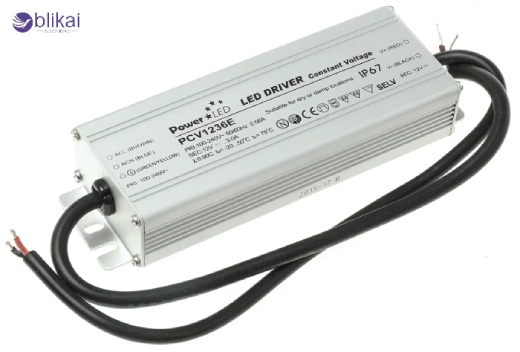
Key Components of an LED Driver
An LED driver typically contains several critical components:
- Transformer: Converts mains AC voltage to a lower AC voltage suitable for LEDs.
- Rectifier: Converts AC to DC to power the LED circuit.
- Capacitor: Smooths voltage ripples to maintain a stable output.
- Inductor: Helps filter current and reduce electrical noise.
- IC Controller: Regulates current/voltage and may include dimming functionality.
These aspects of quality have a direct effect on efficiency, thermal stability and driver lifespan. The quality of parts used may lead to flickering, overheating, or an early end of life, causing a lower LED life and a higher cost of maintenance.
Types of LED Drivers
Constant Current LED Drivers
Constant current drivers provide a constant current to LEDs that is needed in high-power LEDs or LED arrays. These drivers make LEDs work in a safer manner with no current fluctuations that will lead to overheating and burning. They are popular in street lights, industrial lights, and high-intensity LEDs.
Constant Voltage LED Drivers
Constant voltage drivers provide a stable voltage output, commonly 12V or 24V DC, suitable for LED strips, modules, and panels. They are best used in an application where several LEDs are connected to a single power source, like in decorative lighting, residential under-cabinet LEDs, and flexible LED tapes.
Dimmable LED Drivers
Dimmable drivers support adjustable lighting levels, compatible with PWM, TRIAC, or 0–10V dimming systems. These drivers allow users to control brightness in smart homes, office lighting, and commercial displays. Selecting an appropriate dimming type will make the operation smooth and without flickering or shortening of the figures of LED figures.
LED Driver Power Ratings
The right power rating is a major consideration in order to have safe and efficient operation of the LED. The driver should also be equal to the overall wattage, voltage, and current of the LED setup. Key considerations include:
- Safety margin: Choose a driver rated 20% higher than the total LED load to prevent overheating.
- Efficiency: High-efficiency drivers (>80%) reduce energy consumption and heat generation.
- Power factor (PF): PF over 0.9 reduces the reactive power, which makes the use of the AC input stable.
Properly rated drivers not only optimize the performance of LEDs, but they are also in line with the electrical standards and safety requirements.
LED Driver Circuits & Designs
LED driver circuits vary depending on application and complexity. Basic designs include:
- Linear drivers: Simple, low-cost, but less efficient, suitable for low-power LEDs.
- Switching drivers: High-efficiency circuits using PWM or switching regulators to maintain constant current or voltage.
- Integrated IC drivers: Compact solutions with built-in controllers for dimming, thermal protection, and surge suppression.
In industrial and commercial designs as well, modern designs also use EMI filters, thermal management solutions and surging protection to enhance reliability.
Applications of LED Drivers
LED drivers are critical across numerous applications:
Residential Lighting
In residential settings, LED drivers power LED strips, ceiling panels, under-cabinet lights, and decorative fixtures. With the correct choice of driver, there is uniform brightness, elimination of flickers, and a longer lifespan of the LEDs. Dimmable drivers will enable homeowners to use the lighting to their comfort and to save energy, whereas constant voltage lights are used to install the LED strips in a flexible way, whether in a kitchen, living room or wardrobes. High-efficiency drivers also save on energy bills and heat production, and thus can be used with enclosed lighting fixtures or smart home integration.
Commercial & Industrial Lighting
LED drivers are essential in commercial and industrial lighting applications, including office panels, warehouses, retail stores, and street lighting. Constant current drivers are often used for high-power LEDs, ensuring stable operation in large-scale installations. Energy consumption is minimized, maintenance costs are minimized, and uniform illumination prevails with efficient drivers. EMI protection, thermal management, and surge protection are other features of drivers that are also needed in many industrial settings because of the harsh conditions, thereby making them reliable in 24/7 work.
Automotive LEDs
The automotive lighting is highly dependent on LED drivers to power the headlights, tail lights, daytime running lights, as well as interior lighting. Voltage and current are controlled by drivers in order to avoid overheating and flickering under changing car battery situations. Dimmable drivers enable adaptive lighting functions, such as automatic brightness adjustment based on ambient light or driving speed. High-quality drivers improve safety, extend the life of automotive LEDs, and allow integration with vehicle electronics and CAN bus systems.
Smart Lighting & IoT Integration
The current smart lighting systems with the use of the IoT-linked LEDs rely on the drivers that can accurately dim, change their color, and be remotely managed. The LED drivers can be configured to work with the home automation protocols such as PWM or 0-10V dimming protocols, which means that they can be used through schedules, motion sensors, and even smartphone control. Smart offices, homes, or commercial offices. Properly chosen drivers ensure energy efficiency, a smaller amount of heat generated, and other features such as scene setting, adjusting the color temperature, and the dynamic lighting effects.
Troubleshooting & Maintenance Tips
LED drivers are typically problematic flickering, overheating, and the inability of LEDs to light. Maintenance tips:
- Test the driver output with a multimeter to verify voltage/current.
- Make sure that there is good heat dissipation; do not have closed areas with no ventilation.
- Replace failing drivers rather than attempting repair for high-power systems.
- Match drivers to LEDs precisely—mixing constant voltage drivers with constant current LEDs can damage components.
Frequent check-ups and proper installation can avoid failures and increase the lifespan of the drivers and the LED.
Conclusion
The knowledge of LED driver components, types, power ratings and circuits is something necessary to achieve reliable LED lighting systems. Proper choice of drivers helps to increase efficiency, save energy and provide steady brightness and duration. When designing or installing LED lighting, it should be remembered that the kind of driver utilized, the output rating, the dimming capability and the circuit design should be made to attain the optimum output.
FAQ
1. What is the difference between constant current and constant voltage LED drivers?
Constant current drivers maintain a fixed current for high-power LEDs, while constant voltage drivers supply a fixed voltage suitable for LED strips or modules.
2. How do I select the right LED driver for my LED setup?
Match the driver’s voltage and current ratings to the total LED load, include a safety margin, and consider dimming requirements.
3. Can I dim any LED with any LED driver?
No. Only dimmable drivers designed for your LED type support smooth dimming. Incompatible drivers may cause flickering or damage.
4. What are the common signs of a failing LED driver?
Flickering lights, reduced brightness, overheating, buzzing noises, or LEDs failing to power on are common indicators.
Some images are sourced online. Please contact us for removal if any copyright concerns arise.





