


Power Factor Correction IC: Efficiency & Design Guide
 10
10What Is a Power Factor Correction IC?
A power factor correction IC is a special-purpose IC in an AC-to-DC power conversion system that is used to make electrical loads have a more favorable power factor by aligning the voltage waveform with the current waveform to achieve a lower reactive power, reduced harmonic distortion and higher system-wide efficiency, which is especially important in modern electronic devices that use switching power supplies and must meet strict energy requirements and grid requirements.
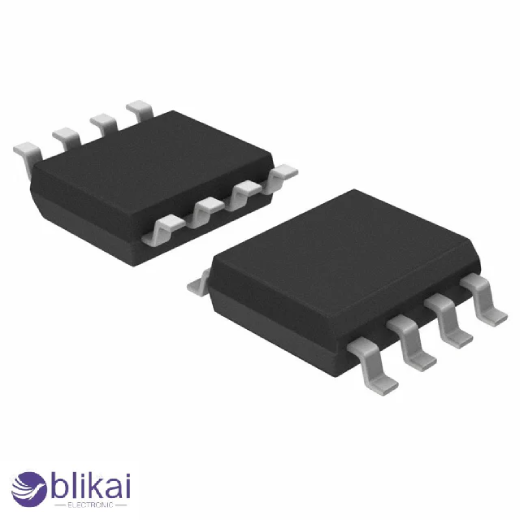
How a Power Factor Correction IC Works
A Power Factor Correction IC is a type of IC used to regulate the input current of a boost converter installed between the rectified AC input and the downstream DC bus to cause the input voltage waveform to be the same as the input current waveform by high-frequency switching and feedback control.
Basic Operating Principle
This IC measures the real-time input voltage and input current and produces a reference waveform that the input current must follow, and adjusts the duty cycle of the switching transistor to make the actual current follow the reference, resulting in a near unity power factor.
Boost PFC Topology Explained
The most prevalent topology with PFC ICs is the boost converter that raises the rectified AC voltage to a higher DC value without stopping current flow to the input, and this is ideal to shape the current waveform and minimize distortion.
Continuous vs Discontinuous Conduction Modes (CCM vs DCM)
PFC circuits can be set in continuous conduction mode, where the inductor current does not bring the current to zero, and offers less ripple and better efficiency, or discontinuous conduction mode, where the current goes to zero at the end of each cycle at the cost of more ripple and lower stress.
Control Techniques (Average Current, Critical Conduction Mode)
Modern PFC ICs use advanced control techniques such as average current mode control, which ensures precise current shaping, and critical conduction mode control, which operates at the boundary between CCM and DCM to achieve high efficiency and reduced switching losses.
Types of Power Factor Correction ICs
There are a variety of types of Power Factor Correction ICs, which are determined by the application, performance requirements, and the degree of integration required.
Passive vs Active PFC
Passive PFC relies on inductors and capacitors, but is large and less efficient, whereas active PFC relies on IC-controlled switching circuits, resulting in a near-unity power factor but with greater efficiency and reduced size.
Analog PFC Controllers
The simplicity, reliability and low cost of analog PFC ICs make them popular with numerous standard applications in which they offer strong performance.
Digital PFC Controllers
Digital PFC ICs are more flexible, programmable, and offer more sophisticated functions like adaptive control and system monitoring, and are used in high-end and complex designs.
Single-Stage vs Two-Stage PFC Solutions
Single-stage PFC combines power factor correction and voltage regulation in a single circuit in cost-sensitive designs, whereas two-stage solutions decouple these functions to enable improved performance and efficiency.
Key Features of Power Factor Correction ICs
The features added to modern PFC ICs are diverse and further increase the performance, efficiency and reliability.
High Power Factor (Near Unity)
These ICs will be coded to get as close as possible to power factor values of 1, meaning maximum energy will be utilized and comply with the regulations.
Low Total Harmonic Distortion (THD)
PFC ICs reduce harmonic distortion by controlling the input current waveform, enhancing the quality of power and minimizing interference with other devices.
Built-in Protection Features
Over-voltage protection, over-current protection, under-voltage lockout, and thermal shutdown are common protection features that protect the IC and the system in general.
Soft Start and Inrush Current Control
Soft-start operation slowly increases the output voltage during start-up, reducing the load on the components and removing high inrush currents.
Efficiency Optimization Functions
Advanced ICs include features such as frequency modulation, burst mode operation, and adaptive control to maximize efficiency under varying load conditions.
RT7300BGS vs Other PFC ICs Comparison Table
To better understand its positioning, the RT7300BGS can be compared with widely used PFC controllers such as L6562 and UCC28019.
|
Parameter |
L6562 |
UCC28019 |
|
|
Topology |
Boost PFC |
Boost PFC |
Boost PFC |
|
Mode |
Transition Mode |
Transition Mode |
CCM |
|
Input Voltage |
85–265VAC |
85–265VAC |
85–265VAC |
|
Power Factor |
Up to 0.99 |
Up to 0.98 |
Up to 0.99 |
|
THD |
<10% |
<15% |
<10% |
|
Protection |
OVP/OCP/UVLO |
OVP/UVLO |
OVP/OCP/UVLO |
|
Package |
SOP-8 |
DIP-8/SO-8 |
SOIC-8 |
This comparison highlights that the RT7300BGS provides competitive performance with strong efficiency and simplified transition-mode control, making it ideal for cost-sensitive and compact designs, while CCM controllers like UCC28019 offer improved performance for higher power applications.
Power Factor Correction Circuit Design Guide
To design an effective PFC circuit, one must not only carefully select the components, but also ensure that one thoroughly understands the requirements of the system.
Basic PFC Circuit Diagram Overview
A PFC circuit will consist of a rectifier, boost capacitor, switching MOSFET, a diode, an output capacitor and the PFC IC that together form a system to shape the input current to control the output voltage.
Key External Components
The energy storage and current smoothing are done by the inductor, the switching is controlled by the MOSFET and the current is directed in the right direction by the diode and the output is filtered by capacitors to give the appropriate current and to stabilize it.
Design Calculations and Considerations
Such key design parameters as input voltage range, output power, switching frequency and thermal limits should be accurately calculated to guarantee reliable functioning.
Thermal Management and Efficiency Optimization
Heat dissipation must be considered by adequate selection of components, heat sinks and PCB design to ensure efficiency and prevent overheating.
Advantages of PFC ICs
These benefits can be seen in the areas of increased efficiency, less energy wastage, regulation adherence and better system reliability.
Disadvantages of PFC ICs
Difficulties are that this is more complex in circuit, more expensive than passive solutions and requires special care in design to prevent instability and EMI problems.
Applications of Power Factor Correction ICs
The PFC ICs find extensive application in various industries and applications.
Switching Power Supplies (SMPS)
They play a crucial role in SMPS designs to achieve efficiency and regulatory needs.
LED Drivers and Lighting Systems
PFC ICs are used to stabilize and optimize the functioning of LED lights.
Industrial Equipment and Motor Drives
They enhance efficiency and minimize energy expenses in industrialization.
Consumer Electronics and Home Appliances
PFC ICs amplify performance and compliance, starting with TVs to refrigerators.
Design Tips and Best Practices
An effective PFC design should be detail-oriented, and best practices need to be followed.
Choosing the Right Topology
It is essential to choose the right topology depending on the level of power and usage.
PCB Layout Guidelines
The layout is done properly to reduce noise, enhance efficiency, and have a reliable operation.
EMI/EMC Considerations
To comply with regulatory standards, design must be done to ensure electromagnetic compatibility.
Compliance and Certification Tips
Guidelines and thorough testing are sure to bring about successful certification.
Conclusion
PFICs are also critical in the current power electronics because they enhance efficiency, minimize harmonic distortion, and ensure regulatory compliance, and as energy efficiency gains more significance, their implementation will remain rife in a huge number of applications.
FAQs
What is a good power factor value?
A power factor of 1 or nearly 1 is optimal, and this means the efficient use of power.
Is PFC required in all power supplies?
PFC is required in many power supplies above certain power levels to meet regulatory standards.
Can PFC improve energy savings?
Yes, a better power factor saves on losses and improves the system efficiency, which brings energy savings.
Some images are sourced online. Please contact us for removal if any copyright concerns arise.





