


Voltage Supervisor IC Explained: Working & Applications
 21
21What Is a Voltage Supervisor IC?
A voltage supervisor IC is a small yet highly important electronics component, used to monitor system supply voltage and to signal a failure mode, to maintain supply voltage within a safe operating range, and forms an important part of the suppression of instability due to undervoltage, overvoltage or brownout operation in delicate electronic devices such as microcontrollers, processors, memory chips and power management circuits, where reliability, uptime and safe startup behavior are critical.
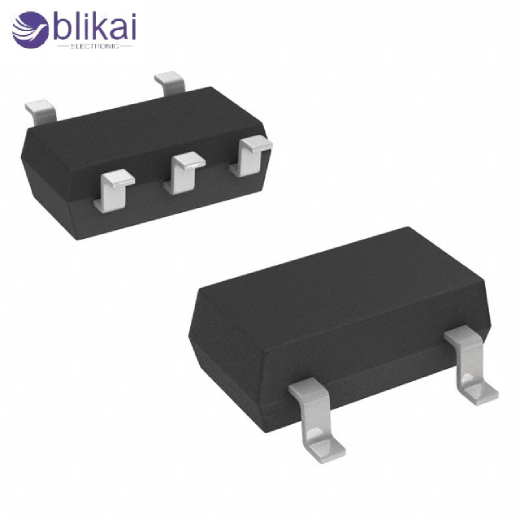
How a Voltage Supervisor IC Works
Voltage Detection Mechanism
An IC-based voltage supervisor continually compares the voltage present on the input supply against a pre-set threshold value, and whenever the voltage measured by the comparator is either below or above the threshold, the comparator identifies the anomaly and initiates the desired response, so that the system does not run in dangerous electrical operation.
Reset Signal Generation
In case of abnormal voltage condition, the IC will cause the generation of a reset signal that will normally be attached to the reset pin of a microcontroller or any other digital system, and this signal will cause the system to be brought to a known safe state until the voltage is stabilized to avoid erratic behaviour or incorrect processing in a volatile power environment.
Timing Delay and Hysteresis
Voltage supervisor ICs to prevent false triggering by noise or temporary changes in transient voltages include internal delay timers and hysteresis circuits, which require the voltage to stabilize before the release of the reset signal, enhancing system reliability and avoiding the rapid switching between reset and normal operation.
Key Features of Voltage Supervisor ICs
To make the voltage supervisor ICs useful and user-friendly, they are designed with a number of features that improve system security and usability such as very accurate voltage thresholds that enhance accurate monitoring, very low quiescent current to make them energy efficient in battery powered devices, manual reset inputs enhance usability and allow user to reset the system, watchdog timer to ensure software execution is monitored, and multi-channel voltage detection capability to support systems with multiple power rails, all of which contribute to making these ICs versatile and essential components in modern electronic design.
Types of Voltage Supervisor ICs
Simple Reset Supervisors
Simple reset supervisors are simple devices that watch one voltage rail and produce a reset signal when the voltage falls below a set point, and are therefore suitable in low-cost and low-technology projects.
Window Voltage Supervisors
The window voltage supervisors check the upper and lower voltage values and keep the supply voltage within a specified safe range, which is especially helpful in systems where overvoltage is as damaging as undervoltage.
Watchdog Timer Integrated Supervisors
These ICs are a combination of voltage monitoring and watchdog timer, which enable them to identify not only power supply problems but also software errors, fully monitoring the system.
Multi-Channel Voltage Supervisors
Multi-channel supervisors are able to monitor a number of voltage rails at once and can be used with complex systems like processors, FPGAs and multi-voltage embedded platforms.
Key Specifications and Parameters to Consider
Threshold Voltage Accuracy
The precision of the threshold voltage is what defines the accuracy with which the IC can detect voltage variations, and the narrower the tolerances, the better in systems that have stringent voltage demands.
Reset Timeout Period
The reset timing is the duration that the system will stay in the reset when the voltage returns to normal, making sure that all the components are initialized properly.
Supply Current
Applications that require low supply current are necessary in battery-powered and energy-efficient applications since it reduces power consumption.
Output Configuration
Open-drain or push-pull VSICs can be used; these options influence the interface of the reset signal with other components.
Operating Temperature Range
The operating temperature range defines the operating environments of the IC, which can be confidently used, and industrial-grade devices have broader ranges.
Voltage Supervisor IC vs Voltage Detector vs Reset IC
Whereas voltage supervisor IC, voltage detector and reset IC are often used interchangeably, there is a small difference in functionality and use, with a voltage detector being confined to voltage threshold detection only. A reset IC is confined to the provision of reset signals to digital systems. In contrast, a voltage supervisor IC is usually a more holistic solution as it combines detection, reset control, timing delay and often watchdog functionality in a single integrated chip, making it the most comprehensive option for system protection.
Common Applications of Voltage Supervisor ICs
Microcontroller and Embedded Systems
Voltage supervisor ICs allow microcontrollers to start properly and work reliably by avoiding execution when the voltage is unstable.
Power Supply Monitoring
They are common in AC-DC and DC-DC converters to check the stability of the output and to guard downstream circuits.
Automotive Electronics
They are used in automotive systems to offer vital protection of electronic control units (ECUs) and safety-related modules.
Industrial Automation Systems
They are used to ensure stability in the operations of industrial environments that experience power fluctuations.
Consumer Electronics
Smartphones, laptops, and wearables use voltage supervisors to ensure performance and guard internal components.
Typical Application Circuit of a Voltage Supervisor IC
The circuitry The most common use of a voltage supervisor IC is to connect the IC to the system power rail, and tie its reset output to the reset input of a microcontroller, and the IC constantly measures the supply voltage and, depending on conditions, activates or deactivates the reset signal and, to achieve reliable operation, appropriate design decisions like decoupling capacitors, PCB layout optimization, and selection of correct threshold values are important to reduce noise disturbances.
RT9818 Series Voltage Supervisor IC Comparison
Richtek Technology offers the RT9818 series, which is commonly used in low-power embedded applications and consumer electronics because of its precision, low current use and compact size and packages, and three of the most common are compared below.
|
Parameter |
|||
|
Threshold Voltage |
1.8V |
2.8V |
2.9V |
|
Reset Timeout |
Fixed delay |
Fixed delay |
Fixed delay |
|
Output Type |
Push-pull |
Push-pull |
Open-drain |
|
Supply Current |
Ultra-low |
Low |
Ultra-low |
|
Package |
SOT-23 |
SOT-23 |
SOT-23 |
|
Key Features |
Ideal for low-voltage MCU systems |
Optimized for 2.8V rails |
Flexible interface design |
Such a comparison shows how various threshold voltages and output configurations enable each model to be applied to particular tasks, enabling designers to choose the most suitable IC depending on the voltage requirements of the system and the interface requirements.
Design Tips for Using Voltage Supervisor ICs
In designing using voltage supervisor ICs, one must carefully select the threshold voltage to suit the operating needs of the system, properly layout PCB to reduce noise coupling, provide enough decoupling capacitors to stabilize the power supply, consider the reset delay to give all components enough time to start, and also consider the need to add additional features such as watchdog timers or manual reset inputs to the application.
Advantages and Disadvantages of Voltage Supervisor ICs
Voltage supervisor ICs offer many benefits, such as increased system reliability, voltage-based fault protection, simplified circuit design and small size, but also include drawbacks, such as fixed threshold values with some models, reduced flexibility when compared with programmable solutions and the need to introduce a small cost and board space.
Frequently Asked Questions (FAQ)
How do I choose the right voltage supervisor IC?
Threshold voltage, accuracy, reset delay, power consumption, and the type of output should be considered depending on the requirements of your system.
Can a voltage supervisor IC prevent system crashes?
Yes, it can prevent crashes by making sure that the system is only operated under stable voltage conditions.
Are voltage supervisors necessary in low-power devices?
Yes, particularly in low-voltage systems where a little variation will result in instability.
Conclusion
Voltage supervisor ICs are essential elements in the modern electronics, offering the necessary safeguarding of voltage instability, and secure functioning of a system in a broad spectrum of uses, and through the selection of the suitable device and its correct application in circuit design they can greatly improve system robustness, minimize failure rates, and satisfy the increasing demands of performance and reliability in the current electronic products.
Some images are sourced online. Please contact us for removal if any copyright concerns arise.





