


Power Management IC: Design, Functions & Applications Guides
 424
424What Is a Power Management IC?
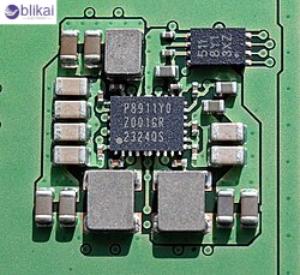
A power management IC (PMIC) is a very compact and highly integrated electronic part that provides power management, power regulation, and power distribution in electronic systems, and it is a key factor in recent electronics such as smartphones and laptops, and industrial automation and satellite communication systems, where many voltage rails, power sequencing, and power protection functions must be accommodated in small and power-efficient designs.
Key Functions of Power Management ICs
Voltage Regulation and Conversion
A primary power source is then regulated and converted into constant, regulated output voltages, appropriate to the sensitive electronic circuits, by one of the most basic functions of a power management IC: integrated linear regulators like low-dropout regulators (LDOs) in low-noise work and switching regulators like buck, boost, and buck-boost converters in high-efficiency power conversion, allowing devices to operate reliably even with changing input voltage conditions.
Power Sequencing and Control
ICs that manage power also offer intelligent power sequencing, such that various subsystems within a device can be turned on and off in the correct sequence, which is critical in more complex systems such as processors, FPGAs and communication modules, where incorrect sequencing may cause malfunction or irreversible damage.
Battery Management
Battery control functions are also included in PMICs used in battery-powered devices, including charge control, overcharge protection, discharge control and fuel gauging to ensure devices can maximize battery life, improve safety and offer consistency of performance at every charge cycle.
Thermal and Fault Protection
More recent PMICs have in-built high-end protection facilities, such as overcurrent protection (OCP), overvoltage protection (OVP), undervoltage lockout (UVLO) and thermal shutdown, to make sure that the IC and the system as a whole are secure in abnormal operating conditions, especially in high-power or mission-critical uses.
Types of Power Management ICs
Linear Regulators (LDOs)
Linear regulators are common where it is necessary to have a low noise, low-cost design, as they offer clean and stable output voltages with low ripple, but at lower efficiency than switching regulators in cases where there is a large difference between the input and output voltages.
Switching Regulators (DC-DC Converters)
Switching regulators are designed to be high-efficiency power converters, and are common in systems where power efficiency is a concern, including portable electronics and high-performance computing systems, where they can switch the voltage levels between high and low with a small amount of power dissipation by quickly switching power storage devices like inductors and capacitors.
Battery Management ICs
Battery management ICs are PMICs with specialisation in the monitoring and control of battery charging and discharging, battery safety and longevity in devices like smartphones, electric vehicles, and portable medical devices.
Power Sequencers and Supervisors
The ICs detect voltage rails and provide appropriate startup and shutdown sequences, avoiding system instability and allowing safe operation in complicated multi-rail systems.
Integrated PMIC Solutions
Extremely integrated PMICs have many functions on a single chip to save board space and the number of components and enhance efficiency and system design simplicity, making them popular in small devices such as wearables and IoT modules.
Internal Design and Architecture of PMICs
Core Components Inside a PMIC
A typical PMIC consists of a number of internal blocks such as voltage references, error amplifiers, switching transistors, control logic, and feedback networks, all of which contribute to stabilizing the output conditions with varying load and input conditions.
Analog vs Digital Control in PMICs
Classical PMICs use analog control loops as a control method, whereas recent designs are moving towards the use of digital control methods, which enable adaptive performance optimization, programmability, and better performance over a range of operating conditions.
Efficiency Optimization Techniques
To achieve maximum efficiency, PMICs employ pulse-width modulation (PWM) to operate stably under heavy loads and pulse-frequency modulation (PFM) to scale their output better at light loads, and dynamic voltage scaling to scale their output levels in response to real-time system requirements.
How Power Management ICs Work
A power management IC works by taking input power (either a battery or external power source) and converting it into needed voltage levels with integrated regulators, checking the output conditions with feedback circuits, and continually adjusting internal control signals to keep everything stable and yet prevent faults in the system so that the electronic devices will run reliably even in the presence of load changes, temperature changes and supply changes.
Key Specifications to Consider When Choosing a PMIC
Input Voltage Range
The range of the input voltage defines the compatibility of the PMIC with other sources of power and should be chosen carefully depending on the purpose of the application.
Output Voltage and Current Capability
Designers should make sure that PMIC is able to provide the necessary output voltage levels and current-carrying capacity to maintain all the loads connected to it.
Efficiency and Power Loss
Greater efficiency is necessary to minimize heat production and increase battery life in portable devices.
Thermal Performance
Reliability is affected by the thermal properties, which should be taken into account in high-power applications.
Package Type and Size
Small package designs are essential when space is a limiting factor, like in mobile and wearable gadgets.
RT5047AGSP vs RT5047BGSP Comparison
|
Attribute |
||
|
Device Type |
LNB Power Supply PMIC |
LNB Power Supply PMIC |
|
Input Voltage Range |
8V – 16V |
8V – 16V |
|
Output Voltage |
13.3V / 18.3V selectable |
13V / 18V (typical) |
|
Output Current Limit |
~550mA |
~500–550mA |
|
Topology |
Boost + LDO |
Boost + LDO |
|
DiSEqC Support |
Yes (22kHz tone) |
Yes |
|
Protection Features |
OCP, OTP, UVLO |
OCP, OTP, UVLO |
|
Package |
SOP-8 (EP) |
SOP-8 (EP) |
|
Application |
Satellite STB / LNB |
Satellite STB / LNB |
|
Revision / Series |
Original A version |
Updated B version |
Applications of Power Management ICs
Consumer Electronics
The power management ICs are widely used in consumer electronics, such as smartphones, tablets, laptops, and wearable devices, where their features include efficient battery consumption, reliability, and miniaturization.
Automotive Systems
PMICs in automotive electronics are applied in infotainment systems, advanced driver assistance systems (ADAS) and electric vehicle power systems, where reliability and efficiency are essential.
Industrial and IoT Devices
PMICs are used in IoT devices and industrial automation systems to deliver efficient power distribution, especially in remote or energy-constrained areas.
Telecommunications and Networking
PMICs are important in driving communication infrastructure, including routers, base stations and satellite equipment, where they are able to operate under the harsh conditions.
Advantages of Using Power Management ICs
A PMIC significantly reduces the number of discrete components required in the design, enhances the overall efficiency, adds more reliability to the system through in-built protection features and enables a compact and cost-effective solution and therefore is an essential part of an electronic design today.
Common Design Challenges and Solutions
Heat Dissipation Issues
One of the key issues in high-power applications is thermal management, and proper layout techniques and heat dissipation methods should be employed by designers to make sure the application will operate reliably.
EMI and Noise Reduction
When changing regulators, it may cause electromagnetic interference, which should be reduced by following best filtering and PCB design practices.
Power Efficiency Trade-offs
The issue of efficiency-cost-complexity often comes into play when designers choose and deploy PMIC solutions.
Power Management IC vs Discrete Power Solutions
PMICs are more integrated, less design-complex, and more reliable than discrete power solutions; but discrete designs can be more flexible in some specialty applications, and system needs dictate the selection.
Future Trends in Power Management IC Technology
The future of PMIC technology lies with growing energy efficiency, miniaturization, and smart power control. Emerging trends are the use of wide-bandgap semiconductors like GaN and SiC, integration of AI-based power optimization, and the creation of ultra-low-power solutions for future IoT devices.
Conclusion
The PMICs are invaluable in contemporary electronics, offering efficient, reliable and compact solutions to the control of electrical power in a broad spectrum of applications and with the ever-changing technology, PMICs are going to be even more important in facilitating even more advanced features and energy saving in electronic applications.
FAQs About Power Management ICs
What does a power management IC do?
A PMIC is a regulator, converter and distributor of power in an electronic system, which also offers protection and control capabilities.
Are PMICs used in all electronic devices?
A majority of the contemporary electronic devices involve some type of PMIC or an integrated power management solution.
What affects PMIC efficiency?
Topology, load conditions, switching frequency, and component quality influence efficiency.
Some images are sourced online. Please contact us for removal if any copyright concerns arise.





