


Special Purpose Regulator: Design, Types & Applications Guide
 223
223What Is a Special Purpose Regulator?
A special purpose regulator is a type of voltage regulation integrated circuit designed in a specific manner to fulfill the electrical, thermal and functional needs of a specific purpose where a standard linear regulator or a standard switching regulator is not suitable, and it is often the case that the special purpose regulator incorporates sophisticated control logic, protection, and power conversion methods to ensure steady, efficient and reliable operation under special conditions such as DDR memory power, notebook systems, LED driving or battery management, making these regulators indispensable in modern high-performance electronic designs.
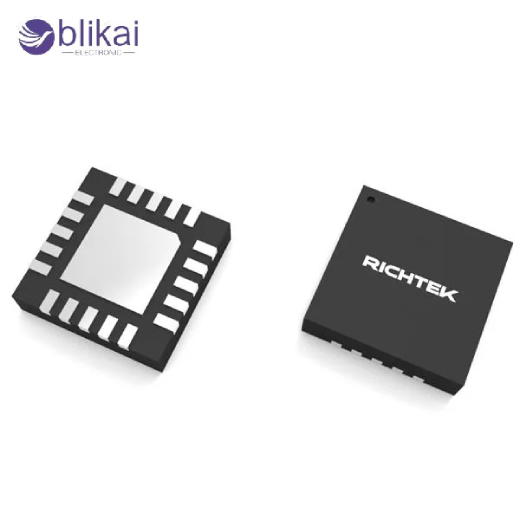
How a Special Purpose Regulator Works
A special purpose regulator operates by combining a feedback-controlled regulation loop with application-specific enhancements such as programmable switching frequency, adaptive voltage positioning, and integrated protection circuits, where the IC continuously monitors output voltage and load conditions to dynamically adjust duty cycle or pass element conduction, ensuring tight regulation, fast transient response, and high efficiency, particularly in demanding environments like DDR memory power rails or multi-output computing systems.
Types of Special Purpose Regulators
DDR memory power controllers, LED constant current drivers, battery chargers, multi-phase DC-DC controllers, and automotive-grade regulators are examples of special-purpose regulators, tailored to a particular purpose, like ensuring tight VTT and VDDQ rails in memory systems or providing synchronized multi-rail outputs in laptops and embedded computing platforms.
RT8231AGQW vs RT8231BGQW vs RT8243AZQW Comparison
In practice, the choice of special-purpose regulator can vary according to the output requirements, complexity of the system, and level of integration and three models typically compared are RT8231AGQW, RT8231BGQW and RT8243AZQW, which represent various ways of managing DDR and multi-rail power, with RT8231 series concentrating on a single-purpose regulator of dedicated DDR memory and RT8243AZQW expands functionality into multi-output notebook and embedded platforms.
Specification Comparison Table
|
Parameter |
|||
|
Application |
DDR memory power |
DDR memory power |
Notebook / multi-rail systems |
|
Output Channels |
Single |
Single |
Dual |
|
Input Voltage Range |
4.5V – 26V |
Similar to AGQW |
Wide input (system-level) |
|
Output Current |
Up to ~3A |
Comparable |
Higher multi-rail capability |
|
Switching Frequency |
300kHz – 1.2MHz |
Similar |
Adaptive / multi-rail optimized |
|
Efficiency |
Up to ~95% |
Similar |
High system-level efficiency |
|
Key Feature |
Low standby current, flexible config |
Optimized variant tuning |
Dual-output integration |
|
Package |
WQFN-20 (3x3mm) |
WQFN |
WQFN-20 |
|
Target Applications |
DDR, embedded boards |
DDR, embedded boards |
Laptops, industrial PCs |
Integrated Design Analysis
In real-world circuit design, the RT8231AGQW and RT8231BGQW are typically selected for DDR memory power applications where tight voltage tolerance, low ripple, and fast transient response are critical for maintaining signal integrity and system stability, while the RT8243AZQW is better suited for systems that require multiple regulated outputs such as notebook motherboards and embedded computing platforms, allowing engineers to reduce external components and simplify layout by consolidating power rails into a single controller, which is particularly beneficial in space-constrained designs.
Key Design Considerations
In selecting between these regulators, designers need to assess system needs of such factors as the number of output rails, current demand, efficiency target, thermal constraints and PCB layout complexity with care, as single-output regulators such as the RT8231 series offer simplicity and optimized performance on a single-rail application, and multi-output regulators such as the RT8243AZQW series offer higher integration and flexibility at the cost of increased design complexity and validation effort.
Common Applications of Special Purpose Regulators
Consumer Electronics
Specialized purpose regulators find extensive application in the consumer electronics sector in smartphones, tablets, laptops and wearable devices when high efficiency, low power consumption and stability are important and regulating DC-DC controllers like DDR power controllers and multi-output DC-DC ICs are used to stabilize the operation of processors, memory modules and display systems and to maximize battery life and reduce heat dissipation in smaller form factors.
Automotive Electronics
Special purpose regulators used in automotive systems are engineered to operate under harsh electrical conditions, such as load dump conditions, and a wide input voltage range, as well as extreme temperature variations, and are therefore needed in applications such as infotainment systems, advanced driver-assistance systems (ADAS), engine control units (ECUs), and in-vehicle networking modules, where reliability and safety are of primary concern.
Industrial Automation Systems
The stability of power delivery is crucial in industrial automation, and to maintain predictable performance under noisy electrical environments, large load changes, and continuous operation, programmable logic controllers (PLCs), motor drives, sensors, and robotics systems use special-purpose regulators, which are often designed with improved protection features to avoid system failures in mission-critical operations.
Communication and Networking Equipment
Special-purpose regulators are used in communication infrastructure, like routers, switches, base stations, and data centers, to offer accurate voltage regulation with minimal noise and rapid transient response to ensure signal integrity and high-speed data rate transmission, especially in RF circuits and high-performance processors, where even small changes in voltages can affect the overall system operation.
IoT and Embedded Systems
Internet of Things (IoT) devices and embedded systems often use special-purpose regulators, since ultra-low power consumption, high integration and compact size are paramount, allowing power management in smart sensors, edge computing devices, wearable technology and battery-powered modules to be efficiently managed with long service life and low maintenance.
Advantages of Special Purpose Regulators
Application-specific regulators such as the RT8231 and RT8243 series have a number of benefits, such as high integration, a minimized number of external components, efficiency, better protection features, and specific application performance, all of which have resulted in shorter development time and more reliable final products.
Disadvantages of Special Purpose Regulators
Although they have advantages, these regulators also bring about issues like reduced flexibility, increased reliance on particular IC suppliers and increased complexity in design in case of integrating multi-output solutions, and in this case close planning and extensive validation are necessary to ensure a successful implementation.
Special Purpose Regulator vs General Regulators
Special purpose regulators provide better performance in specific applications than general-purpose ones due to the customized control mechanisms and protection features, but also less versatile and potentially more expensive, which makes them best adapted to those systems where performance and efficiency are paramount.
How to Choose the Right Special Purpose Regulator
The process of choosing the right regulator includes defining system requirements, assessing electrical and thermal requirements, and considering protection features, as well as comparing the models of ICs available, which include the RT8231 and RT8243 series, so that the selected solution meets the performance requirements, cost, and complexity of the design.
Practical Design Tips and Best Practices
Designers are advised to optimize PCB layout, minimize switching loop size, use high-quality passive parts, provide effective thermal management and extensive testing under different load conditions to make sure that the system is stable and reliable in real world application.
Future Trends in Special Purpose Regulators
The trend of the special purpose regulators is to be more integrated, smarter, efficient and compact in the light of the growing need of high performance, energy efficient, and compact electronic systems among industries.
Conclusion
Special purpose regulators are vital in current electronics by offering custom power solutions to improve the efficiency, reliability and performance of systems, and the RT8231AGQW vs RT8231BGQW vs RT8243AZQW comparison underscores how various regulator designs are optimized to specific applications with RT8231 series designs better suited to DDR power design and RT8243AZQW providing superior integration for multi-rail systems, ultimately emphasizing the importance of selecting the right regulator based on application needs and system complexity.
FAQs
What is a special purpose regulator used for?
It is used for application-specific power regulation, such as DDR memory, LED drivers, and power management systems.
When should I use a multi-output regulator like RT8243AZQW?
When multiple voltage rails are needed in compact systems like notebooks.
Do they improve reliability?
Yes, built-in protection features increase system safety and reliability.
Some images are sourced online. Please contact us for removal if any copyright concerns arise.





