


What Is a Linear Voltage Regulator? Complete Guide
 188
188What Is a Linear Voltage Regulator?
A linear voltage regulator is an integrated circuit of power management that is intended to keep a constant output voltage independent of changes in the input voltage or load current by dissipating excess energy as heat by using a controlled transistor in its linear operation. The regulator actively measures the voltage at the output and changes the internal resistance in a dynamic manner to maintain the voltage at the load constant, maintaining a stable operation of electronic components with strongly controlled power rails.
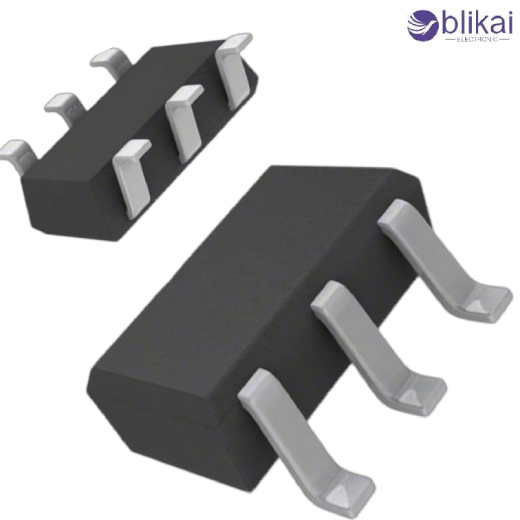
How Does a Linear Voltage Regulator Work?
A linear regulator operates via a closed feedback control loop that compares a fraction of the output voltage to a known internal reference voltage and increases or decreases a pass transistor to achieve the desired and actual levels of the output.
Core Operating Principle
There is an error amplifier inside the regulator that compares changes between the reference voltage and the feedback signal and causes the pass transistor to conduct more when the output voltage is lower and less conduct when the voltage is higher, so that the conditions of the output remain constant.
Key Internal Components
Internal blocks are typically a bandgap reference to give a constant voltage regardless of temperature, an error amplifier to make a comparison and control, a pass element to provide a variable resistor, and protection circuits to eliminate excessive current or overheating in non-standard operating conditions.
Regulation Process Step-by-Step
The regulation process begins when input voltage is applied, followed by internal reference stabilization, continuous feedback comparison, and dynamic transistor adjustment that compensates instantly for load or supply changes, resulting in smooth and stable voltage delivery.
Types of Linear Voltage Regulators
Linear voltage regulators exist in multiple architectures optimized for different electrical requirements and application environments.
Standard Linear Regulators
Traditional series regulators, such as the typical 78xx family, provide fixed output voltages and robust operation but generally require higher voltage headroom and are less efficient compared with modern designs.
Low Dropout Regulators (LDOs)
Low Dropout Regulators, or LDOs, are the latest technology of linear regulators that can be used to provide regulation even with an input voltage that is a little higher than the output voltage, and so they are used in battery-powered and low-voltage digital circuits.
Adjustable Linear Regulators
Controllable regulators enable designers to program output voltage with external networks of resistors, which can be tuned to provide flexibility in power rails in embedded systems.
Positive vs Negative Voltage Regulators
Positive regulators bring voltages above ground, whereas negative regulators bring negative rails needed by an operating amplifier and by some analog signal processing circuits.
Key Specifications of Linear Voltage Regulators
The specifications of data sheets are important to decide the appropriate regulator to employ in a specific scenario.
Input Voltage Range
The input voltage range is used to set permissible operating limits so that the regulator operates properly, without violating internal component ratings or compromising regulation ability.
Output Voltage Accuracy
Output accuracy indicates how closely the regulator maintains the nominal voltage and is particularly important in precision analog and communication systems.
Dropout Voltage
The difference between input and output voltage necessary to be properly regulated is called dropout voltage, and a smaller dropout value is beneficial in efficiency and battery usage.
Load and Line Regulation
Load regulation controls the stability of the output with varying current demand, whereas line regulation checks the stability with input voltage variation, both of which indicate the overall performance of the control loop.
Power Dissipation and Thermal Limits
Since the unused power is lost to heat in linear regulators, thermal performance has a direct impact on reliability and is commonly the determining factor between heat sinks and copper planes.
Quiescent Current
Quiescent current represents internal operating consumption and is critical for low-power and standby applications where battery life is a major concern.
Linear vs Switching Voltage Regulators
The selection of linear and switching regulators is a matter of priorities of the application and not a superior technology universally.
Efficiency Comparison
Switching regulators have better efficiency since inductive switching is used to transfer energy, but linear regulators are less efficient to simplify and avoid noise.
Noise Performance
Linear regulators produce virtually no output ripple and electromagnetic interference and are desirable in RF, audio, and precision measurement circuits.
Complexity and Cost
Linear regulators are simpler to layout, with fewer external components and less risky to develop.
Typical Application Differences
High-power applications are dominated by switching regulators, and post-regulators are commonly linear regulators to smooth the output of switching converters.
Advantages of Linear Voltage Regulator
They have ultra-low noise production, quick transient reaction, limited external components, and superb stability, making them easy to design circuits and enhancing reliability.
Disadvantages of Linear Voltage Regulator
Their greatest drawback is that they are not as efficient with input voltage much higher than output voltage, and generate heat, which constrains the amount of output current that can be used.
Common Applications of Linear Voltage Regulators
Linear regulators appear across nearly every category of electronic product.
Analog and RF Circuits
Linear regulators are preferable to RF transceivers, ADCs and precision analog front-ends because of their low-noise properties.
Microcontrollers and Embedded Systems
Constant power rails provide stability in clock operation and precision in digital logic operation.
Audio Equipment
Clean power reduces hum and distortion in audio amplifiers and signal processors.
Portable Electronics
Devices that are powered by batteries use LDO regulators to ensure that the device operates as long as possible without the voltage dropping.
Typical Linear Voltage Regulator Circuit Design
Linear regulator is an easy-to-design regulator, but needs to be designed with consideration to stability and thermal factors.
Basic Circuit Diagram Explanation
A standard design has an input capacitor to filter the supply, the regulator IC itself and an output capacitor to provide loop stability and transient response.
Capacitor Selection Guidelines
New CMOS LDOs typically use low-ESR ceramic capacitors, which are more stable and do not require much board space.
Thermal Design Considerations
To maintain the safe operating conditions of the junction, engineers should compute the power dissipation through the product of voltage drop and load current.
RT9193-28GB vs RT9013-28GB: LDO Regulator Comparison
Both the RT9193-28GB and RT9013-28GB are CMOS low-dropout linear regulators of Richtek that are aimed at both portable and RF use, but with different performance priorities.
RT9193-28GB Overview
The RT9193-28GB is a 300 mA ultra-low-noise LDO designed to be used in battery-powered wireless applications, with rapid transient response, very low shutdown current and a noise bypass pin that can be complemented with a noise bypass capacitor to further reduce output noise in sensitive RF circuits.
RT9013-28GB Overview
The RT9013-28GB offers improved output performance and reduced design due to the absence of a noise bypass capacitor without compromising PSRR or low dropout performance, and is designed to be used in small portable electronics and handheld systems.
Specification Comparison Table
|
Parameter |
||
|
Regulator Type |
Ultra‑low noise CMOS LDO |
Low noise CMOS LDO |
|
Max Output Current |
300 mA |
120 mA (variant) / higher family versions available |
|
Input Voltage Range |
2.5 V – 5.5 V |
2.2 V – 5.5 V |
|
Dropout Voltage |
~220 mV @ 300 mA |
~60 mV @ 120 mA |
|
Noise Optimization |
Noise bypass pin |
No bypass capacitor required |
|
Quiescent Current |
Very low standby current |
~25 µA typical |
|
Shutdown Current |
<0.01 µA |
~0.7 µA typical |
|
Typical Applications |
RF, wireless modules |
Portable electronics, embedded systems |
|
Package Options |
SOT‑23‑5, WDFN, MSOP |
SOT‑23‑5, SC‑70, WDFN |
Design Selection Guidance
The RT9193-28GB is usually chosen when RT9013-28GB is generally used when more emphasis is on simple digital rails, fast startup, and minimal external components, whereas RT9193-28GB is frequently used when ultra-low noise and RF performance are desired, such as to power PLLs or wireless receivers.
How to Choose the Right Linear Voltage Regulator
When choosing a regulator, one needs to make a trade-off between electrical, thermal, and system-level factors and not just look at one parameter.
Define Input and Output Requirements
First, engineers need to establish the voltage levels, the current of the load, and the anticipated operating conditions in order to provide sufficient headroom and regulation margin.
Evaluate Thermal Performance
The analysis of power dissipation aids in avoiding overheating and provides long-term reliability, particularly in small devices without air flow.
Consider Noise and PSRR
High PSRR and low noise are essential when powering analog sensors or RF circuitry, where supply ripple directly impacts performance.
Package and PCB Constraints
Small packages minimize space but can limit thermal dissipation, necessitating caution in PCB copper design.
Linear Regulator Design Tips and Best Practices
Proper implementation techniques significantly improve regulator stability and performance.
Proper Grounding Techniques
Short return paths and solid ground planes reduce noise coupling and improve regulation accuracy.
Stability and Compensation
The stability of the loops and the absence of oscillations are guaranteed by the use of recommended capacitor values and their location.
Protection Features
Current limiting and thermal shutdown mechanisms should always be considered during system fault analysis.
FAQ
Is a linear regulator better than a switching regulator?
Both are not always better; the linear regulators are good in low noises whereas the switching regulators are good in high power levels.
When should I use an LDO regulator?
LDOs are best when the input voltage is near the output voltage or when low noise is desired.
Can a linear regulator increase voltage?
No, linear regulators can only step down voltage.
How efficient is a linear voltage regulator?
Efficiency is approximately the ratio of output voltage to input voltage, so efficiency is low when the difference in voltage is large.
Conclusion
Linear voltage regulators are still essential elements of modern electronics because of their simplicity, reliability and remarkably clean output characteristics. Although switching converters are used in high-efficiency power conversion, linear regulators remain a key component in analog, RF, and precision digital systems where noise factors are more important than issues of efficiency. The RT9193-28GB and RT9013-28GB illustrate the ability of the CMOS LDO technology of today to balance low dropout, fast transient response and ultra-low noise with the changing needs of portable and communication electronics, to provide stable and reliable power delivery on the myriad of applications.
Some images are sourced online. Please contact us for removal if any copyright concerns arise.





