


Front Load Driver IC: Working, Specs & Applications Guide
 147
147What Is a Front-Load Driver IC?
A front-load driver IC is a special-purpose electronic component that drives electrical load at the front-end of a system, typically between lower-power control logic circuits and higher-power output devices such as motors, relays, solenoids or lighting elements and guarantees system stability, efficiency and survivability to electrical faults.
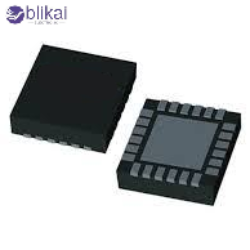
How a Front-Load Driver IC Works
Basic Operating Principle
A front-load driver IC is a type of controller-controlled driver IC in which a low-power input signal is received and used internally to switch the flow of current through a source of power to a load to achieve a desired operation by using internal switchable elements like MOSFETs or BJTs.
Signal Amplification and Switching Mechanism
The IC boosts weak control signals to higher-current outputs with transistor-based switching stages, commonly with high-speed switching methods to reduce power loss and make the system efficient, and in most designs, pulse-width modulation is used to carefully adjust the power output to the load, such as speed control in motors or brightness control in LEDs.
Control Logic and Feedback Systems
Advanced front-load driver ICs include embedded control logic and feedback mechanisms that monitor output conditions such as current, voltage, and temperature, allowing the IC to dynamically adjust its operation or shut down in case of abnormal conditions, thereby protecting both the driver and the connected load from damage.
Internal Architecture of a Front-Load Driver IC
Input Stage and Signal Conditioning
The input stage can usually comprise buffers, level shifters and filters that condition the incoming signals to be processable and to achieve compatibility with other logic levels and to minimize noise interference, which is essential to assure reliable operation in electrically noisy environments.
Driver Stage and Power Transistors
The driver stage of the IC is the central component, comprising power transistors with enough current-carrying capacity to switch high current loads, and is needed to switch quickly and efficiently, with minimal conduction and switching loss, and is commonly optimised to be in a low-side or high-side switch configuration based on the application needs.
Protection Circuits (Thermal, Overcurrent, Short Circuit)
The front load driver ICs also add protection mechanisms (such as thermal shutdown, overcurrent and short circuit) to ensure safe operation and constantly check the operating conditions and act when the thresholds are surpassed, improving the stability of the system and its durability.
Key Specifications of Front-Load Driver ICs
Input Voltage Range
The input voltage range is a specification of the maximum signal levels that can be safely driven into the IC and must be compatible with common logic levels (3.3V or 5V) to integrate with microcontrollers and digital systems.
Output Current Capability
The maximum output current is one of the most important specifications that defines the kinds of loads that the IC can drive, including small signal loads and high-power devices, and must be carefully selected to suit application needs.
Switching Speed and Efficiency
The speed of switching is significant in the response time with which the IC can respond to changes in its inputs, which directly affects performance in high-frequency applications, but the lost energy as heat in operation is called efficiency, which is important in thermal design.
Power Dissipation and Thermal Performance
Power dissipation ratings indicate the amount of heat that the IC can safely dissipate, and the thermal management, including heat sinks or PCB design techniques, is needed to maintain safe operating temperatures.
Types of Front-Load Driver ICs
Low-Side vs High-Side Drivers
Low-side drivers regulate the relationship between the load and the ground, and high-side drivers regulate the relationship between the load and the power supply, with each providing various benefits in safety, efficiency and circuit complexity.
Integrated vs Discrete Driver ICs
Integrated driver ICs have many functions in one package, which simplifies design and size, whereas discrete solutions provide more flexibility, but need more components and design effort.
Smart Drivers with Diagnostic Features
Smart driver ICs are designed with sophisticated diagnostic features of fault detection, load monitoring, and communication interfaces, which allow predictive maintenance and better control of the system.
Front-Load Driver IC vs Traditional Driver Circuits
Performance Comparison
Front-load driver ICs are superior to traditional discrete driver circuits, having better internal design, faster switching speed, and built-in control capabilities, which make them more responsive and efficient.
Efficiency and Power Loss Differences
The use of integrated driver ICs is usually more efficient because it will have fewer parasitic losses and will run the transistors most efficiently, which means that less heat is generated and a better use of energy.
Integration and Design Complexity
The front-load driver ICs have the advantage of simplifying the circuit design since most of the functions have been integrated into a single chip, less PCB space is needed, and development time is also minimized.
RT8979WSC vs RT9746WSC Specification Comparison
Key Parameter Differences
As the comparison of RT8979WSC and RT9746WSC shows, the various driver ICs are optimized to work with particular load control applications, and current capability, protection features, and level of integration vary, which directly impact their utility in real-world designs.
|
Parameter |
||
|
Type |
Smart Load Switch / Driver |
High-Current Load Driver |
|
Input Voltage Range |
Wide (Typical 2.7V–5.5V) |
Wide (Typical 2.7V–5.5V) |
|
Output Current |
Moderate (optimized for portable devices) |
Higher current capability |
|
Rds(on) |
Lower for efficiency |
Slightly higher but robust |
|
Protection Features |
OCP, OTP, UVLO |
OCP, OTP, Short Circuit Protection |
|
Control Interface |
Logic-controlled enable |
Logic + advanced control |
|
Application Focus |
Mobile / portable electronics |
Industrial / high-load systems |
|
Package |
Compact WLCSP |
WLCSP / DFN |
Application-Oriented Comparison
The RT8979WSC is typically designed to suit low power consumption and size constraints in portable and battery-powered devices; thus, it is suitable in smartphones, wearable devices, and USB-driven systems, but the RT9746WSC is more robust and capable of higher load driving.
Common Applications of Front-Load Driver ICs
Industrial Automation Systems
Industrial or front-load driver ICs are used in industrial applications to drive actuators, valves and motors, and provide accurate, reliable performance in automated processes.
Automotive Electronics (Relays, Actuators, Motors)
Another significant application of driver ICs lies in the automotive industry, in controlling relays, fuel injectors and electric motors, where robustness and fault tolerance are vital.
Consumer Electronics and Appliances
Consumer products can utilize these ICs to effectively regulate the operation of gadgets such as washing machines, air conditioning and lighting systems to conserve energy and offer a better user experience.
Power Management and Load Control
Front-load driver ICs are widely used in power distribution systems to manage and control electrical loads, ensuring stable and efficient operation across various applications.
Advantages of Using Front-Load Driver ICs
Improved Efficiency and Reliability
A combination of optimized switching elements and protection functions leads to greater efficiency and reliability than traditional solutions.
Compact Design and Integration
These ICs can also be used to generate smaller and more compact designs by decreasing the number of external components needed; this is especially useful in space-constrained applications.
Enhanced Protection and Safety
In-built safeguards ensure the safety of the IC and the load it is connected with, minimizing the chances of failure and increasing the lifetime of the system.
Typical Circuit Diagram and Design Example
Basic Front-Load Driver Circuit
The circuit of a typical front load driver consists of a microcontroller control input, driver IC, a power supply and the load, with other components like resistors, capacitors and protection diodes added to increase stability and reliability.
Component Selection Guide
In selecting the appropriate components, it is important to consider the parameters like current rating, voltage tolerance and thermal properties, whereby all the elements should be compatible with each other in the system.
Practical Design Tips
The designers are to keep in mind switching rate, load properties and environmental factors to maximize the performance and prevent pitfalls.
Troubleshooting Front-Load Driver IC Issues
Common Failure Modes
The most common problems are overheating, overcurrent, and component degradation that may result in either decreased performance or failure unless acted upon.
Overheating and Power Loss Issues
Overheating may be caused by inefficient design or selection of the parts, and resolution of these problems can be done through a thorough analysis and optimization of the circuit.
Signal Integrity Problems
Signal integrity may lead to erratic behavior, and remedies may involve enhancement of PCB layout, shielding and filtering methods.
Front Load Driver IC Selection Guide
Key Parameters to Compare
In choosing a driver IC, designers must evaluate specifications of voltage range, current carrying capability, switching speed and protection features to determine the most appropriate driver IC to use in their application.
Application-Based Selection Tips
The applications have different requirements, and it is important to comprehend these requirements to select the most appropriate driver IC.
FAQ
Can a front-load driver IC control high-power devices?
Yes, as long as the current and voltage ratings of the IC are suitable for the load, and in high-power systems, external components can be employed to allow higher currents and voltages.
What causes driver IC failure?
Overheating, electrical overstress, bad design practice, or environmental considerations may cause failures, and good design and selection of components are important.
Conclusion
Front load driver ICs are essential components in modern electronic systems, providing efficient, reliable, and compact solutions for controlling a wide range of electrical loads, and with advancements in integration, protection, and smart features, these ICs continue to evolve to meet the growing demands of industries such as automotive, industrial automation, and consumer electronics, making them a key enabler of next-generation electronic design.
Some images are sourced online. Please contact us for removal if any copyright concerns arise.





