


What Is LDO Power Supply? LDO Regulator IC Guide
 5
5What Is an LDO Regulator?
A low dropout (LDO) regulator is a type of linear voltage regulator integrated circuit (IC) that can provide a stable output voltage regardless of the input voltage and output current, provided the input voltage is sufficient to maintain the output voltage (this minimum voltage is called the dropout voltage), and unlike other linear regulators that require a larger difference between input and output voltage to maintain regulation, LDO regulators have been designed to operate with a smaller voltage margin, typically a few hundred millivolts, which makes it very efficient in low-power electronic applications where power consumption is important, and internally, the LDO circuit usually consists of a pass transistor, error amplifier, reference voltage and a feedback path that continuously monitors the output voltage and adjusts it to maintain stability and accuracy across changing operating conditions.
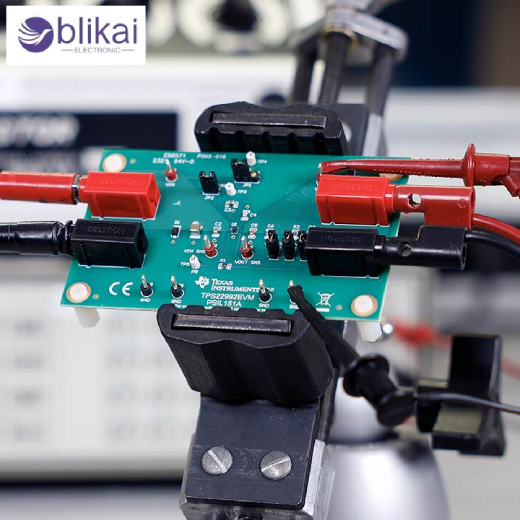
How Does an LDO Power Supply Work?
LDO power supply is based on the feedback regulation concept, where the output voltage is compared with the reference voltage. This error is used to adjust the resistance of a series pass device (typically a PMOS or PNP transistor) that can act as a variable resistor to control the current from the input to the output. The error amplifier is a critical part that amplifies the error signal (feedback voltage minus reference voltage) and controls the pass transistor accordingly to make the output voltage stable in spite of the changing load. The most significant feature of an LDO is that it can operate with a small voltage difference between the input and the output (called dropout voltage), which is determined by the pass device, and has a great impact on efficiency and heat generation.
Key Features of LDO Regulator ICs
LDO regulator ICs are popular because of the combination of characteristics that make it ideal for stable and accurate power supply, including low dropout voltage, allowing it to operate with low headroom, low output noise, important for analog and RF signals, fast response to load variations, to maintain output voltage during transient events, high power supply rejection ratio (PSRR), to reject variations in the input voltage, and integrated safety features such as overcurrent protection, thermal shutdown and short-circuit protection to enhance safety and reliability, and all these features mean LDOs can supply stable and clean power in many applications where switching noise or other instabilities in the power supply can affect system performance or cause errors.
Types of LDO Regulators
Positive vs Negative LDO Regulators
Positive LDO regulators output voltages referenced to ground, while negative LDO regulators output voltages below ground, and these are used according to the needs of the circuit.
Fixed Output vs Adjustable LDOs
LDOs are either fixed output (with a fixed output voltage) or adjustable (allowing the user to set the output voltage by using external resistors) to suit various applications.
Ultra-Low Noise LDOs
Ultra-low noise LDOs are used for applications where very low levels of noise are required, including radio frequency (RF) circuits, audio amplifiers and measurement devices.
High Current LDO Regulators
High current LDOs can deliver high current and are suitable for powering microprocessors, FPGAs and other high-current devices.
LDO vs DC-DC Converter: Key Differences
The main difference between an LDO regulator and a DC-DC converter is the operating modes and trade-offs, as LDOs are linear regulators that are low noise, simple and fast at the expense of efficiency when there is a large voltage difference between input and output due to the heating effect of the power loss. By contrast, DC-DC converters are switching regulators that are efficient as they switch energy storage elements (inductors and capacitors) at high frequency. However, they are noisier and more complex. DC-DC converters are well suited for efficient power conversion where the input and output voltages are significantly different but LDOs are suitable where noise, cost and simplicity of design are more critical than efficiency.
Advantages of LDO Power Supplies
Advantages of LDO power supplies include their low noise, simplicity, speed and ease of integration into small systems.
Disadvantages of LDO Power Supplies
The drawbacks of LDO power supply are low efficiency and high power dissipation, which could lead to thermal problems, especially at high currents.
Common Applications of LDO Power Supply
Consumer Electronics (Smartphones, Tablets)
LDO regulators play a vital role in consumer electronics for powering processors, sensors and communication modems.
IoT Devices and Wearables
LDOs in IoT and wearables conserve battery power and regulate power for low-power devices.
RF and Communication Systems
LDOs are important in RF applications requiring low-noise power supplies.
Automotive and Industrial Electronics
LDOs provide stable voltage supply in automotive and industrial applications across various conditions and load variations.
How to Choose the Right LDO Regulator
When selecting an LDO regulator, designers need to consider input voltage range to ensure it matches the power source, output voltage and current to ensure the load is supplied, dropout voltage to assess efficiency at low headroom, PSRR to determine noise rejection capability, quiescent current for low-power applications seeking energy efficiency, and package and thermal characteristics to ensure heat dissipation and physical dimensions, by keeping these factors in mind, designers can choose an LDO that delivers the best performance, efficiency and reliability for the intended application.
Popular LDO Regulator IC Examples
LDO regulator selection often depends on performance requirements and application type, and Richtek’s RT series is widely used across industrial and consumer electronics due to its balance of efficiency, noise performance, and cost-effectiveness.
RT9013 vs RT9193 vs RT9163 LDO Comparison Table
|
Parameter |
|||
|
Architecture |
CMOS LDO |
Ultra-low noise CMOS LDO |
Bipolar / traditional LDO |
|
Input Voltage Range |
2.5V – 6V |
2.5V – 5.5V |
5V – 15V |
|
Output Current (Max) |
300mA |
300mA |
500mA |
|
Dropout Voltage |
~250–300mV |
~220–300mV |
~1.3–1.4V |
|
Quiescent Current |
Low (µA level) |
~130µA |
~4.5mA |
|
Noise Performance |
Low noise |
Ultra-low noise (RF optimized) |
Moderate |
|
PSRR |
High |
Very high |
Lower |
|
Package Type |
SOT-23-5 |
SOT-23-5 / WDFN |
SOT-223 / TO-252 / TO-92 |
|
Efficiency |
High |
Very high |
Low |
|
Best Use Case |
Portable electronics |
RF / IoT / precision circuits |
Industrial / legacy systems |
Key Interpretation of RT Series Differences
RT9013 represents a balanced modern CMOS LDO suitable for general-purpose portable electronics, RT9193 is optimized for ultra-low noise and high PSRR applications such as RF and communication systems, while RT9163 is a more traditional high-voltage LDO suitable for industrial and legacy power systems where simplicity and higher input tolerance are more important than efficiency or noise performance.
LDO Power Supply Design Tips
When designing an LDO power supply, there are several practical considerations, such as selecting appropriate input and output capacitors for stability and noise filtering, good PCB design practices (short traces and good grounding) to reduce interference, and thermal management such as heat sinks or copper planes to dissipate heat, and also, designers should consider load transient response, start-up times and protection features to ensure safe operation over the entire operating range as these design considerations affect the efficiency and reliability of the power supply.
FAQ
When should you use an LDO regulator?
LDOs should be used in low noise and simple applications.
What is the dropout voltage in LDO?
Dropout voltage is the minimum input-output voltage difference required for proper regulation.
Are LDO regulators efficient?
LDO regulators are efficient in low voltage difference applications but less so in high voltage difference applications.
Conclusion
In conclusion, LDO regulators are a vital part of electronic systems, providing efficient, low-noise power conversion in a simple and compact form, making them suitable for a wide range of applications including consumer electronics, telecommunications and industrial systems and although they may not be as efficient as switching regulators in some cases, the advantages of low noise, simplicity and reliability mean that LDOs will continue to be used in electronic system design and as technology advances, further improvements to LDO design and materials will only lead to more efficient, thermally stable and better integrated LDOs, securing their place as a staple in power supply design.
Some images are sourced online. Please contact us for removal if any copyright concerns arise.





