


What Is a Low Dropout Regulator? Complete LDO Guide
 96
96What Is a Low Dropout Regulator (LDO)?
A low dropout regulator is a linear voltage regulator capable of operating with a very small difference between input voltage and output voltage, known as the dropout voltage. Traditional linear regulators require several volts of headroom to function correctly, but LDOs can regulate voltage with differences as small as a few hundred millivolts. This capability allows circuits powered by batteries or low-voltage rails to maintain stable outputs even as supply voltage decreases during discharge. The main objective of an LDO is to transform a larger DC voltage into an accurate, smaller voltage with the least amount of electrical noise and output ripple, which is particularly vital in analog and RF circuitry. Because LDOs operate without high-frequency switching, they provide clean power outputs that simplify circuit design and reduce electromagnetic interference.
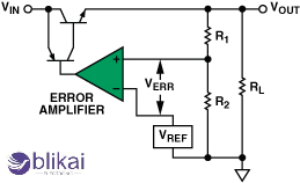
How a Low Dropout Regulator Works
An LDO regulator has a closed-loop feedback system, which does a constant check of the output voltage, adjusting the internal resistance to keep things in check. The device has an error amplifier, within the device, that compares a portion of the output voltage to a specific internal reference voltage and a pass transistor that regulates current flow between the input and the output. As the load varies or the input voltage varies, the feedback loop responds immediately by varying the conduction level of the pass element to maintain the stability of the output. Regulation continues as long as the input voltage remains above the dropout threshold; once the input falls below this level, the regulator enters dropout mode, and the output begins to track the input voltage minus internal losses. It is an easy but specific control mechanism that allows LDOs to develop a rapid transient response and low output noise relative to switching regulators.
Key Specifications of LDO Voltage Regulators
An LDO regulator has a number of electrical parameters that characterize its performance and its ability to fit in a particular application. Dropout voltage represents the minimum voltage difference required between the input and output for proper regulation and is one of the most critical specifications in battery-powered systems. The accuracy of the output voltage shows how well the regulator can hold its rated voltage under different conditions, and the quiescent current is the operating current within the regulator, which directly affects the life of the standby battery. PSRR is a ratio used to determine the ability of the regulator to reject noise on the input voltage, and is essential to audio, RF and precision analog systems. Other specifications such as maximum output current, load regulation, line regulation and thermal resistance are also useful in determining efficiency, stability, heat dissipation and the heat transfer during operation.
LDO vs Switching Regulator: Key Differences
The principal distinction between an LDO and a switching regulator is the method of converting voltage, and energy is lost. LDO regulators are linear, with excess voltage being dropped as heat, and thus are simply designed with minimal output noise but with low efficiency in cases where the input voltage is very large compared to the output. High-frequency switching and inductive energy storage are applied in switching regulators, together with high-frequency switching, to provide much higher efficiency, particularly in high-current applications. Switching regulators, however, produce electrical noise and need more filtering components, and add to the complexity of the circuit. LDOs are typically chosen for noise-sensitive or low-power applications, while switching regulators are preferred when efficiency and thermal performance are the primary concerns.
Advantages of Low Dropout Regulators
Low dropout regulators have a number of benefits that make them popular in most electronic applications, especially where priority has been put on simplicity and signal integrity. Their low noise output allows sensitive analog circuits and RF modules to operate without interference, and their minimal external component requirements simplify PCB layout and reduce overall system cost. LDOs also provide fast transient response, meaning they can quickly adapt to sudden load changes without large voltage fluctuations. Because they do not rely on switching elements or inductors, LDO circuits occupy less board space and produce minimal electromagnetic emissions, making them ideal for compact consumer electronics and precision measurement devices.
Disadvantages of LDOs
The LDO regulators, despite their advantageous nature, have inherent weaknesses because of the linear manner in which they operate. The greatest disadvantage is a decline in efficiency in case of a substantial disparity in the field of input and output voltage, in that the additional energy is converted into heat. This heat production may necessitate thermal management (e.g., heat sinks or more copper on the PCB). LDOs typically also have low output current relative to switching regulators, and are not always suitable in high-power systems. Also, battery-operated equipment that requires maximum efficiency can use a switching regulator to convert primary power, and only use LDOs to drive final noise-sensitive stages.
Common Types of LDO Regulators
LDOs can be found in various variants that suit various circuit requirements. Positive LDO regulators provide regulated positive output voltages, while negative LDOs generate regulated negative rails used in analog signal processing. Adjustable LDO regulators allow designers to set custom output voltages using external resistors, increasing flexibility across applications. LDOs with ultralow noise are designed to support RF, audio and sensor applications that need very clean power, whereas high-current LDO regulators are used to support applications like processors and communication modules that have large current requirements. The current semiconductor technologies have been further enhanced to lower dropout voltage, quiescent current and package size.
Typical Applications of Low Dropout Regulators
LDOs are very common in modern electronics due to their stability and simplicity. In microcontroller systems, LDOs provide clean supply rails that ensure accurate digital logic operation and analog-to-digital conversion. RF communication circuits rely on LDO regulators to suppress switching noise that could degrade signal quality. Sensors and measurement equipment benefit from low-noise power sources that improve accuracy and repeatability. Battery-powered devices such as smartphones, wearables, and IoT nodes frequently use LDOs to maintain a stable voltage as battery levels decline. Automotive electronics also employ LDO regulators to power control modules and sensors requiring reliable operation under fluctuating supply conditions.
How to Choose the Right LDO Regulator
Selecting an appropriate LDO regulator involves evaluating several design parameters to ensure reliable performance. Designers must confirm that the input voltage range always exceeds the output voltage plus dropout margin under worst-case conditions. Output current capability should exceed maximum load demand while maintaining acceptable thermal limits. Noise performance and PSRR ratings must match application sensitivity, particularly in RF or analog designs. Thermal considerations play a major role, as power dissipation depends on voltage drop and load current, requiring careful PCB layout for heat spreading. Package type, protection features, and capacitor stability requirements also influence device selection and long-term reliability.
FAQ
What does “low dropout” mean in an LDO regulator?
Low dropout is the value of the difference between the maximum input and output voltage needed to be regulated by the circuit, at which the supply voltage is similar to the output.
Why are LDO regulators used instead of switching regulators?
LDO regulators offer low noise, easy design and low EMI, which makes it ideal in analog, RF, audio, sensor and precision electronics.
Can an LDO regulator step up the voltage?
No, an LDO only reduces voltage. Output voltage must always remain lower than input voltage by at least the dropout margin.
Conclusion
Low dropout regulators are also a core element of current power control since they are simple, low-noise, and consistent in controlling voltage in small form factors. Although they are less efficient than switching regulators in high-power applications, LDOs excel wherever clean and stable power is required, especially in analog, RF, and battery-operated electronics. Knowledge of the mechanism of LDO regulators, their requirements, benefits and drawbacks enables the engineers and hobbyists to choose the appropriate device to achieve the best performance in the system. The future LDO designs will be even more efficient, noisier, and have better integration as semiconductor technology evolves and makes sure that their future relevance to the next-generation electronic systems.
Some images are sourced online. Please contact us for removal if any copyright concerns arise.





