


Electrical Butt Connectors: Wire Crimp Types & Specs
 659
659What Is an Electrical Butt Connector?
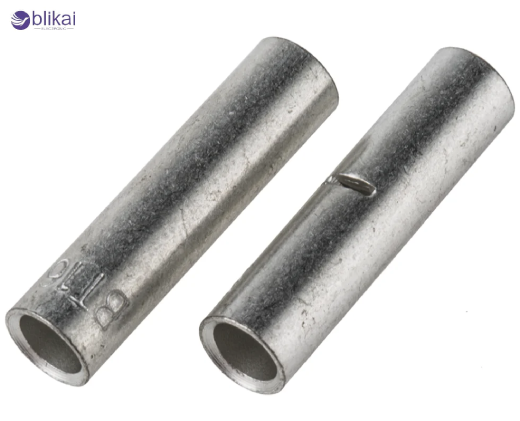
Electrical butt connectors are small, cylindrical-shaped, wiring terminals that are used to connect two wires end to end and are a safe, conductive and vibration-free connection. They are widely used in automotive, marine, industrial, and household wiring because they offer fast installation and long-term reliability.
Electrical butt connectors are made up of a metal barrel that is made up of optional insulation. Stripped wire ends are placed on each side of the connection, and with the help of pressure, a mechanical and electrical bond is formed. Compared with soldering or twist connectors, butt connectors maintain consistent resistance, reduce fatigue failures, and improve moisture protection, especially when using heat-shrink or marine-grade variants. They are easily and easily repairable, durable and are commonly used in the construction of harnesses and extensions of wires.
How Do Butt Connectors Work?
Butt connectors work by compressing a metal barrel around two wire ends to create a gas-tight, mechanically locked connection that safely carries electrical current. The crimping ensures low resistance and high pull-out strength against failure in adverse environments.
A typical butt connector includes a central conductive barrel (usually copper or tinned copper) and an outer insulation layer made from PVC, nylon, or heat-shrink tubing. The user in the installation process strips the wires, then inserts the ends into the barrel and crimps the metal to form the copper strands tightly around the metal. This distortion inhibits oxidation, provides contact pressure, and is vibration resistant. To avoid loose connections, overheating or breaking of wires, it is necessary to select the right connector size and a suitable crimping tool.
Types of Electrical Butt Connectors
Electrical butt connectors are constructed in different forms that are required to fit various environments, temperatures and electrical loads. The selection of the appropriate type guarantees a long-term performance and safe conductivity.
Insulated Butt Connectors
Insulated butt connectors include a colored plastic sleeve—usually PVC or nylon—that protects the conductor and prevents short circuits. PVC types are cost-effective for indoor wiring, while nylon provides greater flexibility, temperature resistance, and toughness for automotive harnesses and machinery.
Heat-Shrink Butt Connectors
Heat-shrink connectors are different types of connectors that consist of an adhesive-lined metal barrel and shrink tubing. The tubing contracts around the wire when heated, forming a waterproof, corrosion-free seal that is suitable in maritime, outdoor and high-vibration conditions. These connectors are the most durable and environmentally friendly.
Non-Insulated Butt Connectors
Non-insulated connectors do not have any outer insulation and thus can be used in high-temperature or completely enclosed junction boxes where there is high heat or where mechanical forces are high. They are often used in industrial control panels, appliances, and professional wiring assemblies.
Step-Down Butt Connectors
Step-down connectors allow two different wire gauges to be joined securely. They are applicable in car modifications, aftermarket equipment installation, or appliance repairs where the sizes of the wires used in different circuits differ.
T-Tap and Quick-Splice Alternatives
Although T-taps and quick-splice connectors allow faster branching, butt connectors offer superior conductivity, mechanical strength, and long-term reliability. They are used in case of a permanent repair or a high-current circuit.
|
Feature / Criteria |
T-Tap Connectors |
Quick-Splice Connectors |
Butt Connectors (Alternative) |
Heat-Shrink Butt Connectors (Alternative) |
|
Wire Compatibility |
22–16 AWG |
22–10 AWG |
22–10 AWG |
22–10 AWG |
|
Connection Type |
Pierces wire insulation |
Pierces wire insulation |
End-to-end crimp |
End-to-end crimp with heat-seal |
|
Insulation |
Plastic |
Plastic |
Optional PVC or nylon |
Heat-shrink with adhesive for waterproofing |
|
Installation Tool |
Pliers |
Pliers |
Ratcheting crimper |
Ratcheting crimper + heat gun |
|
Reliability |
Moderate; may loosen over time |
Moderate; prone to corrosion |
High; strong mechanical and electrical bond |
Very high; waterproof and vibration-resistant |
|
Use Case |
Quick taps for low-current wiring |
Quick taps where speed is needed |
Automotive, household, industrial wiring |
Marine, outdoor, high-moisture, vibration applications |
Technical Specifications to Consider
Being aware of the major specifications assists in the selection of adequate compatibility with the wire size, current load, and the environment.
Wire Gauge (AWG) Compatibility
Butt connectors follow color-coded sizing based on AWG standards:
- Red: 22–18 AWG
- Blue: 16–14 AWG
- Yellow: 12–10 AWG
They support both stranded and solid wires, though stranded wires form stronger crimps.
Current Rating & Voltage Rating
Ampacity will be determined by the size of the wire that is used in the connector, the size of the barrel, and the insulation. Typical ratings include:
- Up to 48A for large yellow connectors
- 12–24A for smaller red/blue sizes
Voltage ratings often range from 300V to 600V, depending on the insulation material.
Material & Plating
Tinned copper barrels are employed in most of the high-quality connectors to ensure resistance to corrosion and good conductivity. Lower-cost connectors can be made of aluminum or brass, and this raises the resistance and lowers the crimp reliability.
Temperature Rating
PVC connectors can work at temperatures of approximately 75-90degC, nylon up to 105degC, and heat-shrink connectors can have up to 125- 150 °C. Insulated connectors Non-insulated connectors may also resist higher temperatures, provided that they are used in conjunction with appropriate heat-resistance insulation.
Environmental Protection (IP / Waterproof)
Heat-shrink connectors provide IP-rated sealing when properly heated. Marine grade models have adhesive lining to resist moisture, chemicals and salt corrosion.
How to Choose the Right Butt Connector
General indoor wiring requires the use of PVC-insulated connectors. Nylon connectors have better vibration resistance when used in automotive or machinery applications. Hear-shrink connectors offer the best seal in outdoor, marine, or high-moisture environments. Always fit the connector with the size corresponding to that of the wire, ensure that the temperature and current limiting ratings are taken care of and use tinned-copper types to have better electrical performance. Step-down connectors are used when connecting different wires to create a strong mechanical and electrical system.
How to Crimp an Electrical Butt Connector (Step-by-Step Guide)
Crimping a butt connector is done by setting up the wire, pushing it into the connector and securing it with the appropriate tool, a mechanical connection.
Step 1 — Strip the wire:
Cut out the precise length of the insulation (usually 1 / 4 -3 / 8 inch) and ensure that the copper strands are not harmed.
Step 2 — Insert the wire fully:
Push each wire into the barrel until the insulation meets the metal sleeve. Misalignment reduces strength and conductivity.
Step 3 — Use a ratcheting crimp tool:
Apply firm, even pressure using a ratcheting crimper designed for insulated or non-insulated terminals. Avoid pliers, which produce weak crimps.
Step 4 — Inspect the crimp:
Check for tight deformation, no exposed wire, and consistent pressure around the barrel.
Step 5 — Seal (for heat-shrink types):
Warm the tubes evenly until the tubing and internal adhesive fuse together in order to make a waterproof seal.
Common Applications of Butt Connectors
They are typical in automobile repair, trailer wiring, and motorcycle harnesses. Electrical marine electricians use butt connectors of heat-shrink to eliminate corrosion in boats, jet skis, and outdoor lighting. In household appliances and HVAC systems, butt connectors provide durable internal wire joints. Electronics enthusiasts use them for LED strips, robotics, drones, and low-voltage DC circuits. Industrial machinery, factory automation, and control cabinets also use non-insulated types for high-temperature or enclosed applications.
Butt Connectors vs. Other Wire Joining Methods
Soldering ensures strong connections but requires heat, skills, and can crack under vibration. Wire nuts are also used in domestic AC components, such as wiring, but cannot be used in automobiles or outdoors. Quick-splice connectors are fast, yet most likely to be corroded and lose contact. Butt connectors offer standard mechanical locking, low resistance with optional waterproofing to suit long-term installations that have high reliability requirements.
FAQs
Can butt connectors handle high current?
Yes, provided the connector is of the same gauge as the wire and that it has high-quality tinned copper barrels.
Are heat-shrink connectors waterproof?
Yes. When heated correctly, adhesive-lined shrink tubing forms a sealed, water-resistant joint.
How long do crimped connections last?
Under proper installation, butt connector joints can last decades in automotive and indoor wiring.
Do I need a special crimping tool?
It is highly recommended to use a ratcheting crimper to provide a uniform gas-tight connection.
Can butt connectors be reused?
No. The metal barrel, when crimped, cannot be straightened.
Conclusion
Electrical butt connectors are required elements in the formation of strong, dependable, and low-resistance wire joints. Using the right type, insulated, nylon, heat-shrink, non-insulated, or step-down, and appropriate crimping methods, users can provide safe and long-life time interconnections in automotive, marine, industrial and household applications. Knowledge of wire gauge, materials, temperature ratings and environmental factors can be used to ensure optimal performance and electric safety.
Some images are sourced online. Please contact us for removal if any copyright concerns arise.





