


What Is a BNC Connector? Functions, Specs & Applications
 511
511What Is a BNC Connector?
A BNC connector is an RF connector of bayonet design to transmit radio-frequency and video signals and test signals, maintaining a fixed impedance and speedy connection. It is a commonly used interface in instrumentation, broadcasting, and electronics due to its small size, safe connection aids and its support of other coaxial cables.
The BNC name comes from “Bayonet Neill–Concelman,” honoring its inventors. BNC connectors support 50Ω and 75Ω versions, typically operating up to several GHz depending on grade. Their balanced mechanical and electrical performance allows them to maintain signal quality, reduce reflections, and provide a reliable connection in both professional and consumer systems.
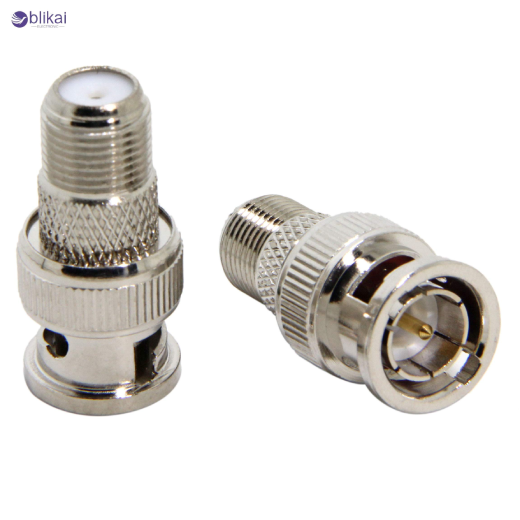
How Does a BNC Connector Work?
Bayonet Locking Mechanism
The bayonet lock-in system of the BNC has a twist-on interface having 2 lugs that connect and hold the plug to the jack. The design allows stable signal connectivity in an accidental disconnection, resists vibration in mobile or industrial conditions and allows equipment that needs to withstand frequent handling to be highly reliable when using BNC connectors.
Signal Transmission Path
The signal is passed on the connector by the central pin with the dielectric and metallic shielding surrounding the connector, ensuring RF integrity. The coaxial geometry withholds the signal against electromagnetic interference, and the loss is minimal to assure the correct transmission of the signal in optimum test, video, or RF circuits when the cables are to be routed through noisy areas.
Impedance Matching
Proper impedance matching, typically 50Ω or 75Ω, reduces reflections and maintains waveform integrity. 50Ω BNC connectors are optimized for RF energy transfer and measurement, while 75Ω versions maximize video signal quality in broadcast and surveillance systems. Matching cable and connector impedance is essential for minimizing distortion.
Key Features and Specifications
Electrical Specifications
BNC connectors feature standardized impedance, controlled frequency response, and stable VSWR (Voltage Standing Wave Ratio). A variety of frequencies up to 4 GHz or higher, depending on grade, has been supported; DC to 4 GHz. They have a voltage rating of usually 500 V peak down to lower values in high-frequency designs, so that they can be safely used in measurement and communication systems.
Mechanical Specifications
The BNC connectors are mostly made of brass or zinc alloy, and nickel or gold-plated to be durable. They offer an extended lifespan, which may have 500-1000 mating cycles. The connectors are featured with a rugged outer shell, precision bayonet interface and cable retention system, which has guaranteed consistent mechanical performance during repeated use.
Environmental Ratings
BNC connectors may be characterized by an excellent temperature operating range, moisture or corrosion-resistant, and of various designs. Weatherproof gaskets, UV-resistant materials and bracelet housings of the ruggedized or outdoor models are designed to withstand extreme weather conditions such as rooftop antennas, marine electronics or factory test stations.
Types of BNC Connectors
50-Ohm BNC Connectors
The BFNC 50O BNC connector is typically used in RF testing, radio systems, wireless communications, as well as in laboratory equipment. Their impedance structure optimizes power transfer, provides stable high-frequency performance, and ensures compatibility with time-domain and spectrum measurement instruments.
75-Ohm BNC Connectors
75Ω BNC connectors are engineered for video and broadcast applications. Their reduced dielectric thickness increases bandwidth and reduces signal distortion, making them ideal for SD and HD video, CCTV systems, and professional media production environments requiring accurate video transmission.
|
Feature |
50Ω BNC Connector |
75Ω BNC Connector |
|
Primary Use |
RF systems, test equipment, radio communications |
Video, broadcast, CCTV, SDI signals |
|
Impedance |
50 ohms |
75 ohms |
|
Signal Type |
High-frequency RF, pulse, measurement |
Video, digital serial video, low-loss transmission |
|
Typical Cable |
RG-58, RG-174 |
RG-59, RG-6 |
|
Max Frequency (Typical) |
Up to ~4 GHz (precision types higher) |
Up to ~2 GHz (broadcast-grade higher) |
|
Construction |
Thicker dielectric for RF stability |
Thinner dielectric for improved bandwidth |
|
Compatibility |
Matches RF equipment ports |
Matches cameras, DVRs, monitors, video routers |
|
Mixing with Other Type |
Causes reflections and distortion |
Causes reflections and video artifacts |
|
Best For |
Oscilloscopes, generators, antennas |
HD/SDI video, CCTV, studio signals |
|
Cost |
Slightly higher for precision RF types |
Lower for CCTV types; higher for SDI |
BNC Male, Female, and Bulkhead Types
BNC connectors are available in male and female variants for cable connections, panel mounting, and device interfaces. Bulkhead versions allow secure installation through chassis walls, while coupling adapters and feedthrough jacks simplify equipment wiring and modular panel design.
BNC Crimp vs. Solder Types
CNP-type BNC connectors can be easily installed and clamped, and therefore, these connectors are suitable for mass production and field installation. Solder-style connectors provide strong, durable connections suitable for high-reliability or precision RF applications where mechanical ruggedness and exact assembly are important.
Applications of BNC Connectors
Test and Measurement Equipment
BNC connectors are the standard interface for oscilloscopes, function generators, frequency counters, and RF analyzers. They provide stable, low-loss measurement paths, allowing engineers to capture accurate waveforms and maintain signal integrity during troubleshooting or development.
CCTV and Security Systems
Analog CCTV systems use connector types that need 75 ° BNC connector types used to transmit composite video on coaxial cable. They have an interface that prevents them from being disconnected accidentally in the process of maintenance or vibration, which guarantees continuous monitoring of video in security-prone installations.
Broadcast and Video Equipment
Professional video equipment, including mixers, routers, and cameras, commonly uses BNC connectors for high-quality signal distribution. They are optimized to a lower impedance structure and low rates of reflection, thus they are applicable in high definition workflows and also in reliability on the studio level.
Networking and Telecommunications
In telecom and network timing systems, BNC connectors carry synchronization pulses, reference clocks, and low-frequency signals. Their controlled impedance and stable mechanical design ensure consistent timing accuracy in large-scale communications infrastructure.
Laboratory and Industrial Electronics
In industrial settings, BNC interfaces facilitate rapid prototyping, modular instrumentation, and sensor interfacing. Engineers use BNC connectors to quickly swap test leads or connect instrumentation without handling exposed conductors or fragile terminals.
Advantages of BNC Connectors
BNC connectors have a locking system that is secure and reliable, a good electrical operation, and broad compatibility with both older and newer equipment. Their mechanism of connection makes them connect quickly and tool-free with a standardized impedance support guaranteeing predictable signal behavior in RF, video and test uses. From measurement labs to surveillance systems, BNC connectors provide a durable and cost-effective interface with proven performance across decades of industry usage.
Disadvantages of BNC Connectors
BNC connectors are also generally not as useful in the high-frequency (above a few gigahertz) systems that require SMA or N-type connectors to work. Their ability to handle power is moderate, and hence, they cannot be used in high-power RF systems. It is also necessary to match the cables: the inappropriate variant of impedance may harm the quality of signals in delicate applications.
How to Choose the Right BNC Connector
Match Impedance to Application
Choice of 50O connectors or 75O connectors, depending on the requirements of the system, guarantees appropriate system behavior. RF and test systems operate on 50 °, and video signal systems operate on 75O to gain the best visualization and minimum distortion.
Check Frequency and Cable Type
The connector and cable should be of appropriate frequency, diameter and dielectric. RG-58 and RG-59/RG-6 are commonly used coaxial cables, each with special compatibility needs, for RF and video systems, respectively.
Indoor vs. Outdoor Rating
Outdoor or industrial applications ought to have weatherproof connectors that have superior sealing and corrosion resistance. These characteristics avoid the entry of moisture, loss of signal, and the wear out of performance over a long period of time.
Connector Style
Crimp, solder, right-angle or bulkhead design is a choice based on the requirements of installation. Crimp connectors are designed to be fast assembled and soldered connectors to offer robust terminations in high-reliability applications or precision-based applications.
Conclusion
BNC connectors combine mechanical reliability, standardized impedance, and versatile application coverage, making them essential for RF, video, and measurement systems. Knowledge about their structure, specifications and variations will create proper choice and best performance of professional and consumer electronics. BNC connectors are reliable when it comes to clear transmission of signals, whether applied in laboratories, broadcast studios or any other surveillance network.
FAQ
What is a BNC connector used for?
An RF, video and test signal is used with oscilloscopes, CCTV systems, broadcast equipment and telecom equipment because it is stable in lock and impedance control.
What is the difference between 50Ω and 75Ω BNC connectors?
BNC 50O is used in RF and test equipment, and 75O versions are used in video and broadcast signals at lower distortion.
Can I mix 50Ω and 75Ω BNC connectors?
They combine physically, though they may give incompatible mixes leading to increased reflections and poor operation, particularly in accuracy RF or high-quality video systems.
What frequency range do BNC connectors support?
Standard BNC connectors support DC to around 4 GHz, while precision-grade versions can reach higher frequencies, depending on design and materials.
Are BNC connectors better than SMA connectors?
BNC can be more conveniently used in general-purpose test and video applications because it has a bayonet lock. At very high frequency RF (several GHz), SMA is much better.
Do BNC connectors support HD video?
Yes. 75Ω BNC connectors are widely used for SDI, HD-SDI, and 3G/6G video signals in professional broadcasting and surveillance systems.
What type of cable works with BNC connectors?
Typical compatible coaxial cables involve RG-58 (50O), RG-59 (75O) and RG-6 (75O), depending on the type of system and its need for system impedance and frequency response.
Some images are sourced online. Please contact us for removal if any copyright concerns arise.





