


What Is a Spade Connector? Types, Specs & Wiring Guide
 1585
1585What Is a Spade Connector?
A spade connector is a fork-shaped electrical terminal designed for fast, reliable wire-to-hardware connections across automotive, appliance, industrial, and low-voltage control systems. Its open fork and the ability to slide the connector underneath a screw terminal without entirely removing the screw greatly decrease the time required to assemble the connector to the connector contact and ensure a constant amount of electrical contact. Since spade connectors offer mechanical stability and ease of installation, they are often used in repair, prototyping and production projects where frequent repairs must be made or where the component to be connected is frequently changed.
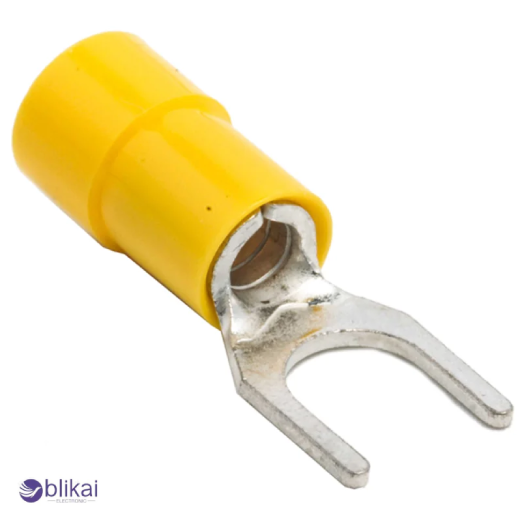
How a Spade Connector Works
A spade connector operates by popping its U-shaped fork into the screw terminal of a device and the metal contact surface to establish a stable and low-resistance electrical connection upon attaching the screw. This type of construction eliminates the necessity of removing all the screws, thereby minimizing the risk of misplacing small hardware and also cutting down on the installation time in panel wiring or providing automotive service. It can also be easily replaced, which is why it is suitable in the environment where the connectors are required to be removed, repositioned, or checked on a regular basis.
Types of Spade Connectors
Spade connectors are available in numerous shapes and forms: insulated, non-insulated, locking or heat-shrink, enabling their users to choose the version that fits a particular environmental, mechanical and electrical demand. Each type contains special benefits in terms of safety, vibration durability, moisture protection and durability so that it is compatible with different industry, vehicle, and household wiring requirements.
Insulated vs. Non-Insulated Spade Connectors
Insulated spade connectors were provided with either PVC, nylon or heat-shrink overwrappings. They provide a shield over the conductor against accidental contact and are convenient in compact wiring systems or where vibration can cause the wires to contact. Non-insulated connectors, however, offer superior temperature tolerance and stronger metal-to-metal crimping, making them better suited for professional installations requiring maximum conductivity, such as high-heat engine compartments or industrial control cabinets.
Standard vs. Locking Spade Connectors
Compared to regular spade connectors, standard spade connectors can be easily inserted and removed, and may be used in a low-vibration application (appliance or small electronics). A locking spade connector has retention tabs or curved forks that will better hold the screw terminal in place, eliminating the possibility of being pulled out accidentally in a vehicle, machinery or equipment with continuous movement. This provides a stability that is long-lasting in case of a loose connection that might be the cause of intermittent faults or electricity hazards.
Heat-Shrink Spade Connectors
Heat-shrink spade connectors provide a waterproof, corrosion-resistant seal that protects the crimp joint from moisture, salt, chemicals, and abrasion. When heated, their adhesive-lined tubing shrinks tightly around the wire, forming a durable, long-lasting barrier. These connectors are widely used in outdoor installations, marine wiring, agricultural machinery, and environments exposed to dirt, humidity, or mechanical stress.
Technical Specifications to Consider
When selecting the appropriate spade connector, it is necessary to consider a number of specifications such as the width of the terminal, compatibility with wire gauge, metal material, plating finish, temperature tolerance and electrical ratings. These parameters are used to define the fit of the connector to the terminal, the amount of current that the connector can safely conduct, and the resistance to corrosion, heat and mechanical fatigue over a long service life.
Terminal Widths (2.8mm, 4.8mm, 6.3mm, etc.)
Spade connectors are standardized to common widths of 2.8mm, 4.8mm and 6.3mm to fit a standard screw and tab connector on appliances and aircraft and control modules. The right choice of width makes sure that the mechanical fit is stable to avoid arcing, overheating or loosening of the connectors. Larger widths typically support higher currents and are used in power circuits, while smaller sizes suit signal or low-load control wiring.
Wire Gauge Compatibility (AWG)
All spade connectors have a desired range of wire gauges that they receive, usually between 22-10 AWG. An appropriate fit of the connector barrel and conductor is essential to create a good crimp, which will not pull out when loaded, and also to provide continuity of the electrical flow when loaded. Sizing that is not correct can result in weak crimps, high heat production or derating of current and proper wire-to-connector compatibility is therefore necessary to operate safely.
Material & Plating Options
Spade connectors are usually made out of copper or brass, which are excellent conductors, but the conductors can be plated with tin or nickel to ensure corrosion resistance and long-term stability. Tin plating is appropriate in most indoor and automobile works, and nickel plating is better in high temperature or high humidity conditions. The selection of material has a direct impact on the conductivity, life span and oxidation resistance.
Temperature & Voltage Ratings
Spade connectors are identified by a specific voltage rating that can be used in an AC or DC circuit, and the temperature limits of the connectors dictate their efficiency in continuous operation or in operating in a rough environment. A great number of connectors are certified by UL or CSA, giving the guarantees of their performance and safety. Higher temperatures than the rating of the insulation may compromise the insulation or metals; therefore, one needs to select carefully when dealing with harsh conditions.
How to Choose the Right Spade Connector
When choosing the right spade connector, one has to consider mechanical fit, environmental factors, the type of insulation, compatibility of wire gauge and anticipated vibration/moisture levels. The properly fitted connector increases dependability, lowers the chances of overheating, and guarantees the durability and performance in house and industry wiring works.
Match Connector Width to Terminal Size
Ensuring that the spade’s fork width matches the screw or tab terminal prevents loose connections, unstable contact pressure, and excessive heat buildup. A proper mechanical fit is crucial for minimizing resistance and ensuring consistent electrical performance, especially in circuits that carry moderate current or experience movement.
Select Insulation Based on Environment
PVC insulation is the simplest level of protection, and nylon is more durable and resistant to heat. Heat-shrink insulation offers more protection in terms of moisture sealing and strain relief. Selection of insulation on the basis of vibration, temperature, contact with chemicals, or environmental moisture is used in preventing shorts, corrosion, and mechanical wear.
Consider Vibration, Moisture, and Load Conditions
Locking spade connectors are used in high-vibration applications like engines, power tools or industrial machines to ensure that these connections are not broken. To prevent wet or corrosive conditions, sealed or heat-shrink connectors are more reliable. The connector design is based on the matching of the connector to the electrical load and environmental stress in order to provide long-term stability.
Wiring Guide: How to Use a Spade Connector
Proper wiring involves preparing the conductor, forming a strong crimp, mounting the connector correctly, and verifying contact integrity through inspection and basic testing. Each step contributes to long-term safety, low resistance, and mechanical durability.
Step 1 — Strip the Wire
Strip approximately 5–7mm of insulation using a precision wire stripper, ensuring the copper strands remain intact and evenly exposed. Damaged or uneven strands reduce crimp strength and can cause hotspots under high load, so clean preparation is essential.
Step 2 — Insert & Crimp
Push the conductor completely into the spade connector barrel and press it with a ratcheting tool in order to clamp it evenly. An appropriate crimp provides a gas-tight connection which is resistant to corrosion, mechanical pull-out and loss of signal, and is thus reliable throughout the service life of the connector.
Step 3 — Connect to the Terminal
Slide the spade fork beneath the screw terminal or tab and tighten the screw securely to maintain consistent contact pressure. The connector must be installed in place without rotation or unequal torque, which may loosen the connection over time.
Step 4 — Inspect & Test the Connection
Perform a gentle pull-test to confirm mechanical strength and use a continuity tester or multimeter to verify electrical connectivity. To achieve a stable and safe installation, the proper seating, tightness and integrity of insulation should be checked by visual examination.
FAQs
Are spade connectors better than ring terminals?
Spade connections are easier to install and remove, and hence they are optimal when dealing with circuits that require frequent maintenance, whereas ring terminals provide maximum security since they cannot fall off unless the screw is completely unscrewed.
Can spade connectors handle high current?
Yes, but only when correctly matched to wire gauge, terminal width, and material. For heavy-duty power circuits, ring terminals or high-temperature lugs provide better long-term stability.
Some images are sourced online. Please contact us for removal if any copyright concerns arise.





