


4LR44 Battery: Features, Applications & Alternatives
 590
590What Is a 4LR44 Battery?
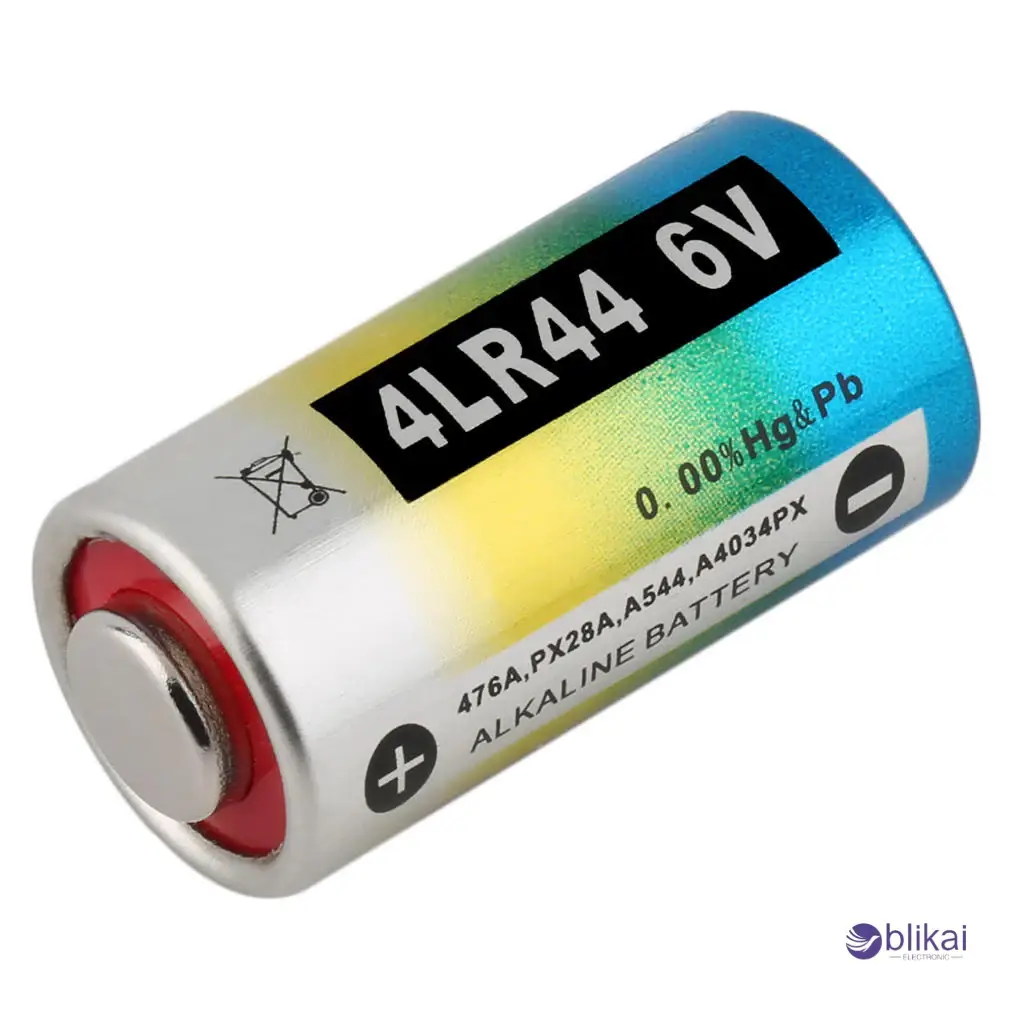
The 4LR44 battery is a special multi-cell alkaline battery that is used to provide a voltage of 6 volts and is therefore suited to those devices that need a steady but higher voltage than is available from a standard AA or AAA battery. The cylindrical form is quite small, and it houses various smaller cells in one unit, which enables it to sustain a steady voltage when used continuously. Also, its long alkaline chemistry minimizes the risk of leakage when compared to other less expensive options and thus is a good option in devices, where failure of the battery would disrupt use or damage the equipment.
The high level of self-discharge is prevented, and the shelf life is high, typically 5-7 years under favorable conditions (cool, dry storage). It can also work at a temperature of -10 °C to 50 °C, but will also be affected slightly at extreme temperatures. The 4LR44 provides a constant V-out at intermittent loading, which is highly important in devices with delicate electronics.
Physically, the battery has the best positive and flat negative terminals, and they fit normal 4LR44 battery holders. Rechargeable versions or, indeed, even silver oxide versions are also produced by other manufacturers; however, the most commonly used type is the standard alkaline type of the battery (they are relatively low-cost and can easily be found).
Key Takeaways:
- Voltage: 6V (6x1.5V cells)
- Capacity: 125-150 mAh
- Dimensions: 24 mm in diameter and 45-46 mm in height.
- Chemistry: Alkaline
- Temperature of operation: -10 °C -50 °C.
- Shelf Life: 5-7 years
What Is a 4LR44 Battery Used For?
Cameras: The 4LR44 battery is also commonly applied in the cameras to energize flash, light meter and other precision parts. Its constant 6V output allows it to be used reliably, particularly in professional photography equipment, where failure of the battery may ruin important shots.
Keyless Entry Systems: A variety of keyless car entry systems and garage door openers are dependent on the 4LR44 battery. The increased voltage required to work under long periods of time is offered by the multi-cell design, such that the rate of battery change is minimized.
Dog Training Collars: Remote-controlled dog training collars usually use 4LR44 batteries with the aim of providing uniform power to vibrations or sound signals. The battery is reliable, hence the functioning of the device in training sessions.
Medical Devices: 4LR44 finds some use in medical devices such as glucometers or handheld diagnostic devices. The constant output of the battery is essential to reduce imprecise measurements and unreliable work of the device.
Specialty Electronics: 4LR44 batteries are also used in toys, remote-controlled devices and some security devices. These devices are multi-cell in nature and thus do not require constant replacements since their small size makes them efficient.
What Is the Equivalent of a 4LR44 Battery?
- A544: The A544 resembles the 4LR44 in appearance, with the same 6V output with six stacked 1.5V alkaline cells. It is widely applied in cameras and dog collars as well as small security systems, and maintains steady voltage under heavy load continuously, which is important in precise electronics.
- K28A: K28A is a physical and electrical duplicate of the 4LR44. and is expected to be compatible with much equipment originally designed to take 4LR44. Its alkaline chemistry will extend its shelf life and ensure consistency even in intermittent use environments such as remote keyless entry systems.
- GP28A: GP28A is the other 6V equivalent, which is typically utilized in specialized electronics and miniature medical appliances. It is designed to produce constant power with devices of high internal resistance to assist in the accurate performance of sensitive equipment.
- PX28A: PX28A batteries are designed to be compatible with the multi-cell setup and voltage of 4LR44. They can commonly be seen in cameras, garage remotes, and some portable meters, where a stable voltage in the device is extremely important to prevent malfunction or errors in measurements.
- MN21: MN21 is a 6V alkaline battery that is typically perceived to be an adequate substitute for devices such as keyless entrants, toys, and mini-diagnosing devices. It is economical, durable, and high voltage, which is easily found in the marketplace as an alternative is also dependable, and it does not compromise on the functionality of a device.
What Is the Difference Between 4LR44. LR44. and 4SR44?
LR44 vs 4LR44 vs 4SR44 - Items Comparison
Explanation and Professional Analysis
4LR44 Battery:
The 4LR44 battery is a 6V multi-cell alkaline battery, which is applicable to devices that demand constant and high voltage, but in a compact size. The moderate capacity (125-150mAh) allows it to power cameras, remote keyless entry, dog collars and portable medical devices.
LR44 Battery:
A 1.5 V alkaline button cell (LR44) is far smaller but again much more appropriate in low-drain gadgets such as watches, calculators, toys and laser pointers. Although it is theoretically possible to use several LR44 cells in series to scale to a 6V output, this is usually hardly feasible. Its primary strengths lie in its small size and low cost, which do not allow it to replace a 4LR44 in any device that needs 6V and so has a restricted scope of use in high-drain or precision electronics.
4SR44 Battery:
The 4SR44 is a 6V silver oxide battery, the physical equivalent of the 4LR44. with increased energy density and better load regulation. It is perfect in professional cameras, high-precise medical devices and high-drain devices, where the consistency of voltage is important. Its greater expense and reduced supply, however, ensure that it finds little application except in the specialized or professional field. In the case of general consumer electronics, a 4LR44 battery is typically adequate and more economical.
Conclusion
The 4LR44 battery constitutes a special multi-cell alkaline power source. The alkaline technology reduces the risk of self-discharge and leakage, and enhances a shelf life of up to 5-7 years in the recommended conditions. Although the LR44 is limited by a single-cell 1.5V single-cell output and a low capacity, and the 4SR44 silver oxide type is better voltage stable and more expensive, the 4LR44 is the most feasible and economical to use in general consumer and professional equipment.
FAQ
What are the typical devices that use a 4LR44 battery?
In 4LR44 (some 6V) devices can be cameras, keyless entry systems, dog training collars, medical devices, and some toys or security gadgets.
Is there an alternative battery that can substitute the 4LR44 battery?
Yes, 4LR44 can replace similar components like - A544. K28A, GP28A, PX28A or MN21 in the applications where the voltage is the same, as well as the multi-cell configuration.
How long is the life of the 4LR44 battery and life?
Alkaline 4LR44 batteries are reliable sources of power, which last for years and have a shelf life of 5-7 years in ideal storage conditions of cool, dry environments.
Some images are sourced online. Please contact us for removal if any copyright concerns arise.





