


LM4562 Op Amp IC: Specs, Pinout & High-Fidelity Audio Guide
 658
658What Is the LM4562 Operational Amplifier?
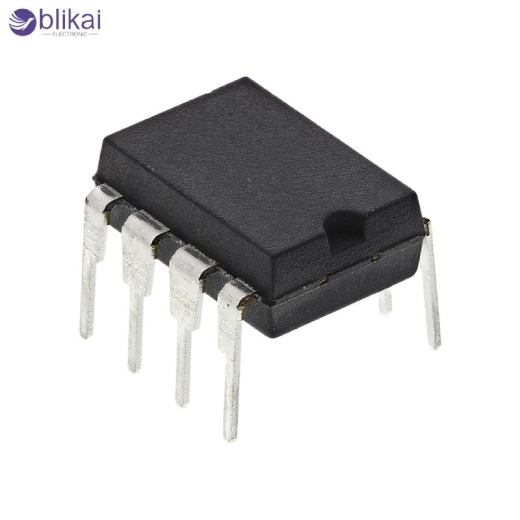
The LM4562 is a precision dual-channel operational amplifier optimized for high-fidelity audio and high-accuracy analog signal processing. It integrates two matched low-noise op amps inside a single 8-pin package, making it ideal for stereo audio circuits, balanced signal conditioning, and differential amplification designs. The LM4562 has been designed to achieve very low distortion, very low noise and very high linearity over the entire audio frequency band (and beyond) instead of the low cost and moderate performance of general-purpose op amps.
Key Features and Technical Advantages of LM4562
Ultra-Low Noise Performance
One of the defining features of the LM4562 is its extremely low input voltage noise density, typically around 2.7 nV/√Hz. This ultra-low noise floor ensures that even the weakest audio signals can be amplified without introducing audible hiss or background noise, making it ideal for high-end audio systems and sensitive analog front-end designs.
High Slew Rate and Wide Bandwidth
LM4562 has such properties as a typical slew rate of 20 V/us and a gain bandwidth product of 55 MHz, which allows it to reproduce fast-changing audio signal and high-frequency signal with a high degree of accuracy. This broad band guarantees low phase distortion and good transient response and this directly relates to better clarity, transparency and dynamic performance in the audio circuits.
Low Total Harmonic Distortion (THD+N)
With a typical THD+N of just 0.00003%, the LM4562 delivers reference-level distortion performance. This very low distortion guarantees accurate reproduction of audio with a minimum amount of harmonic coloration of the natural tonal qualities of the music and speech cues.
High Open-Loop Gain and CMRR
LM4562 has a large open-loop gain (more than 120 dB) and has a high common-mode rejection ratio (CMRR) that allows to increase the accuracy, decrease the level of noise coupling and increase the stability of the system on a system level. This renders it to be applicable in precision instrumentation and low-level signal amplification.
Excellent Output Drive Capability
Capable of delivering up to ±26 mA of output current, the LM4562 can drive low-impedance loads directly, making it ideal for line drivers, DAC output stages, and audio buffer circuits without requiring additional output drivers.
LM4562 Electrical Specifications and Absolute Maximum Ratings
Electrical Characteristics Table
Key electrical specifications of the LM4562 include a supply voltage range of ±2.5 V to ±17 V (or 5 V to 34 V single-supply), typical input offset voltage of 0.1 mV, input bias current of 10 nA, slew rate of 20 V/µs, and gain bandwidth product of 55 MHz. Not only does it allow designers to achieve high dynamic performance but it also allows the designers to achieve high precision.
Absolute Maximum Ratings
The absolute maximum supply voltage for the LM4562 is ±18 V, with input voltage limits extending slightly beyond the supply rails. Maximum power dissipation is also dependent on the type of package and ambient temperature, which is normally approximately 500 mW in the case of DIP and SOIC packages. Any exceeding of these scores may lead to permanent damage to the device.
Recommended Operating Conditions
For optimal performance, the LM4562 should operate within ±5 V to ±15 V supply rails, with proper thermal management and decoupling. There is no distortion of data and ensures high linearity and noise performance.
LM4562 Pin Configuration Diagram (DIP-8 / SOIC-8)
The LM4562 follows the standard dual op amp pin configuration. Pin 1 is output A, pin 2 is inverting input A, pin 3 is non-inverting input A, pin 4 is negative supply (V−), pin 5 is non-inverting input B, pin 6 is inverting input B, pin 7 is output B, and pin 8 is positive supply (V+). This industry-standard pinout allows easy drop-in replacement for many common dual op amps.
Internal Architecture and Working Principle of LM4562
Input Differential Stage Design
The LM4562 employs a precision bipolar input differential stage optimized for ultra-low noise and minimal offset voltage. This input architecture reduces thermal noise and gives high input linearity which makes this input architecture particularly appropriate with low-level audio and sensor signals.
Voltage Amplification Stage (VAS)
The amplification of the voltage stage offers very high gain on open loop enabling the op amp to retain a high level of closed-loop accuracy. The compensation at this step is done in such a way that stability is provided over a large margin of gains and capacitive loads.
Output Buffer and Class AB Output Stage
The output stage is constructed on a Class AB design which balances low distortion with a high power consumption. It delivers sufficient current to drive low-impedance loads while maintaining minimal crossover distortion and thermal stability.
Signal Flow Block Diagram Explanation
Input signals are first processed by the differential input stage, amplified by the voltage gain stage, and then delivered through the output buffer, ensuring high-fidelity signal reproduction from input to output.
Why LM4562 Is Ideal for High-Fidelity Audio Applications
Ultra-Low Noise Floor for Clean Audio
This is because LM4562 has very low noise properties, which allow an excellent signal to noise ratio that is suitable in preamplifiers, microphone circuits, and DAC output stages, where even the smallest noise contribution can be detected.
Extremely Low Distortion for Transparent Sound
Its performance of THD+N is the best in the industry and provides clear audio reproduction, finer details, spatial reproduction, and musical nuances in listening.
Wide Frequency Response for Accurate Sound Reproduction
Being able to have a flat frequency response that extends far beyond the audible frequency, LM4562 offers a linear amplification of the whole audio band, and therefore sound reproduction becomes life-like.
Professional Audio Industry Adoption
The LM4562 is widely used in studio mixers, professional DACs, audiophile amplifiers, and recording equipment, where signal integrity and sonic purity are critical.
Typical LM4562 Application Circuits
High-End Audio Preamplifier Circuit
The LM4562 is commonly used in low-noise voltage amplification stages for microphone preamps, line preamplifiers, and active crossover networks.
DAC Output Buffer Stage
It has a high bandwidth and low distortion, so it is suitable to buffer the DAC outputs so that they can deliver clean analog signals to the downstream amplifiers and speakers.
Active Audio Filter Circuit
The LM4562 excels in low-pass, high-pass, and band-pass active filter designs used in equalizers, crossovers, and tone control circuits.
Instrumentation and Sensor Signal Conditioning
Its precision and low offset voltage make it suitable for amplifying small sensor signals in measurement and data acquisition systems.
Headphone Amplifier Front-End Stage
The LM4562 is often used as the voltage gain stage before a dedicated power output buffer in headphone amplifier designs.
LM4562 Example Schematics and Design Guidelines
Power Supply Decoupling and Layout Best Practices
Decoupling must be done properly in order to enable optimum performance. Ceramic capacitors (0.1 uF) are to be installed near each supply pin and bulk electrolytic capacitors (10-47 uF) are to be installed to reduce low-frequency noise.
PCB Layout Techniques for Low Noise
To reduce noise coupling and electromagnetic interference, short signal paths, star grounding, good shielding and analog / digital ground separation are used.
Gain Setting and Stability Optimization
Careful resistor selection ensures stable operation and low distortion. Audio circuits are generally given optimum performance by gains between 1 and 20.
Preventing Oscillation and EMI Noise
Minimizing parasitic capacitance and using proper grounding techniques reduces oscillation risks, especially in high-gain or high-frequency designs.
LM4562 vs Popular Audio Op Amps Comparison
LM4562 vs NE5532
The LM4562 is better than the NE5532 because it has much lower noise, bandwidth, and distortion, so it is better in high-end audio uses.
LM4562 vs OPA2134
Although the OPA2134 has an advantage of having a smooth sonic character, the LM4562 outperforms the former in terms of technical performance, especially in terms of noise and distortion.
LM4562 vs TL072
The LM4562 provides significantly better noise, higher output drive and better audio than the TL072, which is more appropriate in general-purpose audio applications.
Comparison Summary Table
On the whole, LM4562 is always more precise, transparent, and fidelity-wise than the audio op amps of the past.
LM4562 Equivalent, Alternative, and Replacement ICs
Usually replaced with the LME49720 (pin-compatible version), OPA2134, NE5532 and AD797. They are chosen on the basis of cost, availability, power supply limitation, and on the basis of sonic selection.
Common LM4562 Design Mistakes and Troubleshooting Tips
Power Supply Noise Issues
Poor filtering can be the cause of hum and noise. Decoupling and clean power railing must be done properly.
Oscillation and Instability Problems
Improper PCB layout and excessive capacitive loading can cause oscillations. Use series output resistors if necessary.
Ground Loop and Hum Noise
Star grounding and careful cable routing help eliminate hum and interference.
Distortion and Clipping Issues
Ensure sufficient headroom by selecting appropriate supply voltages and gain settings.
FAQ
Is LM4562 better than NE5532 for audio?
The LM4562 is indeed much lower in noise, higher in bandwidth and much lower in distortion than the NE5532, and is thus the better choice to use in high fidelity audio.
What is the difference between LM4562 and LME49720?
They are functionally the same with LME49720 being a repurposed version which is audio marketing optimized.
Is LM4562 a drop-in replacement for NE5532?
Yes, the LM4562 shares the same pinout and can replace NE5532 in most circuits, though power supply decoupling may need optimization.
Summary
LM4562 is among the best audio operational amplifiers in the market that provides the best noise performance, minimum distortion, wide bandwidth, and excellent linearity. Its combination of precision engineering and outstanding sonic transparency makes it ideal for high-end audio, DAC buffering, instrumentation, and professional signal conditioning applications. Designers seeking reference-grade performance and long-term reliability will find the LM4562 an outstanding choice for both commercial and audiophile-grade electronics.
Some images are sourced online. Please contact us for removal if any copyright concerns arise.





