


LM555 vs NE555 Timer ICs: Differences and Which to Choose
 551
551Introduction to 555 Timer ICs
Since its introduction in the 1970s, the 555 timer has been used in countless designs in the field of education, in educational project kits, as well as in industry and home automation. LM555 and NE555 are the most popular bipolar variants that are usually interchangeable and functionally identical but can have some differences that can influence the ultimate decision on the component used in the design process.
What Is the NE555 Timer IC?
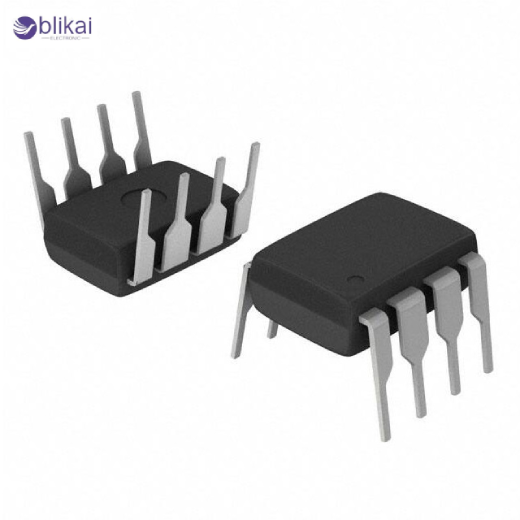
The NE555 timer IC is the original commercial implementation of the 555 timer, first developed by Signetics and later produced by many semiconductor manufacturers. It is a bipolar-based timer IC that is capable of working with a big voltage adjustment and is capable of providing comparatively high output current, providing it is appropriate to drive loads directly like LEDs and tiny relays. Due to its long history, broad availability, and low cost, the NE555 has become a standard component in hobbyist, educational, and general-purpose electronic circuits.
What Is the LM555 Timer IC?
The LM555 timer IC is essentially the same as a bipolar 555 timer, which is being sold by Texas Instruments and National Semiconductor vendors. It follows the same internal architecture and pin configuration as the NE555 but is often specified with tighter electrical tolerances and more consistent performance across temperature and voltage ranges. Consequently, the LM555 has been commonly applied in commercial and industrial electronics where predictability and long life are factors.
LM555 vs NE555: Key Differences Explained
Operating Voltage and Power Consumption
Both LM555 and NE555 also work with the supply current of 4.5 V to 15-16 V and, thus, the bipolar character of the two devices suggests that both will have relatively higher values of quiescent current than CMOS solutions. In practice, at most, the LM555 has somewhat more predictable supply current changes with temperature, whereas NE555 current consumption has an even greater range of variation in practice, as it depends on the manufacturer.
Output Drive Capability
One of the best features of both LM555 and NE555 is that they have a good output drive capability, and their peak source or sink current may be as large as about 200 mA. This enables any of the devices to directly operate LEDs, buzzers or coils on a relay without using any extra output transistors in many designs. Output performance is mostly the same, although LM555 devices are commonly used in those cases when the load-driving characteristics are to be constant during a continuous working period.
Temperature Stability and Reliability
One of the areas where LM555 devices can be generally considered to have an edge is temperature stability, in that LM555 devices are often defined with tighter performance limits between industrial temperature extremes. NE555 performance may be more variable with the manufacturer and production lot, and this can lead to timing errors and behavior in a harsh environment. LM555 is usually thought to be the safer option in cases of designs operating at high temperatures or with long operating periods.
Noise Performance and Precision
Both LM555 and NE555 can introduce switching noise due to their bipolar internal circuitry, particularly at higher frequencies or in sensitive analog systems. In many practical designs, the LM555 demonstrates slightly lower jitter and improved noise immunity, while NE555 devices may exhibit greater timing variation in precision-sensitive applications. For simple oscillators or delay circuits, this difference is usually negligible.
Manufacturer Variations and Compatibility
Many manufacturers use the NE555 designation, which means that the electrical characteristics and quality of the internal design vary, but the LM555 is usually obtained from a smaller number of longstanding vendors. Such differences, however, do not exclude pin-compatibility between the two ICs and, in general, can be interchanged without the circuit around them being modified.
Electrical Specifications Comparison Table
From an electrical standpoint, LM555 and NE555 share nearly identical specifications, including similar operating voltage ranges, output current capability, and functional modes, with differences mainly appearing in supply current consistency, noise behavior, and guaranteed performance limits. This is not necessarily the same even with the same part numbers and the values published and, therefore, the datasheet of the specific manufacturer should always be consulted by the designer.
Performance in Common 555 Timer Modes
Astable Mode Comparison
LM555 and NE555 also produce continuous square waves in the astable mode, the frequency of which is largely determined by external resistors and capacitors. The LM555 generally provides slightly better frequency stability over temperature and long-term operation, while the NE555 performs adequately for non-critical oscillators such as LED blinkers and tone generators.
Monostable Mode Comparison
In monostable mode, both timer ICs produce a single output pulse when triggered, and pulse width accuracy depends on internal comparator thresholds and external components. The LM555 tends to deliver more consistent pulse timing in electrically noisy or temperature-variable environments, making it preferable for industrial timing and control circuits.
Bistable Mode Behavior
When used as a bistable latch, LM555 and NE555 behave almost identically, offering fast switching speeds and stable output states. The decision about which to use between the two devices hardly affects the performance of circuits in this scenario unless there are extreme environmental conditions.
Applications: When to Use LM555 vs NE555
Low-Power and Battery-Operated Circuits
LM555 and NE555 are not designed to be used in low-power or battery-operated applications due to the relatively large quiescent current in the device, but in applications where a bipolar 555 is needed then the LM555 may be somewhat more efficient and predictable. In the majority of battery-driven applications, CMOS 555 variants are highly suggested in place of this.
Industrial and Automotive Electronics
The LM555 is sometimes used in preference, in fact, in industry and automotive systems where the temperature range, electrical noise and long-term stability are critical factors because of its tight specifications and uniform quality in manufacturing. These features are useful in eliminating timing drift and unforeseen behavior over long operating times.
Educational and Hobbyist Projects
The NE555 continues to be popular in education and amateur applications because of its low cost, wide commercial availability and the ability to forgive the errors of wiring when attempting to use it on a breadboard. Its thick output driver and forgiving design make it perfect for learning the principles of timing and oscillation that are basic.
Timing, PWM, and Pulse Generation Circuits
For timing delays, PWM generation, and pulse control circuits, both LM555 and NE555 are capable solutions, but LM555 is typically favored in designs that require continuous operation, improved noise immunity, or more predictable long-term timing behavior.
Which One Should You Choose?
LM555 or NE555 is a matter of application needs, such that NE555 can be used in cost-conscious, general purpose application, or educational designs, and LM555 will be more appropriate in professional, industrial or reliability-conscious designs. In the majority of applications, the two devices can be used interchangeably, and the designs need to be in relation to the operating environment, consistency of manufacturers, and the margins of performance before making a final choice.
LM555 and NE555 Alternatives
More recent electronics now prefer CMOS based 555 timers like LMC555, TLC555, and ICM7555, that have much lower power consumption, higher input impedance, less noise, and larger operating voltage ranges. These options are the best in portable and battery-powered and precision timing applications, where bipolar 555 timers are no longer ideal.
Frequently Asked Questions (FAQ)
Are LM555 and NE555 pin-compatible?
Yes, both use the standard 8-pin 555 configuration, making them interchangeable in most circuits without layout changes.
Can LM555 replace NE555 directly?
Yes, LM555 generally works with NE555 (unmodified), however, with the timing- or voltage-sensitive ones it is recommended to refer to the datasheet of the manufacturer.
Which 555 timer is better for low-power designs?
Neither LM555 nor NE555 is good in low-power circuits; CMOS versions such as LMC555 or TLC555 are suggested.
Is NE555 obsolete?
No, NE555 is still widely produced and used in hobbyist, educational, and general-purpose timing applications.
Conclusion
LM555 and NE555 timer ICs have the same design and working principle, but are slightly differentiated on the aspect of consistency during manufacture, consistent behavior across temperature, noise, and dependability. NE555 remains a good and popular general-purpose and educational application and LM555 is more industrial and professional. Such knowledge of these differences enables the designers to be certain of the best 555 timer IC to use in their application.
Some images are sourced online. Please contact us for removal if any copyright concerns arise.





