


RT1720GF Hot Swap Controller: Specs, Pinout & Applications
 190
190What Is the RT1720GF Hot Swap Controller?
A hot swap controller is an integrated circuit power management chip, and is used to manage the connection of a powered device to a live power bus by controlling external MOSFET switching behaviour. Instead of allowing instantaneous current flow when power is connected, the controller gradually ramps the voltage and limits inrush current, ensuring system stability and protecting sensitive components. Hot swap controllers are common in all those systems in which continuous uptime is necessary, and it is either impractical or impossible to shut down the power prior to replacement of the hardware.
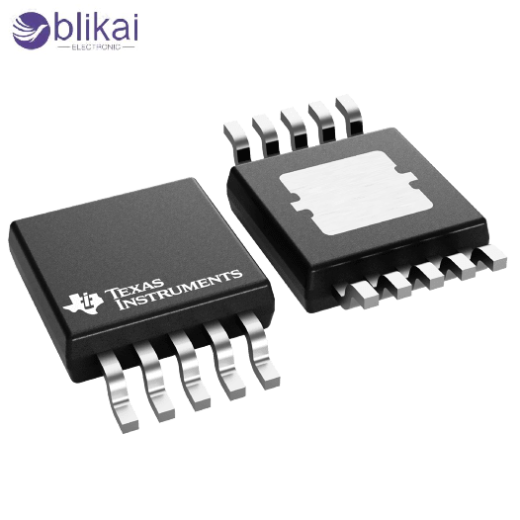
RT1720GF Key Features and Benefits
Integrated Protection Functions
The RT1720GF incorporates various protection facilities needed in contemporary power systems. The Inrush current limiting helps eliminate sudden bursts of current when the current is inserted, and the overcurrent protection helps in detecting unusual conditions of the load, and the overcurrent protection is able to react fast to avert component damage. The short-circuit protection is applied to ensure immediate shut off when catastrophic faults occur, and the undervoltage lockout is applied to ensure the unstable operation at the supply voltage that is below the safe values. These safeguards minimise the risks of failure of the system and enhance operational safety.
Power Management Advantages
By actively controlling MOSFET gate charging, the controller enables smooth voltage ramp-up, minimising electromagnetic interference and preventing voltage droop on shared power rails. This regulated action enhances the reliability of the system, particularly when the distributed power architecture is utilised, whereby multiple modules share a single supply.
Design Flexibility for Engineers
The RT1720GF enables engineers to set up startup time, current limit and protection response with external passive components. This flexibility enables adaptation across a wide range of applications without redesigning the core power architecture, simplifying development cycles and reducing engineering effort.
RT1720GF Pinout and Functional Description
Pin Configuration Overview
The RT1720GF includes pins dedicated to power sensing, gate control, timing configuration, and fault monitoring. The pins are assigned certain supervisory duties that lead to the safe delivery of power. Effective implementation and proper operation of a system require proper knowledge of the PIN functionality.
Control Pins and Monitoring Pins
Voltage sense pins monitor input supply conditions, while current sense inputs measure voltage across an external resistor to calculate load current. Timing pins allow designers to define startup ramp speed, and fault pins communicate abnormal operating states to system controllers or monitoring circuits.
External MOSFET Control Operation
The gate output pin drives an external N-channel MOSFET, gradually increasing gate voltage during startup. The RT1720GF allows current through the MOSFET to be controlled at the conduction region to provide a constant current flow and assure smooth energy flow between the source and the load to avoid stressing the connectors and other downstream components.
How the RT1720GF Works
Startup Sequence
When input power is applied, the RT1720GF first verifies that the supply voltage meets operational thresholds. After validation, it begins charging the gate of the external MOSFET through a controlled current source, allowing the output voltage to rise gradually instead of instantaneously.
Inrush Current Control Mechanism
During startup, capacitive loads attempt to draw large currents. The controller senses current through the sense resistor and dynamically adjusts the MOSFET gate voltage to maintain current within predefined limits. This closed-loop control prevents excessive surge currents that could otherwise damage connectors or power supplies.
Fault Detection and Protection Response
If the load current exceeds safe limits or a short circuit occurs, the RT1720GF quickly pulls down the MOSFET gate, disconnecting power from the load. Depending on the system settings, the controller can either make an automatic restart or can be left latched until power is recycled, thus ensuring safe fault handling.
RT1720GF Specifications Overview
Electrical Characteristics
The RT1720GF supports operation across a wide input voltage range suitable for common distributed power rails. Its gate drive capability allows efficient control of external MOSFETs, enabling scalable current handling depending on MOSFET selection. Precision current sensing makes certain that the protection thresholds are accurate, and a low operating current can help to manage power consumption within a system in an efficient way.
Absolute Maximum Ratings
Absolute maximum ratings establish voltage, temperature and current limits beyond which the device should not operate, or it will be damaged permanently. When choosing components and determining operating environments, designers have to consider these values carefully so that the results will be long-term reliable.
Thermal Performance Considerations
The thermal performance is highly determined by the MOSFET choice and PCB layout as opposed to the controller. Proper copper area allocation and thermal vias help dissipate heat generated during startup and fault conditions, maintaining safe operating temperatures.
Typical Application Circuit of RT1720GF
Server Power Supply Application
In server backplanes, the RT1720GF enables hot insertion of storage or processing modules without interrupting system operation. Controlled startup prevents bus voltage collapse, ensuring uninterrupted service availability in data centre environments.
Industrial Backplane Systems
Automation systems used in industries tend to need the replacement of modules when in use. The controller protects both the power rail and connected equipment from transient disturbances, improving operational uptime and maintenance efficiency.
Telecom Power Modules
Telecommunications equipment relies on continuous operation. The RT1720GF helps maintain stable power delivery when network cards or expansion modules are replaced, minimising service disruptions.
RT1720GF vs Other Hot Swap Controllers
|
Feature |
Typical Controller A |
Typical Controller B |
|
|
Function |
Hot Swap Control |
Basic Protection |
Advanced Monitoring |
|
Inrush Control |
Yes |
Limited |
Yes |
|
External MOSFET Support |
Supported |
Supported |
Supported |
|
Fault Protection |
Multiple Protections |
Basic Protection |
Multiple Protections |
|
Application Focus |
Servers & Industrial |
Consumer Electronics |
Telecom Systems |
When to Choose RT1720GF
The RT1720GF is particularly suitable when system reliability, configurable protection, and stable startup performance are primary requirements. Compared with simpler protection ICs, it offers better control accuracy and flexibility for professional power system design.
Design Considerations and PCB Layout Tips
Current Sense Resistor Selection
The sense resistor determines the current limit threshold, making precision and power rating critical parameters. Low resistance values minimise power loss while still providing accurate current measurement, and designers must ensure adequate thermal capacity.
MOSFET Selection Guidelines
MOSFET choice significantly impacts efficiency and thermal behaviour. Engineers are advised to choose devices with low RDS(on), correct voltage rating and adequate safe operating area to be able to survive stress conditions of startup.
Thermal Layout Optimisation
Wide copper traces, short high-current paths, and proper grounding improve heat dissipation and reduce electrical noise. Thermal vias under components with power are used to spread the heat in the PCB layers, increasing reliability.
Common Applications of RT1720GF
The RT1720GF is ubiquitous in industries that need continuous use and regulated power insertion. Typical applications include data centre servers, enterprise storage systems, network switches, industrial automation controllers, telecom infrastructure, and redundant power distribution systems. Its capability to handle inrush current and fault tolerance makes it the ideal choice when there is a need to ensure that the downtime is minimal in mission-critical electronics.
Advantages of Using a Hot Swap Controller
An immediate benefit of hot swap controllers, such as RT1720GF, over direct MOSFET switching designs is that a hot swap controller allows faster switching, or in other words, enables more frequent switching cycles than a direct switching design. It enhances system safety by preventing electrical stress during insertion, improves reliability through integrated protection features, reduces design complexity by consolidating monitoring functions, and ensures compliance with modern power integrity requirements. All these advantages help to increase the equipment life and minimise the maintenance expenses.
RT1720GF Datasheet and Ordering Information
Package Type (GF Package)
The RT1720GF is typically offered in a compact surface-mount package suitable for dense PCB layouts, enabling integration into space-constrained designs while maintaining thermal efficiency.
Operating Conditions
Recommended operating conditions define voltage ranges, temperature limits, and external component guidelines necessary for stable performance. Implementation should always be done based on the official values on datasheets.
Recommended Design References
The reference circuits supplied by the manufacturer documentation are optimised component choices and layout techniques, which can be trusted as a good starting point in the new design.
Conclusion
The RT1720GF hot swap controller offers a strong and versatile means of controlling power insertion in modern electronic systems. By combining controlled startup, accurate current monitoring, and comprehensive protection mechanisms, it enables safe hot swapping in demanding environments such as servers, telecommunications equipment, and industrial platforms. The RT1720GF is a useful option in the case of power management applications with advanced design implementation, better system stability, and longer hardware life.
FAQ
What does the RT1720GF do?
The RT1720GF manages the power delivery when hot parts are inserted by controlling inrush current, checking system conditions and fault protection of circuits against overcurrent, short circuits and other faults.
Is RT1720GF suitable for server power systems?
Yes, it is commonly used in servers and data centre equipment because it ensures stable power insertion without interrupting ongoing operation.
Can RT1720GF protect against short circuits?
Yes, the controller detects excessive current conditions and rapidly shuts down the MOSFET to isolate the fault and protect the system.
Some images are sourced online. Please contact us for removal if any copyright concerns arise.





