


Advanced Power Manager IC: Features, Design & Applications Guide
 37
37Introduction to Advanced Power Manager IC
Advanced power manager ICs Highly integrated semiconductor devices to control, regulate and optimize power distribution in modern electronic systems are advanced power manager ICs, which are increasingly becoming important components in minimizing energy use, stability and reliability in a wide variety of devices, as smaller and more energy-intensive electronic systems proliferate and the need to provide intelligent control in power management increasingly becomes a key element of more complex environments.
What Is an Advanced Power Manager IC?
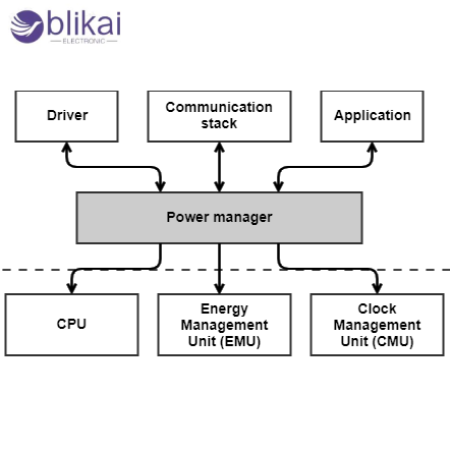
A complex of power management functions contained within a single chip, like voltage regulation, power sequencing, monitoring, protection, and communication interfaces is called an advanced power manager IC (PMIC). Simple regulators can be replaced by advanced PMICs, which in turn enables the designer to add many outputs into a compact and efficient design rather than simple power circuits; unlike simple regulators, advanced PMICs can coordinate power-up and power-down sequences of various subsystems, since improper sequence can result in malfunction, or even damage, in the case of microprocessor based systems.
Key Features of Advanced Power Manager ICs
A very rich range of enhanced power manager ICs, with multi-channel voltage regulation enabling the regulation of many outputs simultaneously, dynamic voltage scaling (DVS) enabling dynamical adjustment of voltage levels to optimize power use, integrated power sequencing to give the circuit accurate startup and shutdown timing, very low quiescent current to be energy-efficient in standby, on-board protection functions such as overvoltage protection (OVP), undervolt lockout (UVLO), overcurrent protection (OCP), and thermal shutdown; additionally, many advanced PMICs include digital communication interfaces like I2C or SPI, enabling system-level programmability and monitoring, which is essential for modern embedded systems requiring flexibility and remote configuration.
Internal Architecture and Working Principle
A complex power manager IC is typically internally organized around a set of voltage regulators (low-dropout regulators (LDOs) and DC-DC converters), a control logic unit, feedback networks, protection circuits and communication interfaces to provide coordinated power management; it works by measuring output voltages through feedback networks and comparing them to reference values, and by adjusting switching or line-based regulation elements as necessary to maintain consistent output, with the control logic manages power sequencing, monitors system conditions, and responds to faults, ensuring that each subsystem receives the correct voltage at the right time with minimal noise and maximum efficiency.
Types of Power Manager ICs
Power manager ICs can be categorized by application, e.g., mobile PMICs which are highly integrated and have low power consumption, industrial PMICs which are robust and have a wide operating temperature range, automotive grade PMICs which are highly reliable and have operating temperature range, and IoT or wearable PMICs which operate at very low power consumption and size; each category has a set of specific applications, e.g. input voltage range, output current capability, environmental conditions, and communication protocols, allowing designers to select the most suitable solution for their application.
Advanced Power Management Techniques
Such advanced power manager ICs employ advanced methods like dynamic voltage and frequency scaling (DVFS) to automatically vary both voltage and operating frequency in response to workload to minimize power consumption, power gating to fully shut down otherwise idle circuit blocks to eliminate leakage current, load switching to selectively allocate power to areas of high need, and integrated battery management capabilities to charge and protect batteries in portable devices; these features have collectively become essential in the current energy-conscious design landscape.
Design Considerations for Using Advanced Power Manager ICs
When integrating a complex power manager IC into a circuit, a number of important factors need to be considered, including thermal management to prevent overheating, proper PCB layout to reduce noise and to provide stable performance, proper grounding and decoupling to reduce electromagnetic interference (EMI) and proper selection of external components including inductors and capacitors to achieve the optimum performance, and efficiency optimization which should be considered to meet the EMC standards and the design meets regulatory requirements, especially in sensitive applications like medical devices and automotive systems.
Applications of Advanced Power Manager ICs
Power manager ICs have been widely used in numerous sectors, including consumer electronics, where they power mobile phones, tablets and laptops; embedded systems, where they drive microcontrollers and processors; industrial automation, where reliable and efficient power control is vital to machinery and control systems, and renewable energy applications where high efficiency power conversion and management is essential to maximum energy utilization; their flexibility and integration make them a staple of modern electronic design.
Advantages Over Discrete Power Solutions
Advanced PMICs may have numerous advantages over discrete power solutions, including smaller board area (high level of integration), efficiency (optimised internal design), ease of circuit development (short design cycles) and reliability (reduced number of external components and interconnections); not only do advanced PMICs lower the cost of the entire system, but also provide better consistency in performance, and reduce the chances of design failures hence advanced PMICs is the solution of the modern electronic system.
Common Challenges and Troubleshooting
Although the advanced power manager ICs have the above advantages, they may still have drawbacks regarding power instability due to inappropriate feedback or compensation, noise and ripple due to poor layout or due to poor filtering, overheating due to excessive load or due to thermal design, and startup sequencing due to erratic system behaviour which can easily be solved by a critical analysis on the circuit design, checking component values, refining PCB layout, and using diagnostic features offered by the PMIC, such as status registers and fault indicators, to identify and resolve problems efficiently.
Comparison with Traditional Power Management ICs
Conventional power management ICs may have limited functionality, including single-output regulation only, and lack sophisticated control functionality, whereas advanced PMICs offer multi-channel outputs, programmable settings, intelligent monitoring and in-built protection, leading to increased efficiency and greater flexibility; this comparison reflects the development of power management technology, where modern solutions are focused on integration, flexibility, and energy efficiency to fit the needs of complex electronic systems.
|
Parameter |
||
|
Manufacturer |
Richtek |
Richtek |
|
PMIC Type |
Display Power Management IC |
System Power Management IC |
|
Primary Application |
TFT-LCD / Automotive Display |
Mobile SoC / Embedded Systems |
|
Input Voltage Range |
2.5V – 5.5V |
Typically 2.7V – 5.5V |
|
Output Configuration |
AVDD, VGH, VGL, VCOM |
Multi Buck + Multiple LDOs |
|
DC/DC Converters |
Boost / Inverting |
Multiple Buck converters |
|
LDO Regulators |
Limited |
Multiple |
|
Power Rails Supported |
Display-specific rails |
CPU, GPU, Memory, I/O |
|
Quiescent Current |
~2.35mA |
Low |
|
Operating Temperature |
-40°C to +105°C |
Consumer / Industrial |
|
Automotive Qualification |
Yes |
No |
|
Package Type |
WQFN-32 |
WLCSP / UFBGA |
|
Integration Level |
Medium |
Very High |
|
Control Interface |
I²C / Enable |
I²C / SPI |
|
Key Strength |
LCD bias generation |
Full SoC power management |
|
Typical Use Case |
Car displays, HMI |
Smartphones, tablets |
How to Choose the Right Advanced Power Manager IC
When choosing an advanced power manager IC, the following factors must be considered: input voltage range, output voltage and current requirements, number of channels, efficiency targets, compatibility with communication interface, and environmental conditions, and needs of application (such as battery operation or automotive certification); designers must also review datasheets, reference designs, and manufacturer support materials to ensure that the selected PMIC meets performance requirements and fits well in the system architecture.
Future Trends in Power Management IC Technology
New trends in advanced power manager ICs include AI-based power optimization to offer adaptive energy management, integration of wide-bandgap semiconductor technologies (GaN and SiC) to provide higher efficiency and power density, creation of ultra-low-power designs into the IoT, and the emergence of smart power systems that can combine sensing, control, and communication functions into a monolithic chip; these technologies promise to continue to improve performance, reduce energy consumption, and enable new applications in next-generation electronic systems.
Conclusion
Highly integrated power manager ICs have become fundamental devices in the modern electronics world, providing unprecedented levels of integration, efficiency and control that make them a useful tool in designing compact, energy efficient, and intelligent electronic systems to support the current and expanding needs of the digital world.
FAQ
What does a PMIC do?
It converts and regulates power into multiple outputs for different components.
PMIC vs voltage regulator?
A PMIC handles multiple power functions; a regulator provides a single output.
Where are PMICs used?
They are applicable in smartphones, IoT devices, car systems, and embedded electronics.
Why use a PMIC?
It enhances efficiency, space saving, and eases the circuit design.
Some images are sourced online. Please contact us for removal if any copyright concerns arise.





