


Vibration Isolator: Key Electronic Component Types & Applications
 509
509What Is a Vibration Isolator in Electronics?
A vibration isolator is a part that minimises vibration, shock, and mechanical noise transmission to delicate electronic devices. It takes the kinetic energy until it reaches PCBs, sensors, modules, and enclosures to enhance stability and increase component life. Vibration isolators are applied in electronics to ensure signal accuracy, mechanical reliability and long-term equipment performance.
How Does Vibration Affect Electronic Components?
Vibration can loosen connectors, damage solder joints, distort sensor readings, and create noise in power modules and signal lines. Micro-cracks and long-term fatigue in PCBs are a result of small oscillations. Electronics cannot perform without isolation and may become unreliable, inaccurate, and more likely to experience intermittent breakdowns.
How Does a Vibration Isolator Work?
A vibration isolator works by converting mechanical vibration into heat using elasticity and damping. It shifts the system’s natural frequency to reduce resonance and lowers the amplitude before vibration reaches critical components. In practice, it acts as a protective buffer between a device and its mounting surface.
Types of Vibration Isolators
Rubber Vibration Isolators
Rubber isolators rely on the compression and shear absorption of vibration by elastomers such as neoprene, silicone or natural rubber. Their good damping, low cost, and broad compatibility with consumer and industrial electronics are good. They, however, age more quickly in the presence of heat, oils and UV.
Spring Vibration Isolators
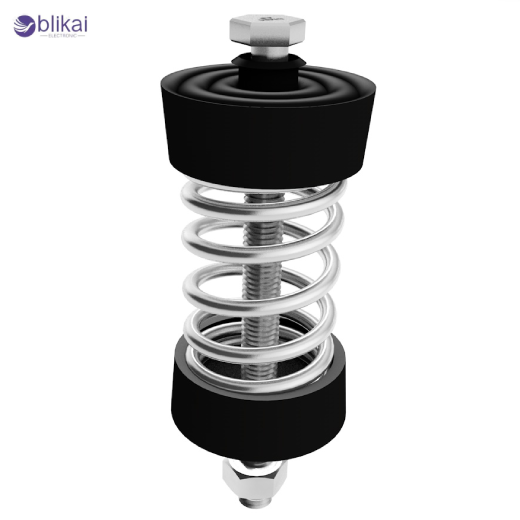
The spring isolators use steel coils to isolate low-frequency vibration in heavy or large equipment. They have a large load capacity and good long-term performance, but need additional damping in order to prevent bouncing excessively. They are best for transformers, HVAC electronics, and communication racks.
Air Vibration Isolators
Air isolators use pneumatic chambers to achieve extremely low natural frequencies, ideal for precision electronics and lab instruments. They provide adjustable stiffness and superior vibration reduction, but cost more and may require pressurization. They're common in optical, measurement, and semiconductor tools.
Silicone and Gel Vibration Isolators
Gel and silicone isolators make use of viscoelastic materials, which creep slowly, leading to high damping and the best shock protection. They are also good in temperatures and shield delicate modules such as cameras and MEMS sensors. Their creep limits are long-term working in heavy loads.
Wire Rope and Metal Mesh Isolators
Wire-rope isolators involve the use of stainless-steel cables that are in the form of loops to offer multi-directional vibration and shock isolation. They are very sustainable, able to withstand temperature extremes as well as perform well in harsh conditions. They are expensive and inflexible, which makes them suitable only in aerospace, defense and rugged industrial electronics.
Vibration Isolator Selection Guide
What Factors Matter Most When Selecting an Isolator?
Key factors include vibration frequency, static and dynamic load, material behavior, environmental conditions, and available mounting space. Designers must ensure the isolator’s natural frequency stays below the expected vibration range for effective attenuation. Temperature, chemical exposure, and footprint also determine the best isolator type.
Applications of Vibration Isolators
Where Are They Used in Consumer Electronics?
Consumer devices use isolators to reduce noise, protect camera modules, stabilize HDD/SSD mounts, and dampen fan vibration. These isolators enhance the ease of use, minimize the amount of mechanical noise, and avoid the early wear of components. The most prevalent types of silicone and rubber are in compact electronics.
How Are They Used in Industrial Electronics?
Industrial electronics rely on isolators to stabilize PLCs, VFDs, control cabinets, and high-power transformers under continuous vibration. They enhance reliability in machinery and automation environments where motors and mechanical shocks are common. Wire-rope and spring isolators are typically used for high-load systems.
Why Are They Critical in Automotive Electronics?
Automotive isolators protect ECUs, radar modules, infotainment units, and sensors from engine vibration, road shock, and temperature extremes. These isolators improve durability and prevent signal drift in safety-critical systems. Silicone, rubber, and hybrid isolators are widely used in modern vehicles.
How Do Aerospace and Defense Electronics Use Them?
Aerospace systems must have isolators with the ability to resist high shock forces, temperature and extended life cycles. They shield avionics, navigation unit, communications unit, and satellite electronics against vibration. In critical environments, the users prefer wire-rope isolators
Vibration Isolator Comparison Table
|
Type |
Best For |
Advantages |
Disadvantages |
|
Rubber Mounts |
General electronics, HVAC units |
Low cost, easy to install |
Limited high-frequency isolation |
|
Spring Isolators |
Heavy machinery, large enclosures |
Excellent low-frequency isolation |
Bulky, higher cost |
|
Wire Rope Isolators |
Defense, aerospace, rugged environments |
Extreme shock and vibration resistance |
More expensive |
|
Sorbothane Pads |
Sensitive sensors, lab equipment |
High damping, wide frequency range |
Can deform under heavy loads |
FAQ
What Are the Benefits of Using a Vibration Isolator?
Vibration isolators eliminate fatigue of the components, enhance stabilization of signals, silence mechanical systems and increase the life of the equipment. They guarantee stability of electronic performance even in dynamic or adverse conditions.
What Materials Work Best for Vibration Isolation?
The material to use in everyday electronics is rubber and silicone; the shock-heavy devices are better using gel, springs are better when dealing with heavy loads, and the wire rope is better in extreme environments. Choice depends on vibration frequency and durability requirements.
How Do You Install an Isolator Correctly?
Even weight distribution, proper mounting torque, and surface alignment are some of the requirements that lead to good installation. This may cause serious performance degradation of isolation by improper preloading or improper mounting.
Are vibration isolators the same as shock mounts?
No. The difference between vibration isolators and shock mounts is that the former reduces constant vibration, whereas the latter dampens impact. Other mounts also serve both purposes, but the choice is based on your application: vibration, shock or both.
Do vibration isolators reduce electronic noise or interference?
Yes. They suppress mechanical resonance, microphonic effects, connector movement and electrical noise, which cause noise in the circuit. This aids in stabilizing sensors, audio circuits and precision modules.
How long do vibration isolators last?
The average life of isolators varies with the material used, load and temperature, under 5 to 15 years. Rubber is the quickest aging material, whereas wire-rope and metal isolators are the longest serving. Spot check will provide a consistent performance.
Should you use multiple vibration isolators?
Yes. Several mounts evenly distribute the load and enhance control of multi-axis vibration. This reduces stress concentration, eliminates rocking and enhances the isolation performance of heavier devices.
How do I choose the right vibration isolator material?
Rubber and silicone suit general electronics, gel works with sensitive shock-prone modules, and metal types work in harsh conditions. Experiment with matching material to vibration frequency, load and operating conditions to get the best results.
Can vibration isolators improve sensor accuracy?
Yes. They minimize the noise, drift, and jitter in IMUs, cameras and precision sensors. This aids in maintaining constant measurements in automotive, robotics and measurement systems.
Do vibration isolators require maintenance?
Maintenance is kept to a bare minimum, and periodic checks on cracks, compression or corrosion are taken to maintain consistent performance. It might be necessary to replace mission-critical systems periodically in order to prevent downtime.
Some images are sourced online. Please contact us for removal if any copyright concerns arise.





