


What Is SDRAM? Working, Types & Applications Guide
 295
295What Is SDRAM (Synchronous Dynamic Random Access Memory)?
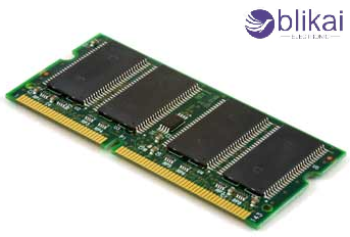
SDRAM is a volatile semiconductor memory that stores digital information temporarily, alongside coordinating all the operations with a system clock signal to facilitate faster and more ordered communication of the memory and the central processing unit. In contrast to the older asynchronous DRAM, whose responses were subject to control signals, SDRAM will execute commands based on clock cycles, which provides predictable timing and better throughput. This synchronization enables memory controllers to queue instructions, overlap operations, and transfer data in bursts as opposed to a single transaction, which largely enhances efficiency.
How SDRAM Works
The mechanism of operation is that SDRAM works by processing memory commands every timing window of a periodic clock signal produced by the system motherboard or processor, so that read, write and refresh actions take place within defined time windows. SDRAM does not react to commands instantly; it schedules operations on a clock cycle-by-cycle basis, so it is possible to have internal preparation steps (row activation and column selection) run efficiently. This form of structured timing model supports the continuous streaming of data and minimizes idle time between accesses to memory, which enhances the performance of the system in general.
SDRAM Architecture and Internal Structure
The inner structure of SDRAM is well planned so that the speed and efficiency can be maximized with high storage density by employing hierarchical structures that subdivide the memory into autonomous regions. This organization enables simultaneous preparation of multiple memory operations, reducing delays between accesses and supporting high-bandwidth data transfers required by modern processors.
Memory Cells and Capacitors
Each SDRAM cell consists of a transistor acting as a switch and a capacitor storing electrical charge representing binary information. A charged capacitor typically represents a logic “1,” while a discharged state represents “0.” Because capacitors naturally lose charge, refresh circuitry continually restores stored data, allowing extremely dense memory arrays to be implemented at low cost.
Banks, Rows, and Columns
SDRAM splits memory into various memory banks where rows and columns are organized in the form of a spreadsheet grid. When one row is activated, you can access several columns in the same row quickly, and therefore, you can conduct burst operations, which establish the transmission of adjacent data effectively. Several banks permit a single operation to prepare and another to execute to enhance throughput with the use of parallelism.
Command and Control Signals
SDRAM relies on control signals such as Row Address Strobe (RAS), Column Address Strobe (CAS), Write Enable (WE), and chip select signals to manage memory operations. These signals are used to facilitate activation, reading, writing, and precharging so that the data of billions of storage locations is handled properly.
Types of SDRAM
SDRAM technology has, over the years, developed into various generations that are aimed at satisfying the rising performance needs in addition to enhancing energy efficiency and data bandwidth.
SDR SDRAM (Single Data Rate)
The first implementation of SDRAM would transfer one piece of data at a time at a rate of one clock cycle, which would make a significant improvement over asynchronous DRAM, but that would soon not scale with the speeding up of computer processors. The SDR SDRAM received widespread use in computers in the late 1990s, before it was supplanted by more sophisticated designs.
DDR SDRAM Family
Double Data Rate (DDR) SDRAM improved performance by transferring data on both rising and falling edges of the clock signal, effectively doubling bandwidth without increasing clock frequency. The first implementation of SDRAM would transfer one piece of data at a time at a rate of one clock cycle, which would make a significant improvement over asynchronous DRAM, but that would soon not scale with the speeding up of computer processors. The SDR SDRAM received widespread use in computers in the late 1990s, before it was supplanted by more sophisticated designs.
Mobile and Low-Power SDRAM
Low-power DDR (LPDDR) variants are smartphone-based, tablet-based, and portable electronics-based variants of LPDDR memory that are low-power with high performance. These designs prolong battery life and also accommodate high-level multimedia and mobile processing.
SDRAM vs DRAM vs SRAM
Understanding SDRAM becomes clearer when compared with other memory technologies used in electronics.
SDRAM vs Traditional DRAM
Traditional DRAM is asynchronous, and there are delays that are not predictable when communicating with processors. SDRAM is asynchronous, which ensures that operations are synchronized with a clock, making it efficient and capable of high transfer rates.
SDRAM vs SRAM
(Static RAM) SRAM Data are stored using flip-flop circuits, rather than capacitors, so they do not need to be refreshed, providing access speeds of very high speed. Nonetheless, SRAM takes up more silicon space and is much more expensive, so SDRAM is the memory used in the main system, with SRAM being used in CPU caches.
Performance Comparison Overview
In implementation, SDRAM trades speed, density, and cost, and provides much higher capacity than SRAM and much higher performance than older DRAM technologies, and is therefore used extensively throughout the computer industry.
Common Applications of SDRAM
In almost all contemporary digital systems that must have quick temporary storage of data, SDRAM is employed, including personal computers, where it is being used as primary system memory that supports operating systems and applications. Graphics cards are dependent on high-speed forms of SDRAM to retrieve textures and visual data at high speeds, whereas embedded systems employ SDRAM in real-time processing in automotive controllers, industrial machines, and Internet of Things devices. Routers and switches and other networking devices utilize SDRAM buffers to handle packet traffic, and other consumer electronics like smart televisions, game consoles and multimedia devices rely on SDRAM to handle data effectively and provide a responsive experience.
Advantages and Disadvantages of SDRAM
Despite the fact that SDRAM offers very good performance and is economical, it also suffers as a result of inherent limitations concerning its dynamic storage process. Denser, scaled, predictable timing behavior, and compatibility with modern processors are the key benefits of using them, whereas limitations include volatility, refresh overhead, and latency in comparison to ultra-fast cache memory technologies. In spite of these disadvantages, SDRAM is still the most viable option as far as the system memory is concerned since it has the most reasonable trade-offs in terms of cost, capacity, and speed.
How to Choose the Right SDRAM
To achieve the reliability of SDRAM operation, it is important to select an appropriate SDRAM by considering the system compatibility, performance requirements, and power constraints. Engineers need to align type and generation of memory with motherboard or controller support, frequency and latency trade-offs based on the nature of work load and energy efficiency of portable or embedded systems. Special applications like gaming, data processing, or industrial control also determine the best capacity and speed options, and as such, the specification analysis of the system should be given careful consideration during the system design.
Future Trends in SDRAM Technology
SDRAM technology continues to evolve to meet increasing computational demands driven by artificial intelligence, cloud infrastructure, and high-performance computing systems. The next generation DDR5 memory brings in new features of a higher bandwidth, better control of power and much more sophisticated features of error handling, and further innovations will bring in increased efficiency with better signaling architectures and lower operating voltages. With the rise in usage of data-intensive applications, SDRAM innovations will target to increase capacity and speed at energy efficiency and thermal stability.
FAQ
What is the difference between SDRAM and DDR RAM?
DDR RAM is a better form of SDRAM, and this one performs twice the transfer per cycle, which increases the bandwidth, but not the frequency.
Why does SDRAM need refreshing?
SDRAM stores data in electrical charge within capacitors, which leak energy and need periodic refresh cycles to maintain stored data.
Is SDRAM volatile memory?
Yes, SDRAM is not volatile, but it loses all the stored data when power is removed since it depends on a continuous electricity charge.
Conclusion
SDRAM is a groundbreaking memory technology discovery that allowed modern computing performance, in the sense of synchronization of memory operations with processor clock cycles, and was many times more efficient than previous DRAM structures. By constantly evolving into DDR generations, SDRAM has been able to keep up with the increasing performance, capacity, and power requirements and be cost-efficient and scalable. SDRAM is an essential part of digital electronics since it is found in personal computers and mobile devices, as well as in industrial automation and cloud servers, which is important to provide quick access to data and a safe functioning of the system in the world of increasing data volumes.
Some images are sourced online. Please contact us for removal if any copyright concerns arise.





