


What Is an ARM Processor? Why It Powers Most Devices
 348
348Introduction
One of the most popular computing architectures in the world is an ARM processor, which is used in billions of electronic devices, including smartphones and tablets, embedded systems, IoT hardware, and modern laptops. In contrast to the conventional desktop CPUs that focus on raw processing power, the ARM CPUs are based on efficiency, performance scale, and power conservation. These attributes render ARM architecture particularly appropriate in battery-powered and always-on gadgets, which clarifies why ARM-based procedure prevails in customer electronics and also broadens to PCs, servers, and data centres.
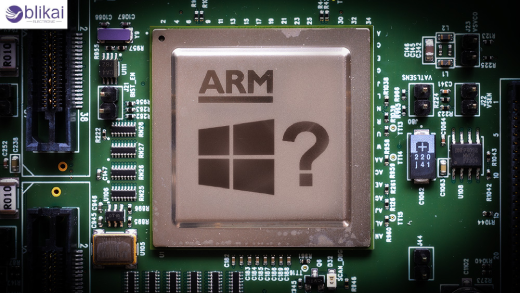
What Is an ARM Processor?
ARM processor ARM is a type of CPU, a software implementation of the ARM instruction set architecture (ISA), which was originally developed by ARM Holdings. ARM processors follow a RISC (Reduced Instruction Set Computing) design philosophy, which uses a smaller and simpler set of instructions compared to traditional desktop CPUs. The low-level design enables the hardware complexity to be reduced, power consumption to be reduced, and performance per watt to be enhanced, which makes ARM processors a desirable option in mobile phone designs, embedded systems and system-on-chip (SoC) designs.
How Does an ARM Processor Work?
The ARM processor operates under a simplified and very efficient pipeline based on the focus on predictable execution and low power consumption. The ARM CPUs have a load/store architecture, which implies particular instructions only access the memory, whereas other instructions use the registers, improving the efficiency and minimizing the execution time. With deep pipelining, heavy use of registers and dynamic frequency scaling, ARM processors can be dynamically scaled to meet performance requirements in real time with low power consumption.
ARM Instruction Set Architecture (ISA)
The ARM instruction set architecture is the definition of how software interacts with ARM-based hardware and has undergone numerous generations to meet more and more performance and functionality. Older models like ARMv7 were concerned with 32-bit computing on mobile and embedded applications, whereas ARMv8 offered 64-bit computing to enable support of modern operating systems and programs. The most recent ARMv9 architecture introduces better security, better performance, and AI and machine learning workload optimization, which has rendered ARM an appropriate platform in high-performance and enterprise computing.
Why ARM Processors Are So Power-Efficient
ARM processors have a reputation for being very power efficient owing to their being built in order to reduce the complexity of instructions, the count of transistors, and the operating voltage. ARM processors can execute simpler instructions more effectively, thereby making them more performance-per-watt efficient than more complicated processors. Dynamic voltage and frequency scaling, efficient idle states, workload-aware performance management and other features enable ARM processors to only use the energy required to complete a certain task, greatly increasing battery life and minimizing heat dissipation.
ARM Big.LITTLE Architecture
ARM big.LITTLE architecture ARM big.LITTLE architecture is a heterogeneous multi-core architecture, which integrates energy-efficient cores with high-performance cores within the same central processing unit. High-performance cores are used to process tasks that are demanding, like gaming and video processing, and the efficient cores deal with background tasks and low-power workloads. Working with the ability to dynamically alternate between these cores on demand of real-time performance requirements, the big.LITTLE architecture allows ARM processors to provide high performance on demand, yet with high energy efficiency in normal operation.
Where Are ARM Processors Used?
The use of ARM processors is quite diverse, as it can be applied in various industries because it is flexible and can be scaled. They dominate smartphones and tablets, power embedded systems in industrial and medical equipment, and serve as the core of IoT devices and smart sensors. ARM-based processors have also penetrated the automotive electronics, networking devices, and consumer appliances and are now making inroads into laptops, desktops, and cloud servers as performance and software support levels continue to rise.
ARM in Mobile Devices
The standard mobile device processor is ARM processors due to their optimal performance to battery efficiency ratio. Mobile system-on- chip designs combine ARM CPU, GPUs, artificial intelligent accelerators, memory controllers and wireless communications modules all into one small package. This high-degree of integration lowers power costs and area utilized and presents the capability needed by current smartphone applications, game-play and multimedia processing.
ARM in Embedded Systems
ARM processors are being appreciated in embedded systems because of their low power consumption, real-time performance and extensive ecosystem compatibility. ARM Cortex-M microcontrollers are commonly used in control systems, sensors and low-power electronics and Cortex-R processors are used in real time and safety-critical applications, including automotive and industrial control. This versatility makes ARM the dominant architecture in embedded and industrial electronics.
ARM Processor vs x86 Processor
The first distinction between the ARM and x86 processors is the priority in the architecture design. ARM has a focus on efficiency, scalability, and low power usage, allowing them to be used in mobile applications and embedded applications, whereas x86 is focused on desktop- and server-like high performance and compatibility. Despite the historical dominance of x86 CPUs in PCs, there has been increasingly better performance of ARM and software compatibility, particularly in laptops and daily workloads in computers.
ARM vs x86 for Laptops and PCs
The ARM processors have found more applications in laptops and desktop computers because they can provide high performance with significantly higher battery life compared to the conventional x86 systems. ARM-based PCs enjoy silent working, low heat production and long standby times, but the software compatibility and emulation can still be a problem with some legacy applications. ARM is starting to be used as an option to mainstream personal computing, as operating systems and applications are ARM-native.
ARM Processor Licensing Model
As opposed to the other conventional CPU producers, ARM does not make complete processors but rather licenses its technology to other companies. In ARM standard designs, manufacturers are free to license the core designs or to license the architecture to design their own CPU based on the ARM instruction set. This licensing system promotes innovation and software compatibility throughout the ARM ecosystem to support a large variety of customized processors that are tailored to specific needs.
Popular ARM Core Types
ARM processors are grouped together in a number of core families, which are fine-tuned to various uses. Cores that are Cortex-A are designed to be embedded in smartphones, tablets and computers in application processing, cores with Cortex-R are just designed to be used in real-time and safety-critical applications, and cores with Cortex-M are optimized to be used in microcontroller applications with extremely low power usage. This controlled product range enables ARM architecture to be scaled between simple embedded systems to high performance computing systems.
Advantages and Disadvantages of ARM Processors
The ARM processors have a great advantage, such as the ability to consume low amounts of energy, scalable performance, a good environment as an ecosystem and can easily fit into system-on-chip designs. Nevertheless, they also may experience some difficulties, like the lack of compatibility of the software with older applications or lower performance with some heavy workloads than specialized x86 processors. Irrespective of these weaknesses, advances in ARM hardware and software are still ongoing, so these shortcomings are being mitigated.
ARM Processors in Modern SoCs
ARM processors are influencing modern system-on-chip design because they have a modular and integration-friendly architecture. ARM-based SoCs are generally packaged in the same chip, which includes the CPU, graphics, AI, the memory controllers, and peripheral interfaces, which draw less power and consume less space. This integration is one of the reasons why ARM processors are employed in smartphones, embedded systems and compact computer systems.
Future of ARM Processors
Even in mobile devices, the future of ARM processors goes well beyond that, as they are increasingly applied in AI acceleration, edge computing, cloud servers, and data centers. Increment in the ARM architecture, in addition to enhanced software support, is making ARM-based systems compete with high-performance and enterprise environments. With energy efficiency coming to the fore as an important part of the global computing infrastructure, ARM processors will continue to be even more significant in defining the future of technology.
FAQs
Is ARM better than Intel?
ARM is generally better for power efficiency and battery life, while Intel processors often excel in legacy software compatibility and certain high-performance computing tasks.
Can ARM processors run Windows?
Yes, ARM processors can execute Windows versions specifically created to operate on ARM architecture, and x86 application emulation is possible.
Why is ARM used in smartphones?
Smartphones implement ARM processors due to their high performance per watt, which allows them to have long battery life and operate efficiently with regard to thermal management.
What is the difference between ARM and x86?
ARM has an efficient and scalable RISC-based architecture, whereas x86 has a CISC-based one, with its emphasis on performance and backward compatibility.
Some images are sourced online. Please contact us for removal if any copyright concerns arise.





