


DC Motor Explained: Types, Working Principle & Applications
 362
362What Is a DC Motor?
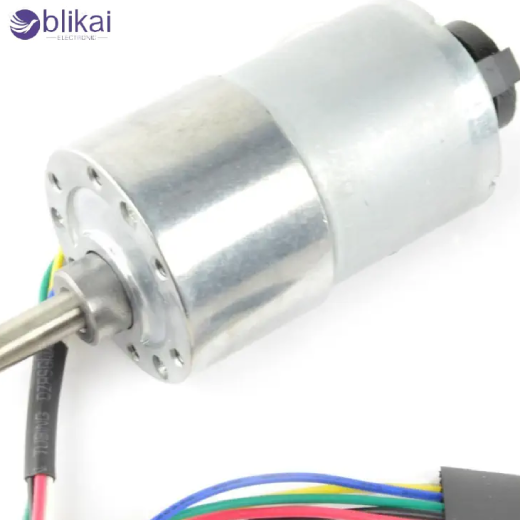
A DC motor is an electric machine that transforms electrical power that exists in direct current form to mechanical energy with the help of a magnetic field and a current-carrying circuit. As the current is passed through the windings of the motor as it passes over them in a magnetic field, a force is created which generates torque and causes the motor shaft to rotate. The DC motors have been associated with predictable operation, simple control procedures, and high torque characteristics at low speeds.
How Does a DC Motor Work?
Basic Operating Principle of a DC Motor
A DC motor operates on the principle of the law of Lorentz force, and it declares that a current-carrying conductor that is put in a magnetic field experiences a force. The Fleming Left-Hand Rule of determining the direction of a force can be applied in calculating the direction of a magnetic field, a current, and a motion. This electromagnetic force exerts torque on the rotor, thus causing rotational motion.
Main Components of a DC Motor
The general components of a standard DC motor are the armature (rotor), which carries the current, the stator or field system, which generates the magnetic field, the commutator, which provides unidirectional torque, carbon brushes, to which the current is transferred and the shaft and bearings, which provide the mechanical output smoothly.
Step-by-Step DC Motor Operation
Upon application of DC voltage, current will pass through the armature windings through the brushes and commutator. The interplay between armature current and stator magnetic field on one another results in an opposing force on conductors, which creates torque. The commutator changes the direction of current at the right moment when the rotor is rotating and makes sure that the rotating process proceeds in one direction.
Types of DC Motors
Brushed DC Motor
The brushed DC motors involve mechanical brushes and a commutator to regulate the flow of current in the armature. These are cheap, simple and easy to manipulate, hence they are ideal in simple applications. Their primary disadvantages, however, are brush wear, sparking and increased maintenance needs.
Brushless DC Motor (BLDC)
Another category of DC motors is the use of brushless motors, which are not operated using mechanical brushes but through an electronic process called commutation. They are more efficient, durable, less noisy and can be controlled in terms of speed. BLDC motors are commonly used in electric vehicles, drones, cooling fans, and modern industrial systems.
Series DC Motor
In a series DC motor, the field winding is connected in series with the armature. It may be applied as a crane, a hoist, or traction, in which case the high initial torque is needed. There is poor regulation of speed under no-load conditions.
Shunt DC Motor
Shunt DC motors parallel connect the field winding with the armature. They offer almost steady speed irrespective of the load and therefore are very suitable in machine tools, lathes and conveyors that need consistent operation.
Compound DC Motor
Compound DC motors use series and shunt windings together in order to achieve good speed regulation and high starting torque. Depending on the winding configuration, they can be cumulative or differential, offering flexibility for demanding industrial applications.
Speed Control of DC Motors
A simple and accurate control of speed is one of the largest merits of DC motors. Pulse-width modulation (PWM) can be used to adjust the motor speed by modifying the armature voltage, alternating the field current, or modifying the pulse-width. PWM-based motor drivers and controllers are used in current electronics to provide a method of effective speed regulation with the lowest power levels.
Advantages of DC Motors
DC motors start with good torque, can operate with ease at low speeds and possess simple control circuits. They are perfect in portable devices, automation and embedded applications because they are compatible with batteries, power supplies and electronic controllers.
Disadvantages of DC Motors
DC motors have shortcomings, although they have their advantages. The motors with brushes require frequent maintenance as the brushes wear off and the commutator is eroded. Electrical noise and sparking can interfere with sensitive circuits, while brushless motors, although efficient, tend to be more expensive and require complex electronic controllers.
Applications of DC Motors
Industrial Applications
DC motors are common in conveyors, rolling mills, presses and machine tools where a high degree of control in speed and torque is needed.
Automotive Applications
DC motors are used to drive devices in cars such as power windows, windshield wipers, seat adjustment systems, fuel pumps and electric power steering systems.
Consumer Electronics
DC motors are used in cooling fans, printers, optical drives, and small appliances because they are very small and reliable.
Robotics and Automation
DC motors are extremely essential in robots, actuators and automated guided vehicles because they control the movement, positioning, and speed of the mechanism.
DC Motor vs AC Motor
DC motors are better in speed regulation and high starting torque, whereas AC motors are used in fixed speed and high power. DC motors are commonly used in battery-driven and variable speed drive applications, whereas AC motors are mostly used in large industrial applications, as it requires less maintenance and easier power distribution.
How to Choose the Right DC Motor
The choice of an appropriate DC motor will be determined by the voltage rating, torque and speed demand, the load characteristics, the duty cycle, the efficiency, and the environmental conditions. Knowledge of application requirements will assist in providing good service life and reliability.
Common Problems and Troubleshooting
Some of the issues related to the DC motors include failure to start, overheating, intensity of noise, vibration, and wear of the brushes. Regular maintenance inspection of the motor, proper lubrication, appropriate voltage utilization, and substitution of components that have worn out can, to a great extent, contribute to enhancing the motor's life.
FAQs
What is a DC motor used for?
A DC motor is a device that transforms the direct current electrical energy into mechanical motion in those instances when variable velocity and high starting torque are needed, e.g., in robotics, automotive systems and electronic devices.
Why are DC motors easy to control?
DC motors also make it easy to operate as their speed is directly proportional to the voltage introduced to them, allowing easy control measures like adjusting the voltage and PWM to be used.
Which DC motor is best for high torque?
The best use of series DC motors is a high-torque application by virtue of the strong starting torque characteristics of series DC motors.
Conclusion
DC motors continue to play a significant role in contemporary electric and electronic systems. Having various types, adaptable control options and a broad range of applications, they remain critical in industries in automation to consumer electronics. Realizing the mechanism of DC motors and the choice of the appropriate type is the guarantee of the highest performance, efficiency, and reliability in all applications.
Some images are sourced online. Please contact us for removal if any copyright concerns arise.





