


How to Test Throttle Position Sensor (TPS) Step-by-Step
 157
157What Is a Throttle Position Sensor (TPS)?
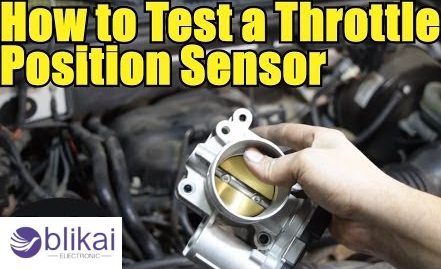
A throttle position sensor is a type of electronic sensor that is commonly placed on the throttle body and detects the angular position of the throttle valve and translates the mechanical motion into a variable electrical signal. In most vehicles, the sensor operates as a potentiometer powered by a regulated reference voltage from the ECU, usually around 5 volts. As the driver presses the accelerator pedal, the throttle plate opens, and the sensor changes its output voltage proportionally, allowing the ECU to determine how much air is entering the engine. Based on this signal, the engine control module adjusts fuel injection duration, ignition timing, emission control parameters, and sometimes automatic transmission shifting to maintain optimal combustion efficiency and drivability.
Common Symptoms of a Bad Throttle Position Sensor
Once a throttle position sensor starts to malfunction, the incorrect throttle angle data delivered to the ECU interferes with the control of the air-fuel mixture of the engine and throttle response, which, in most cases, causes a number of performance problems to be noticed.
Rough Idle or Stalling
A defective TPS can provide unreliable voltage changes when the throttle is shut, thus resulting in the ECU calculating the volume of air entering the engine falsely at idle. Consequently, the idle speed control system is unable to hold a constant engine speed, potentially resulting in rough idling, engine vibration or frequent stalling of the vehicle at traffic lights.
Poor Acceleration Response
When the TPS fails to properly follow throttle movement, the ECU will slow to provide adjustments to the fuel delivery during acceleration. This may result in hesitation, slow throttle response or a definite delay in responding to the accelerator pedal by the driver.
Check Engine Light
Onboard diagnostics constantly measure sensor performance on most of the modern vehicles. In case of abnormal signals in TPS voltage and signal inconsistency, the ECU records diagnostic trouble codes and sends out the check engine light as a warning to the driver about a possible sensor or circuit failure.
Sudden Engine Surging
An unstable signal of TPS can cause the ECU to repeatedly adjust the fuel injection and ignition timing in an attempt to correct erroneous throttle information that may result in sudden engine surging or uncontrollable acceleration during driving.
Tools Required to Test a Throttle Position Sensor
A throttle position sensor test does not involve the need to purchase expensive diagnostic instruments, and in most instances, the test can be done with a combination of simple electronic tools that can measure voltage and track sensor signals.
Digital Multimeter
The most commonly described device to test TPS voltage output is the digital multimeter due to the fact that the device enables the technicians to measure both the reference voltage, the signal voltage and ground continuity with an elevated degree of accuracy.
OBD-II Scanner
An OBD-II scan tool allows access to real-time sensor data and diagnostic trouble codes that are stored, and therefore, it is possible to look at TPS voltage or throttle percentage values as the engine is running.
Back-Probe Pins or Test Leads
Back-probe pins or thin diagnostic leads allow voltage measurements to be taken directly from the sensor connector without damaging the wiring harness or disconnecting the sensor.
How to Test Throttle Position Sensor with a Multimeter (Step-by-Step)
One of the most sure ways of detecting the problems with TPS is by using a digital multimeter since it will directly read the electrical response produced by the sensor, and will determine that the signal varies steadily over the throttle range.
Step 1: Locate the Throttle Position Sensor
The throttle position sensor on the throttle body may be found at the throttle shaft side, where, in most cases, it is easy to detect throttle plate movement directly.
Step 2: Turn the Ignition Key to ON
Turn the ignition key to ON and not on to start the engine, to allow the ECU feed the TPS circuit when the sensor is not in motion.
Step 3: Check Reference Voltage
Hook the multimeter up to the DC voltage mode and measure the voltage between the reference wire and the ground wire at the sensor connector. The voltage should be approximately 5 volts, which indicates that the ECU is supplying the correct supply voltage.
Step 4: Measure the Signal Voltage
The second thing to do is to attach the multimeter probe to the signal wire and the ground probe to the sensor ground terminal, and measure the voltage at throttle position, which under full throttle should be between about 0.5 and 0.7 volts.
Step 5: Slowly Open the Throttle
Slowly open the throttle plate manually or by pushing the accelerator pedal as the multimeter display is observed, making sure that the voltage rises steadily and gradually without any sharp rises or falls.
Step 6: Verify Ground Connection
Finally, confirm that the ground wire provides a stable electrical connection by checking continuity between the ground terminal and the vehicle chassis or battery negative terminal.
How to Test TPS Using an OBD-II Scanner
In current cars with complex onboard diagnostics, a scan tool can serve as a handy way of analyzing throttle position sensor operation by showing real-time sensor data straight out of the ECU.
Reading Live TPS Data
Once the scan tool is plugged into the diagnostic port of the vehicle, the user will be able to view the live data parameters and watch throttle position values in either voltage or percentage form, which are expected to increase gradually as the accelerator pedal is pushed.
Checking for Diagnostic Trouble Codes
The scan tool can also read the stored fault code associated with the throttle position sensor circuit, which can be a signal range error, circuit interruption or correlation between two or more throttle sensors in an electronic throttle control system.
TPS Testing Results and What They Mean
No Voltage Signal
In case the multimeter shows no signal voltage on the TP, it could be due to a broken wire, disconnected connector or lack of reference voltage in the ECU.
Voltage Jumps or Drops
When the throttle is opened gradually, the internal potentiometer track within the sensor can become worn or damaged, resulting in the voltage reading suddenly jumping, dropping, or fluctuating.
Constant Voltage Reading
In case the sensor output does not change according to throttle movement and instead is at a constant voltage, TPS fails internally, or the signal wire could be shorted.
Tips for Accurate TPS Testing
Throttle position sensor testing must be done with care and specific measurements and with consideration of the electrical wiring, since any minor problem with the wiring will lead to inaccurate diagnostic values. Ensuring that the vehicle battery voltage is stable during testing helps prevent incorrect readings, and using proper back-probing methods avoids damaging sensor connectors or wiring insulation. The throttle should also be moved slowly and steadily when monitoring the changes in voltage so that even small anomalies in the signal can be detected.
Conclusion
Verifying a throttle position sensor is a critical diagnostic research that may aid in diagnosing the engine functioning issues associated with the throttle body and electronic fuel injection. Knowing how the TPS operates and the easy-to-use device, like a digital multimeter or OBD-II scanner, the technicians and vehicle owners will be able to easily check whether the sensors work and decide whether to be replaced or not. Proper TPS testing not only avoids unneeded repairs but also provides the engine control system with the correct throttle information so that the vehicle can continue to accelerate smoothly, maintain a steady idle and make rational use of its fuel.
FAQ
Can you test a throttle position sensor without removing it?
Yes, most throttle position sensors can be tested while still installed on the throttle body by back-probing the connector and measuring the voltage output while the throttle is moved.
What voltage should a TPS read at idle?
0.4 -0.7 volts at closed throttle is a normal TPS voltage; however, depending on the manufacturer of the vehicle, this can be different.
Do you need to recalibrate a new throttle position sensor?
There are vehicle models that have throttle relearn or ECU reset requirements following the installation of a new throttle position sensor in order to make the engine control unit aware of the proper throttle position range.
Some images are sourced online. Please contact us for removal if any copyright concerns arise.





