


Throttle Position Sensor Meaning: How TPS Works
 516
516What Is a Throttle Position Sensor (TPS)?
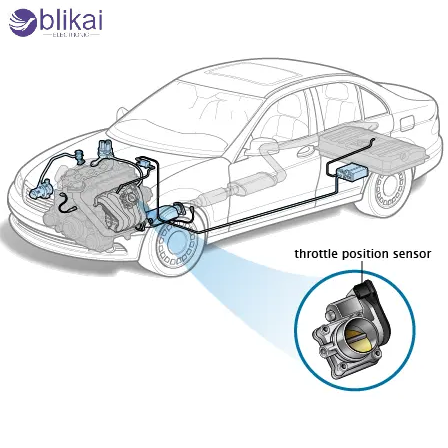
The throttle position sensor is an electronic sensor that is located on the throttle body and senses the throttle plate or throttle valve position. Its significant purpose is to detect throttle position and send an equal electrical signal to the ECU. With the help of this signal, the ECU sets engine load, the timing of fuel injection, ignition advance and transmission shift behavior. The plain language TPS feeds the engine computer with the quantity of power the driver is requesting.
What Does a Throttle Position Sensor Do?
Throttle position sensor is the throttle position sensor is an endless throttle sensor that is constantly reading throttle position and giving a real-time throttle position signal back to the ECU. The throttle being closed in idle condition produces a low voltage in TPS, and that implies minimal air intake. As the throttle opens, voltage increases proportionally, allowing the ECU to enrich the air-fuel mixture, adjust ignition timing, and control engine speed. This information is critical for smooth acceleration, stable idle, and optimal emissions control.
How Does a Throttle Position Sensor Work?
The principle behind the operation of the throttle position sensor is that mechanical motion is converted to an electrical signal. When the throttle plate turns, the sensor provides a variable voltage, which is proportional to the throttle angle. The ECU constantly monitors this signal and responds immediately to throttle response to achieve the appropriate response of the engine, regardless of the driving conditions.
Potentiometer-Type Throttle Position Sensor
A potentiometer-type TPS uses a resistive track and a movable wiper arm connected to the throttle shaft. As the throttle opens, the wiper moves along the resistive element, changing the output voltage. These are straightforward and affordable sensors, and they are highly applicable, although they wear out over time as a result of mechanical contact.
Hall Effect Throttle Position Sensor
A Hall effect throttle position sensor uses a magnetic field and semiconductor circuitry to detect throttle position without physical contact. The sensor output is modified as the throttle is turned. Hall effect TPS are of higher quality and wear resistance, and are usually used in a current-day vehicle with an electronic throttle.
Throttle Position Sensor Signal Characteristics
The throttle position sensors normally work with a voltage of about 0.5 volts or so at closed throttle up to about 4.5 volts or so at wide-open throttle. The ECU expects a smooth, linear increase in voltage as the throttle opens. Any sharp rises, spikes or gaps in the signal may lead to problems in the drivability and result in diagnostic trouble codes.
How the ECU Uses TPS Data
ECU processes TPS data to calculate engine load and process numerous parameters at once. These are fuel injector pulse width, ignition timing, idle air control, exhaust gas recirculation and automatic transmission shifting. In many systems, TPS data is cross-referenced with signals from the mass airflow sensor (MAF), manifold absolute pressure sensor (MAP), and oxygen sensors for precise engine control.
Common Symptoms of a Bad Throttle Position Sensor
A failing throttle position sensor can cause a wide range of engine performance problems. The typical symptoms are: rough or unstable idle, immediate deceleration on acceleration, abrupt engine surging, poor throttle response, inefficient fuel consumption, and inability to hold steady speed. In extreme situations, the car can stall or go limp. The check engine light commonly lights up in the presence of incongruent or unreasonable TPS indicators to the ECU.
Throttle Position Sensor Failure Causes
This is because throttle position sensors may malfunction as a result of mechanical wear, particularly on potentiometer-based systems. Contamination with dirt, oil and moisture can disrupt the operation of the sensor. Electrical faults may also result in wrong readings due to damaged wiring, corroded connectors or internal short circuits. Over time, sensor degradation is caused by heat and vibration within the engine bay.
How to Test a Throttle Position Sensor
An examination of a throttle position sensor is a simple diagnosis. The first thing to do is to conduct a visual checkup to verify the presence of loose connectors or wiring damage. It is possible to measure the TPS output voltage using a multimeter and open the throttle slowly. A normal sensor will have a continuous and smooth rise in voltage. Live TPS data and detection of abnormalities could also be observed with the help of an OBD-II scan tool.
Normal vs Faulty TPS Readings
Normal TPS values indicate that the idle voltage is constant, and that there is a slow increase to peak voltage with full throttle. There can be faulty readings, which can be sudden jumps in voltage, dropouts, or values that do not change according to throttle movement. Such defective indicators mean that there is wear-out or an electrical breakdown inside.
Throttle Position Sensor Reset and Calibration
A throttle position sensor reset/calibration is necessary after a battery is changed or the throttle position sensor is replaced. The relearn of the closed throttle body and open throttle body is made possible using this process by the ECU. The steps taken to reset the car depend on the car maker and can include a definite sequence of ignition cycles, pedal presses or scan tool inputs. The correct calibration guarantees the throttle response is correct and avoids idle or acceleration problems.
Throttle Position Sensor vs Accelerator Pedal Position Sensor
The throttle position sensor and accelerator pedal position sensor play two distinct but closely related functions in the present drive-by-wire systems. The accelerator pedal position sensor records the input of the driver, whereas the TPS records the throttle plate position. The ECU balances the two signals so as to provide safe and accurate throttle control. Disagreement between these sensors may cause a fault code and cut the engine power off.
Applications of Throttle Position Sensors
Throttle position sensors are widely used across different engine-driven systems where precise control of air intake and engine load is required. By providing accurate throttle position feedback to the control unit, TPS devices enable efficient fuel delivery, smooth power response, and stable operation in a variety of applications.
Throttle Position Sensors in Gasoline Engines
In gasoline-powered vehicles, throttle position sensors are essential for controlling fuel injection, ignition timing, and idle speed. TPS is an essential sensor in electronic fuel injection systems as the ECU uses TPS data to estimate the demand of drivers, adjusting the air-fuel ratios when acceleration occurs, and minimizing emissions when the engine is operating under part-load conditions.
Throttle Position Sensors in Diesel Engines
Despite the fact that diesel engines do not employ conventional throttles to control power, throttle position sensors are employed in contemporary diesel engines to also control airflow, exhaust gas recirculation (EGR) and emission control plans. TPS signals facilitate the maximization of the efficiency of combustion and the tight compliance with emissions laws.
Throttle Position Sensors in Motorcycles and ATVs
All-terrain vehicles and motorcycles have throttle position sensors, as they are important in providing rapid and accurate throttle response. These applications of TPS units also promote easy acceleration, steady idle and better rideability, particularly in electronically controlled fuel injection systems where throttle switches are commonplace.
Throttle Position Sensors in Marine Engines
Throttle position sensors are utilized in marine engines to offer good throttle feedback in extreme conditions that are vulnerable to damp and vibrate. Without any mistakes in TPS, the boat and personal watercraft engines operate at the same speed, fuel consumption is more efficient, and the delivery of power is safe.
Throttle Position Sensors in Industrial Engines and Equipment
The throttle position sensors are used in industrial engines, generators, forklifts, and construction machinery to ensure load monitoring and speed control. TPS devices are used to assist in stabilizing the operation of the variable loads, enhancing the fuel efficiency and safeguarding the engine against overloading and unreliable running conditions.
Throttle Position Sensors in Drive-by-Wire Systems
Throttle position sensors are used together with accelerator pedal position sensors in electronic throttle control systems to give closed-loop feedback. This app improves safety, gives the option of traction control, cruise control, and other functions like the ability to manage the torque and stability.
FAQ
Can You Drive with a Bad Throttle Position Sensor?
It is possible but not advisable to drive with a faulty throttle position sensor, which may result in poor engine performance, unsafe acceleration, and high fuel consumption.
Will a TPS Affect Transmission Shifting?
Yes, the throttle position sensor influences automatic transmission shift timing. Incorrect TPS signals can cause harsh, delayed, or erratic gear changes.
Is a TPS the Same as a Throttle Body Sensor?
The throttle body assembly includes the TPS, although this is a separate component that performs a specific function in position sensing.
Conclusion
To diagnose the problem with engine performance and provide efficient operation of a vehicle, it is necessary to understand the throttle position sensor's meaning and how the TPS works. By accurately monitoring throttle movement and providing real-time feedback to the ECU, the TPS ensures smooth acceleration, stable idle, and optimal fuel delivery. By conducting frequent checkups, ensuring that testing is conducted, and replacement of a faulty throttle position sensor as soon as possible, expensive repairs can be avoided and the modern engine can continue to operate without failure.
Some images are sourced online. Please contact us for removal if any copyright concerns arise.





