


Throttle Position Sensor Replacement: Symptoms & Fix Guide
 130
130What Is a Throttle Position Sensor (TPS)?
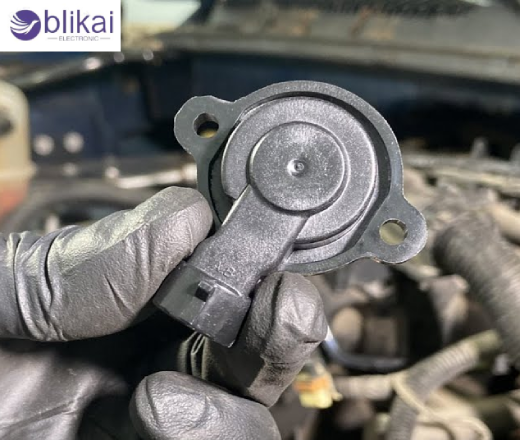
A throttle position sensor (TPS) is an electronic device that is attached to the throttle body and measures the throttle valve position and translates mechanical motion into an electrical voltage signal, which can be read by the engine control unit (ECU). In the majority of cars, the TPS is a variable resistor or potentiometer fed with a reference voltage of about 5 volts by the ECU. When the driver presses the accelerator pedal, and the throttle plate opens, the sensor varies its resistance and gives a changing voltage signal which is proportional to throttle angle. This sensor enables the ECU to figure out the quantity of air getting into the engine and modify the fuel injection, ignition timing, and transmission characteristics accordingly, to ensure effective burning, acceleration, and the emission of specific pollutants.
Common Symptoms of a Bad Throttle Position Sensor
Check Engine Light
The second, and one of the most frequent symptoms of a malfunctioning throttle position sensor, is the appearance of the check engine light on the vehicle dashboard. When the ECU detects abnormal TPS voltage signals or inconsistent throttle readings, it may trigger diagnostic trouble codes related to throttle position or sensor performance. An OBD2 scanner can be used to access these codes, which usually indicate that the TPS is faulty or that it is generating erroneous signals.
Poor Acceleration or Hesitation
A defective TPS can result in the observable reluctance to press the accelerator pedal. Because the ECU relies on TPS signals to determine how much fuel to inject, incorrect or delayed readings can result in slow throttle response or uneven acceleration. Drivers can experience that the vehicle is not gaining power or is acting erratically when the accelerator is used.
Rough Idling or Engine Stalling
In the case of incorrect signals caused by the throttle position sensor, the ECU might interpret the throttle position wrongly when the throttle is in idle mode. It may result in fluctuating idle speed, lumpy engine operation or engine stalling. The engine can also idle to either high or low; in other situations, the ECU is not able to tell the proper amount of air flowing into the engine.
Sudden Surging While Driving
The other effect of a malfunctioning TPS is a sudden surging of the engine when driving. In case the sensor delivers unstable voltage readings, the ECU can wrongly signal that the throttle has opened unexpectedly and increase the supply of fuel. It may result in the vehicle suddenly accelerating, which makes the driving process uncomfortable or even hazardous.
Poor Fuel Economy
Misleading throttle position data may result in ineffective fuel injection. The ECU may inject more fuel than is needed in case it thinks that the throttle has been opened more than it has. This eventually leads to low fuel efficiency and high emissions, making the car less efficient to use.
Transmission Shifting Problems
In vehicles equipped with electronically controlled automatic transmissions, TPS signals help determine the appropriate shift timing. A malfunctioning sensor may cause delayed, rough, or unpredictable gear shifts because the transmission control system receives incorrect throttle data.
Causes of Throttle Position Sensor Failure
The failure of the throttle position sensor can be a result of various mechanical and electrical factors that influence the internal circuitry of the component. With time, the resistive track within the potentiometer may become worn out due to repeated throttle movement, resulting in irregular voltage readings or dead zones where the sensor will not give a stable reading. The signal between the TPS and the ECU may also be interrupted by electrical problems like corroded connectors, loose wiring or damaged harnesses. Also, the sensor may be interfered with by dirt, oil vapor, or carbon deposits inside the throttle body that disturb the mechanical alignment or movement of the sensor. Heat, vibration, and other environmental factors can cause a gradual decrease in the sensor accuracy, which at some point will result in failure and subsequent replacement.
Tools Needed for Throttle Position Sensor Replacement
The process of replacing a throttle position sensor is usually a simple operation that does not need many tools, but just a few basic tools that are usually in the automotive repair kit. The sensor is mounted to the throttle body with a screwdriver or socket set that is normally required to remove the mounting screws. A digital multimeter may be needed to check the voltage signals and ensure that they are operating correctly after installation. After the installation of the new component, the fault codes may be cleared, and the sensor readings may be checked with the help of an OBD2 diagnostic scanner. Moreover, the most significant object is a compatible replacement throttle position sensor that fits the engine and throttle system of the car.
How to Replace a Throttle Position Sensor (Step-by-Step)
Step 1: Disconnect the Vehicle Battery
Disconnection of the negative battery terminal helps to avoid an electrical short-circuit and even to protect the ECU during the repair.
Step 2: Locate the Throttle Body and TPS
A throttle body is normally placed between the air intake duct and the intake manifold. The TPS is attached to the side of the throttle body and attached to the throttle shaft.
Step 3: Disconnect the Electrical Connector
Carefully remove the connector of the wiring harness to the TPS by pressing the locking tab.
Step 4: Remove the Old Sensor
The mounting screws and sensor can be removed with a screwdriver or socket tool, and the sensor can be peeled off the throttle body with ease.
Step 5: Install the New TPS
Align the new sensor with the throttle shaft and secure it using the original mounting hardware.
Step 6: Reconnect the Wiring Harness
Insert the electrical connector again into the sensor and make sure that it is connected.
Step 7: Start the Engine and Test Operation
Install the battery and then restart the engine, ensuring smooth throttle response, and it does not show any warning lights.
How to Prevent Throttle Position Sensor Failure
Though throttle position sensors usually become worn out over a long period, they can be maintained and last longer to reduce the likelihood of early failure. The throttle body should be cleaned frequently to avoid the formation of carbon that may lead to the hindrance of the throttle movement and sensor operation. Interruption of electric signals can be avoided by ensuring that the wiring connectors are clean and properly fitted. Sensors can also be maintained by not exposing them to a lot of moisture and ensuring the engine bay is not contaminated. Early signs of TPS malfunction can be identified by carrying out periodic vehicle diagnostics with the help of an OBD2 scanner before the appearance of severe issues in the field of driveability.
Throttle Position Sensor vs Accelerator Pedal Position Sensor
Even though the throttle position sensor and the accelerator pedal position sensor are quite similar, they play different functions in the modern vehicle control systems. The throttle position sensor is used to sense the physical position of the throttle valve within the throttle body, and the accelerator pedal position sensor is used to sense the distance the driver goes to press the accelerator pedal. In drive-by-wire systems, the pedal sensor transmits its input signals to the ECU, which subsequently provides an electronic throttle actuator to open or close the throttle plate correspondingly. The TPS verifies actual throttle angle and gives feedback to make sure that there is proper control. As a result, the engine management system can guarantee proper operation safely and efficiently.
Conclusion
The throttle position sensor is a small yet vital electronic component that makes a significant contribution to engine performance, fuel efficiency and vehicle driveability. The sensor would allow the engine management system to adjust the amount of fuel delivered to the engine and ensure that combustion is appropriate since it monitors throttle movement and sends the correct voltage signal to the ECU. The start of the TPS decline can be manifested in a short time with such symptoms as slow acceleration, rough idle, or check engine light. Luckily, the sensor can be easily diagnosed and substituted at a relatively cheap cost. Knowing the symptoms, the test procedures, and the replacement procedures can assist the vehicle owners solve throttle related problems in little time and bring the engine to normal functioning.
FAQ
Will disconnecting the battery reset the TPS?
In some vehicles, disconnecting the battery can trigger an ECU relearn process, but others require a specific reset procedure or diagnostic tool.
How do I know if my TPS needs replacement or cleaning?
Whenever irregular voltage signals or diagnostic codes involving throttle position are tested, it is normally replaced in most cases instead of being cleaned.
Some images are sourced online. Please contact us for removal if any copyright concerns arise.





