


Ultrasonic Flow Sensor: Specs, Working Principle & Applications Guide
 187
187Introduction to Ultrasonic Flow Sensors
Ultrasonic flow sensors are highly developed electronic equipment used to measure the flow rate of liquids and gases without disrupting the flow. They are common in industrial automation, water management, HVAC systems, car businesses, and smart metering IoT. In comparison with mechanical flow meters, ultrasonic flow sensors have non-invasive measurements, low pressure drop, and years of reliability, and therefore, they are a vital element in contemporary flow monitoring systems.
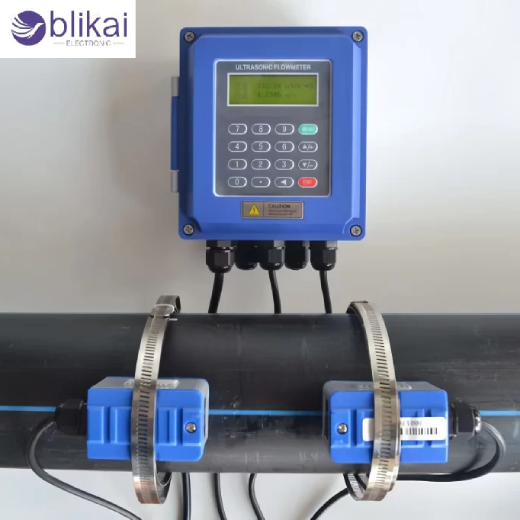
What Is an Ultrasonic Flow Sensor?
An ultrasonic flow sensor is an electronic flow meter that measures the velocity of the flow by measuring the speed of sound waves. These sensors may be installed either in line or inside the pipe or could be clamped on the pipe surface. Ultrasonic flow sensors are more precise compared to the mechanical, magnetic or thermal flow sensors, and they have less maintenance and have the ability to sense corrosive or pure liquids without necessarily coming into contact with the fluid.
Working Principle of Ultrasonic Flow Sensors
Transit-Time Ultrasonic Flow Measurement
Transit-time ultrasonic flow sensors are flow sensors that transmit ultrasonic pulses into the pipe, both upstream and downstream. The distance between these pulses is proportional to the speed of the fluid, and the flow rate can be measured correctly. This is the best method that applies to clean liquids and is also very precise when used in controlled situations.
Doppler Ultrasonic Flow Measurement
Flow is measured by a Doppler ultrasonic flow sensor, where the frequency difference of reflected ultrasonic waves of suspended particles or gas bubbles in the fluid is measured. In dirty, aerated or viscous liquids, the transit-time technique may not give consistently valid values, and this method is best applied with this technique.
Sensor Components
An example of an ultrasonic flow sensor when used in a real-world application is a piezoelectric transducer producing and receiving ultrasonic waves, a signal processing unit to determine flow velocity and a display or flow data transmission interface. Contemporary sensors can have digital communications protocols of 4-20 mA, Modbus, or pulse outputs to be incorporated into industrial automation.
Specifications to Consider
The main specifications when choosing an ultrasonic flow sensor would be the range of the flow and the accuracy of the measurement, usually a percentage of the reading. It is important that the fluids are fluid-compatible, like clean, dirty liquids, gas, or corrosive liquids. Others that are critical include the range of pipe diameter, the type of installation (clamp-on or inline) and other factors such as the operating temperature and pressure, as well as electrical outputs. These specifications are used to protect the sensor to match the performance and integration requirements of the sensor to different applications.
Key Advantages of Ultrasonic Flow Sensors
The ultrasonic flow sensors offer very precise flow measurement that is non-intrusive, which means that the pressure will not be dropped significantly, and the flow of fluid will not be interrupted. They are designed with no moving parts, which lowers maintenance needs and increases their working life. A lot of models are based on the bidirectional flow measurement and digital outputs such as 4-20 mA, Modbus, pulse, which are perfect in the automation of industry, HVAC systems and IoT-enabled smart metering.
Non-Intrusive Measurement
The clamp-on or inline design of ultrasonic flow sensors is designed in such a way that it can be measured without coming into contact with the fluid, particularly in corrosive, high-pure, or dangerous liquids.
Low Maintenance and Long Lifespan
Ultrasonic flow sensors have no moving parts, which means that there is less wear and tear as compared to mechanical flow meters. The flow sensors do not need regular maintenance or replacement.
High Accuracy and Bidirectional Measurement
These sensors have an accurate flow rate value and can measure in both flow directions, which is beneficial to control processes, energy, and detect leakages.
Disadvantages of Ultrasonic Flow Sensors
Even though they are beneficial, ultrasonic flow sensors possess limitations that should be considered by their users. Big installations may be in sensitive relation to high initial cost and certain determinants, e.g., air bubbles, suspended solids, highly viscous fluids, etc., may affect the correctness of the measure. The clamp-on sensor is picky with regard to the pipe material, wall thickness, and alignment, and must be installed with great care to avoid signal loss.
Sensitivity to Fluid Conditions
Ultrasonic signals can be distorted by air bubbles, debris or high viscosity fluids, resulting in inaccurate readings when the wrong sensor type is used.
Installation Considerations
The alignment and positioning of the pipe are very crucial to effective measurements, especially in the clamp-on models, which can be influenced by the vibrations, bends, or welds.
Higher Initial Cost
The ultrasonic flow sensors have a higher cost as compared to the mechanical meters in most cases, yet their high reliability and low maintenance in the long run tend to compensate for the initial expenditure.
Common Applications of Ultrasonic Flow Sensors
Industrial Process Control
The ultrasonic flow sensors find extensive applications in process control of industries to identify the flow of chemicals, water, and oils. They assist in keeping the processes efficient, accurate dosing and also prevent overflow or leakage in important systems.
HVAC and Water Management
Ultrasonic flow sensors can be used in building waters and in HVAC systems to monitor energy use, flow of cooling water and leak detection. The non-invasive nature of their design makes them retrofit onto pipes without interfering with operations.
Automotive and Transportation
Automobile use comprises the flow of fuel, coolant, and lubricant in the engines and hybrid cars. Such sensors are used to monitor the efficiency in real-time and diagnostics of the system.
IoT & Smart Metering
Ultrasonic flow sensors are also incorporated into smart water, energy and chemical metering systems with the emergence of IoT. They enable remote monitoring, predictive maintenance, and data-driven optimization of resources.
Installation and Practical Tips
Good installation is very important for the accurate measurement of ultrasonic flow. Clamp-on sensors are to be correctly aligned along the pipe and not to bends, valves or welds that might cause disturbances of flow. The inline sensors should be carefully calibrated and chosen depending on the diameter of the pipe, the type of fluid, and the working conditions. The prevention of air bubbles, sediment, or vibrations will result in the same and reliable measurements over time.
FAQs
Can ultrasonic flow sensors measure gas flows?
Admittedly, some ultrasonic flow sensors are used to determine the flows of gases, yet depending on the size of the pipes, pressure, and turbulence of the flow.
How accurate are ultrasonic flow sensors compared to mechanical ones?
The ultrasonic sensors tend to be more accurate, quicker responding, and with little maintenance, and the mechanical meters tend to degrade as time passes because of moving parts.
Are they suitable for high-viscosity fluids?
Some of the Doppler ultrasonic sensors can be used in high-viscous or particle-contaminated fluids, though transit-time sensors can work with clean liquids.
What are the maintenance requirements?
Ultrasonic flow sensors are not very demanding in terms of maintenance; the transducers only require cleaning and calibration to be done in order to guarantee the correct measurement.
Conclusion
Ultrasonic flow sensors are multi-purpose and very precise liquid and gas flow measuring devices applied in industrial, automotive, and intelligent industries. Knowing their working principles, specification and uses, engineers and technicians are able to choose the appropriate sensor to use in their applications to guarantee the reliable, non-invasive and efficient measurement of the flow.
Some images are sourced online. Please contact us for removal if any copyright concerns arise.





