


Dimmable LED Driver Overview: How It Works, Specs & Options
 654
654What Is a Dimmable LED Driver?
A dimmable LED driver is an electronic power controller that is used to provide constant current or voltage to LEDs and to allow measurement of brightness by use of adjustable dimming controls. These types of units are designed to respond to different dimming signals and convert them into changes in output without flicker, noise, or instability, as opposed to non-dimmable types of drivers. Since LEDs are sensitive to handled current in order to be safe, a dimmable driver provides accurate electrical control and avoids sharp brightness changes, extended lifespan, and interoperability with current residential and commercial lighting as well as smart-lighting systems.
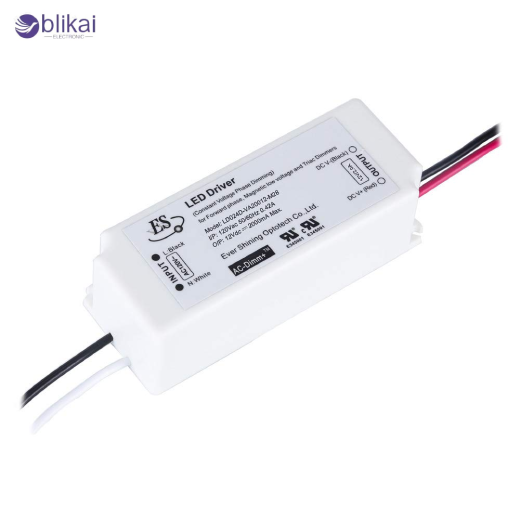
How a Dimmable LED Driver Works
Constant Current vs. Constant Voltage Regulation
Dimmable LED drivers are used to vary the intensity of LEDs in either constant current (CC) or constant voltage (CV) to the lighting system according to the design of that system. Constant current drivers are used to maintain a fixed milliamp of output to prevent overcurrent in high-power LEDs or COB modules, whereas constant voltage drivers are used to provide a constant voltage (e.g., 12 V or 24 V) to LED strips or modular systems.
Dimming Control Mechanisms
A dimmable LED driver processes dimming signals such as Triac phase-cut, 0–10V analog, PWM digital pulses, or DALI/DMX commands and translates them into controlled LED brightness adjustments through internal conversion circuits. The driver manages power regulation through high-frequency switching, pulse-width modulation, or constant-current reduction, ensuring smooth dimming curves without visible flicker or steps. By maintaining stable electrical feedback and temperature compensation, the driver enables responsive, reliable dimming across a wide range of lighting applications.
Types of Dimmable LED Drivers
Triac (Leading-Edge) Dimmable Drivers
Triac dimmable LED drivers use phase-cut dimming to reduce AC power during the beginning portion of each sine wave, making them compatible with traditional wall dimmer switches found in homes. These drivers are cost-effective and widely used for retrofitting LED lamps, downlights, and small lighting fixtures, although their performance depends on driver quality and dimmer compatibility.
ELV (Trailing-Edge) Dimmable Drivers
ELV dimmable drivers use reverse-phase (trailing-edge) dimming, offering smoother operation, lower electrical noise, and better performance with modern LED loads compared to Triac dimming. Their mode of operation is silent dimming and better low-brightness control, which qualifies them to be used in high-quality residential fixtures, architectural lighting, and high-quality LED installations. ELV dimmers are, however, more expensive and need proper driver-dimmer matching to obtain the best output.
0–10V Dimmable LED Drivers
The 0-10 V drivers use an analog control signal, between zero and ten volts, to regulate the brightness of the driver, enabling linear dimming, which is very common in commercial, industrial and large-scale lighting systems. They are very stable and have a stronger dimming ability, as well as can be combined with sensors and building automation systems, which makes them preferable in offices, warehouses, and smart-controlled scenes. Their wiring is isolated by using separate control wiring and is carefully installed and wired.
PWM Dimmable Drivers
PWM dimmable LED drivers adjust LED brightness by rapidly switching the output on and off at high frequency, controlling perceived brightness without changing current levels. This method is ideal for LED strips, signage, RGB systems, and low-voltage lighting, preventing color shift and resulting in uniform dimming performance. Due to the necessity of compatible controllers in PWM, the technology is common in dynamic and decorative lighting projects and digitally controlled lighting projects.
DALI / DMX / Smart Dimmable Drivers
DALI, DMX and smart drivers operate digital communication protocols to offer specific multi-channel lighting control, automation, and programmable scenes to advanced lighting installations. Addressable fixtures are supported in DALI in commercial buildings, and DMX is used in stage lighting and architectural lighting. Smart IoT drivers have Wi-Fi, Bluetooth or Zigbee, and provide app-controlled dimming.
Key Specifications to Consider
Output Current and Voltage Ratings
Appropriate matching of the voltage or current rating of a driver to the LED load is appropriate to guarantee optimal operation, avoid early failure and the appropriate range of dimming. LEDs need a high level of electrical control, and using the wrong driver can lead to overheating, irregular brightness or no working at all. Constant current LEDs require precise mA values, whereas constant voltage LEDs require constant and stable voltage levels in order to operate safely and efficiently.
Wattage and Power Factor
The wattage of a dimmable LED driver dictates the amount of LED load it can sustain, and a dimmable LED driver with at least 20-30% headroom is a guarantee of long-term dependability. An energy rating of a power factor greater than 0.9 is preferable with regard to energy efficiency, especially in a commercial installation where the quality of electricity counts.
Dimming Range and Smoothness
The dimming range indicates how low and how smoothly a driver can reduce brightness without flicker, stepping, or dropout. Good dimmable drivers are dimmable as low as 1 per cent or even 0.1 per cent, so that they can be used in ambient or architectural lighting or theatrical use. A curved line makes it easier to look at, and the color temperature is consistent, and the performance is stable during the dimming process.
Dimming Protocol Compatibility
It is important to ensure that a driver matches the desired dimming solution- Triac, ELV, 0-10 V, PWM, DALI or smart control, to avoid such problems as flicker, buzzing, poor dimming range, incompatibility, etc. Mismatches in compatibility are one of the most frequent causes of dimming problems, in particular in retrofit installations. The appropriate choice of the protocol ensures a smooth integration process and stable control of the lights.
Safety Ratings and Certifications
Some of the certifications of dimmable LED drivers include UL, CE, FCC and RoHS, which guarantee that the dimmable LED drivers comply with regulatory safety, efficiency, and electromagnetic compatibility standards. Additional ratings like IP65 or IP67 indicate suitability for damp or outdoor environments, while thermal protections prevent overheating or electrical hazards. Choosing certified drivers improves reliability and compliance in both residential and professional lighting projects.
Troubleshooting Dimmable LED Drivers
Flickering and Noise Issues
Flicker and buzzing often stem from incompatible dimmers, overloaded drivers, loose wiring, or low-quality LED components. Addressing these problems requires checking driver specifications, verifying dimmer compatibility, and ensuring proper electrical connections.
Poor Dimming Range
Mismatched driver-dimmer pairings, insufficient load, or low-resolution dimming control protocols usually cause limited dimming range. Ensuring correct pairing and using drivers designed for deep dimming improves low-brightness performance and prevents sudden cutoff or visual stepping.
Driver Overheating or Shutdown
The overheating is caused by the installation of the drivers in unventilated enclosures, installation that exceeds the rating, and the mismatch of LEDs. Internal circuit protection of thermal shutdown shows an error in size or placement, which must be fixed. Correct choice of wattage, sufficient air flow, and certified drivers will avoid overheating and make the service last longer.
How to Choose the Right Dimmable LED Driver
Selecting the ideal dimmable LED driver involves evaluating LED load requirements, dimming protocol compatibility, voltage or current ratings, wattage headroom, installation environment, and certification needs. It is important to match the type of driver (Triac, ELV, 0-10V, PWM, DALI or smart) with the desired lighting system in order to avoid discontinuities in dimming performance. A list of power factors, efficiency, thermal protection, and compatibility of the fixtures can be used to ensure long-term successful functioning and high-quality lighting results.
Conclusion
Dimmable LED drivers are especially important in providing stable, adjustable lighting through the control and interpretation of dimming signals with a variety of control technologies. Knowledge of the operation of these drivers, their main specifications and compatibility prerequisites will guarantee the best performance, lifetime and complication-free use of these drivers in any LED lighting setup. With the correct selection of dimmable driver and installation, users may attain flicker-free dimming, better energy saving, as well as high lighting quality in residential, commercial and smart-lighting applications.
Can Any LED Light Become Dimmable by Changing the Driver?
Yes, when the LED module has the capability of varying the current. Dimming may be made possible by replacing the driver, so integrated AC-LED lamps or sealed fixtures cannot be dimmed, independent of the type of driver. Check LED module specs at all times before updating.
What Is the Most Universal Dimming Method for LED Drivers?
0–10V dimming is widely compatible, simple, and stable, offering smooth transitions without flicker. PWM is also universal for low-voltage LED strips. DALI is preferred for professional digital lighting control.
How Do I Know If My Wall Dimmer Works With a Dimmable LED Driver?
Match your wall dimmer type—TRIAC, ELV, or smart—with the driver’s dimming input. Using mismatched types often causes flicker, buzzing, or a limited dimming range.
What Output Range Ensures the Best Dimming Performance?
Choose a driver whose current and voltage closely match the LED load. Oversized drivers reduce dimming accuracy and cause early cutoff. Look for 1–100% or deep-dimming support for optimal control.
Some images are sourced online. Please contact us for removal if any copyright concerns arise.





