


Infrared Thermometer: How It Works, Specs & Applications
 74
74What Is an Infrared Thermometer?
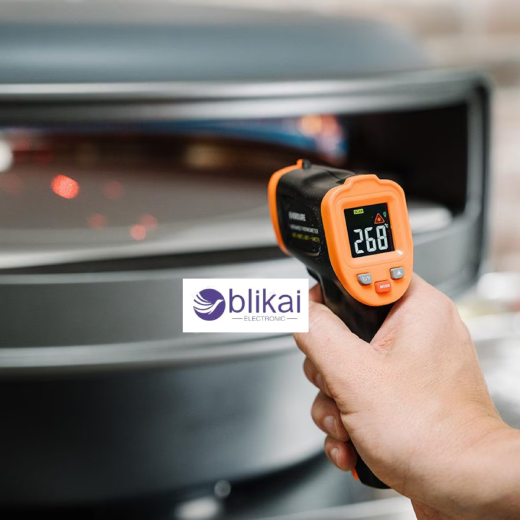
Infrared thermometer is a temperature measuring instrument that is non-contact and ascertains surface temperature by detecting infrared energy that is emitted by an object. Anything that has a temperature exceeding the temperature of absolute zero emits infrared radiation and an infrared thermometer measures the radiation and transforms it into a signal of electrical power which is proportional to the temperature. In contrast to other types of sensors like thermocouples, RTDs, etc, infrared thermometers do not need to touch the target, thus making them useful in measuring in motion targets, electrically live components, or surfaces that are so hot, cold, or inaccessible.
How Does an Infrared Thermometer Work?
A working principle of infrared thermometer is the correlation between temperature and emitted infrared radiation. As an object’s temperature increases, it emits more infrared energy, primarily in the mid- and long-wave infrared spectrum. This radiation is absorbed by the infrared thermometer and directed to a sensor which is then turned into an electrical signal. Calibration algorithms are used to process this signal, which is used to compute and show the temperature of the surface in real-time.
Key Specifications of Infrared Thermometers
Temperature Measurement Range
The range of temperatures at which an infrared thermometer can measure temperature is determined by the minimum and maximum values of temperature that it is able to measure. Handheld models in general purpose can span -50 deg C to 550 deg C, and industrial infrared thermometers can be used to measure temperatures above 2000 deg C.
Accuracy and Resolution
Accuracy defines the closeness of the measured temperature to the actual temperature which is normally measured in percent or plus- minus degrees. The Resolution is the minimal temperature change which the device can show. In Precision Infrared Thermometers are required to have very precise tolerances of accuracy and fine resolution, because of high-precision applications, like electronics diagnostics or medical screening.
Distance-to-Spot Ratio (D:S Ratio)
The distance-to-spot ratio is used to refer to the size of an area of a specific distance of the target. The increased D:S ratio enables the successful measurement of the object at a greater distance by concentrating on a smaller spot. This is a particularly significant specification in an industrial setting where access to the target surface is not always available.
Response Time
Response time refers to a time after a target has been aimed at, the infrared thermometer will stabilize and record the reading. Dynamic processes, moving objects and safety-critical inspections which demand immediate feedback are often necessary and made possible by fast response times that are less than 500 milliseconds.
Spectral Response and Wavelength Range
Infrared thermometers operate within specific wavelength ranges, commonly 8–14 μm for general-purpose models. This range aligns well with ambient temperature measurements and minimizes interference from atmospheric absorption. There are special models that are able to work with different wavelengths to detect hot surfaces of metals or glass with greater accuracy.
Types of Infrared Thermometers
Handheld Infrared Thermometers
Handheld infrared thermometers are portable, battery-powered devices widely used for maintenance, HVAC diagnostics, and electrical inspections. They provide convenience, live readings, and affordable temperature monitoring among the technicians and engineers in the field.
Fixed-Mount Infrared Temperature Sensors
The fixed-mount infrared thermometers are meant to enable continuous temperature monitoring in an industrial automation system. They are frequently used as sensors in production lines, furnaces, process control systems and relay real time information to PLCs, SCADA systems or industrial controllers.
Medical Infrared Thermometers
Medical infrared thermometers are optimized for human body temperature measurement and are commonly used in clinical and screening environments. The gadgets are sensitive to small temperature ranges and have to meet high standards of medical quality to guarantee the user safety and precision.
Applications of Infrared Thermometers
Industrial Temperature Monitoring
Industrial applications include infrared thermometers that are applied to machinery, motors, bearings and production processes. Non-contact measurement will allow timely response to overheating equipment eliminating downtime and equipment failure.
HVAC and Building Maintenance
IR thermometers are important in the diagnostic of HVAC to detect any change in temperatures in ducts, vents, and insulation. They are utilized by the maintenance professionals to find out the air leakages, areas of inefficient heat transfer, and imbalances in the system that influence the efficiency of the energy.
Automotive and Mechanical Diagnostics
The infrared thermometers are used by the automotive technicians to measure the temperatures of engines, exhausts and brakes. The ability to quickly scan components without contact improves safety and speeds up troubleshooting during diagnostics and testing.
Medical and Healthcare Applications
Infrared thermometers can be used in healthcare settings to screen the body temperatures of patients in a fast and non-invasive manner. They can be used in hospitals, clinics and to monitor the health of the general population owing to their rapid response and clean utilization.
Food Safety and Processing
IR thermometers are popular in the food processing and food safety inspection to test the temperature of the surface and not to contaminate food. They also encourage compliance with food hygiene and aid in the compliance with standard processing conditions.
Advantages of Infrared Thermometers
The key advantages of infrared thermometers are non-contact operation, high response time and measurement of temperatures in inhospitable and hazardous areas. They suit best where there is a moving target, live electrical parts, or high temperature where a contact sensor cannot be used.
Disadvantages of Infrared Thermometers
Despite its versatility, infrared thermometers are limited to measuring the surface temperature and prone to changes in emissivity, reflections and environmental elements. They are also incapable of measuring the internal temperatures and might need special attention in their set up to provide reliable measurements on reflective or low-emissivity surfaces.
Infrared Thermometer vs Other Temperature Sensors
Infrared Thermometer vs Thermocouple
Infrared thermometers have non-contact measurement where thermocouples have direct contact measurements and greater precision on internal temperatures. The sensors have different applications which are more suited to particular applications based on the requirements of accessibility and precision.
Infrared Thermometer vs RTD and Thermistor
RTDs and thermistors deliver high accuracy and stability in controlled environments but require physical contact with the target. IR thermometers are efficient in those areas where contact is not wanted, where it is unsafe, or where it is impossible and thus they are complementary to each other as opposed to competing technologies.
How to Choose the Right Infrared Thermometer
In choosing the suitable infrared thermometer, one has to consider the target temperature range, accuracy required, distance to spot ratio, and compatibility emissivity. The ambient temperature, dust, humidity, and other environmental parameters should be taken into consideration as well as the compliance requirement in industrial or medical operation.
Common Errors and Best Practices in Infrared Temperature Measurement
Typical errors in measurement are poor emissivity settings, measurement of reflective surfaces and poor distance control. Best practices involve calibrating emissivity, aiming at non-reflective areas, maintaining the correct measurement distance, and allowing the device to stabilize before taking readings.
FAQs
How Accurate Are Infrared Thermometers?
The majority of infrared thermometers have +-1degC to +-2degC accuracy in the event of proper emissivity and distance settings.
Do Infrared Thermometers Work Through Glass?
No, they temperature check the surface of the glass, but not the object behind it.
What Is the Best Distance to Use an Infrared Thermometer?
Always take measurements in the designated distance to spot in order not to get incorrect measurements.
Can Infrared Thermometers Measure Liquid Temperature?
They are capable of measuring the temperature of the liquid surface and not the temperature of the liquid internal temperature.
Some images are sourced online. Please contact us for removal if any copyright concerns arise.





