


Is Copper Magnetic? Properties, Applications & Electronics Guide
 12
12What Is Copper?
Copper is a reddish-brown non-ferrous metal (Cu) having atomic number 29. It occurs naturally in the earth's crust and, because of its good conductivity and workability, has been utilized by man for thousands of years. Copper is a metal that doesn't rust like ferrous metals, which contain iron, and is highly prized for electrical and industrial use.
Understanding Diamagnetism in Copper
What Is Diamagnetism?
Diamagnetism is a weak magnetism that is present in materials that will produce a small magnetic field against an applied magnetic field. Diamagnetic materials are non-magnetic and only respond weakly to a strong magnetic field. Diamagnetic materials include copper, silver, gold and bismuth.
How Copper Responds to Magnetic Fields
If copper is put near a strong magnetic force, very tiny electric currents can start to flow inside, a bit against the magnetic force. This effect is extremely weak and usually not noticeable with ordinary household magnets. Scientific demonstrations, however, with strong neodymium magnets sometimes show the very special magnetic properties of copper.
Copper vs Ferromagnetic Metals
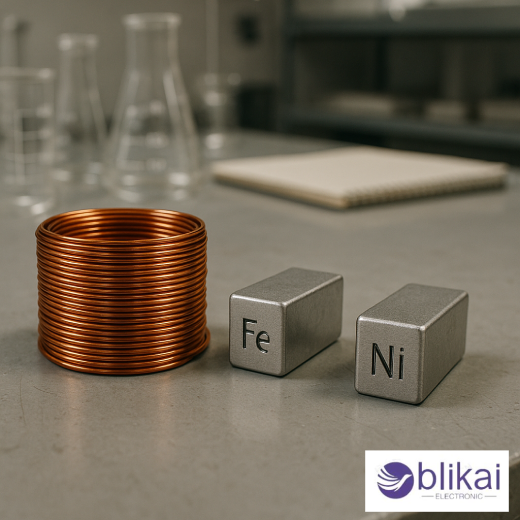
Ferromagnetic metals (like iron, nickel and cobalt) have magnetic domains, which align very easily with a magnetic field, resulting in very strong attraction. The magnetic domains are absent in copper, so magnets cannot stick to it. This difference makes it suitable for use in a variety of applications where electrical conductivity is needed, but magnetic interference is not.
Does Electricity Make Copper Magnetic?
Electromagnetism Explained
The close connection between electricity and magnetism is called Electromagnetism. The magnetic field surrounding a conductor is produced by the passage of an electric current through the conductor. Physicist Hans Christian Ørsted first discovered it and is the basis of how electrical engineering is practiced today.
B=μ0I/2πr
Copper Wire in Electromagnets
The materials used to make electromagnets are usually coils of copper wire, as copper is an efficient conductor of electrical current. The coil has a magnetic field when the current flows through it, and it is wound into a coil. The copper is non-magnetic, but magnetic effects are caused by the flow of electrical current through it.
Why Copper Is Used in Magnetic Devices
The advantage of copper is that it has a very low electrical resistance and high efficiency, which would make it preferable to use in motors, transformers and inductors. The material reduces energy losses and provides excellent electromagnetic performance. That is why most electrical machines and power systems use copper windings.
Copper and Magnets in Electronics
Copper in Electric Motors
The rotating magnetic field is a key component in electric motors and is largely made up of copper windings. The permanent magnets or electromagnetic stators create the motion when they are coupled with the current that flows through the copper coils. The quality and conductivity of copper windings have a strong influence on the efficiency of a motor.
Copper in Transformers
Transformers use insulated copper wire coils to draw electricity from one circuit to another circuit by induction. When the alternating current passes through the primary coil, a fluctuating magnetic field is established in the primary coil, which generates a voltage in the secondary coil. Copper is also conductive and is preferred to boost the efficiency of the transformer and decrease heat production.
Copper in PCB and Electronic Circuits
Printed circuit boards are made of thin copper traces that are used to pass electrical signals and electricity between the components. There are also modern electronic devices that need copper for grounding, EMI reduction and heat dissipation. Almost all electronic appliances rely on copper circuits.
Copper vs Other Metals in Magnetism
Copper vs Aluminum
Copper and aluminum are two non-magnetic metals that frequently are part of an electrical system. Copper is more conductive and more durable, and aluminum is lighter and cheaper. Copper is the material of choice for high-performance electronic devices, and aluminum for power transmission lines.
Copper vs Iron
Iron is very magnetic; it can be used in magnetic cores, transformers and motors. Copper, on the other hand, is not magnetic and is principally used in electrical applications. Iron and copper are used in conjunction in many electrical devices, iron to direct the magnetic field and copper to conduct the current.
Copper vs Silver
Silver is about as conductive as copper, but is far more costly. Both are non-magnetic, and they are employed in electronics, but copper is more convenient to work with in large applications because it is cheaper and more readily available.
Can Magnets Affect Copper?
Eddy Currents in Copper
Copper has a magnetic field that changes when brought close to a magnet, and the copper may generate circulating currents (eddy currents) in it. The currents produce opposing magnetic forces according to Lenz's Law, which slows the movement of the magnet.
E=−dΦB/dt
Magnetic Braking with Copper
Magnetic braking systems employ copper or aluminum plates to produce a braking action without contact. The eddy currents created by the magnets near the conductive metal produce opposing forces that smooth and quietly inhibit the movement of the magnets. This technology was applied to trains, roller coaster rides and industrial machinery.
Heat Generation from Magnetic Fields
Alternating magnetic fields can be used to induce currents in copper and to cause electrical resistance to generate heat in copper. In induction heating systems, transformers and high-frequency electronic applications, thermal losses are important, and control is essential to the process.
Applications of Copper in Electronics
Copper in Power Transmission
Copper is used a lot in electrical distribution lines, cables and electrical grids because it can carry high electrical current and has a capacity to minimize transmission loss. Copper conductors are an important component in the power delivery system for residential, commercial and industrial applications.
Copper in Consumer Electronics
Copper wiring and circuitry are present in smartphones, laptops, televisions, chargers and gaming systems. Copper facilitates effective signal transmission, battery charging and heat management within the micro-scale electronic devices.
Copper in Renewable Energy
The production of renewable energy technologies like solar panels, wind turbines and EV charging stations consumes significant amounts of copper, which is vital for the power conversion and electrical connections. Copper demand is growing worldwide as the demand for clean energy grows.
Advantages of Copper
Copper is highly conductive, corrosion-resistant, long-lasting, long lasting and recyclable. It also offers excellent electromagnetic characteristics and good electrical conductivity, which is why it is one of the most reliable engineering metals for electronics use.
Disadvantages of Copper
Although it has many benefits, copper is more expensive and weighs more than aluminum. The surface oxide layer on the copper may also vary with time, and this can cause a problem with electrical contacts in sensitive systems if this surface layer is not appropriately maintained.
How to Test If Copper Is Magnetic
Simple Magnet Test
One of the most straightforward tests to perform on copper is to bring a magnet to it. The magnet will not pick up on pure copper. If the magnet is securely attached, the object might have iron or steel under a copper coating.
Identifying Fake Copper Materials
Some low-cost materials are copper-plated and not solid copper. A magnet can aid in the identification of these materials, as the steel core underlying the material can still be attracted to the magnet. The surface can be scratched to expose the underlying metal as well.
Safety Tips During Testing
Users should keep magnets away from sensitive electronic devices such as credit cards, medical devices or other magnets when testing materials with strong magnets. Magnetic forces can cause damage or injury if not handled properly.
FAQ
Why does copper react near strong magnets?
When subjected to a rapidly or strong magnetic field, copper can develop eddy currents and/or weak diamagnetic effects.
Does a magnet stick to copper?
Pure copper is not a strong attraction for a normal magnet.
Why is copper important in electronics?
Copper ensures low-loss electrical and thermal properties and dependability in electronics.
Can magnets slow down copper objects?
Yes, moving magnets can generate eddy currents in copper, which add magnetic braking effects and thus slow motion.
Conclusion
Copper is not a magnetic metal, but it does interact with magnetic fields due to its diamagnetism and electromagnetic induction. Because of its excellent conductivity, corrosion resistance and efficiency properties, it is one of the most important materials used in the field of electrical and electronic engineering. Today, copper is essential to several applications such as power transmission, electric motors, renewable energy and advanced electronics. The understanding of the relationship between copper and magnetism helped to explain many important concepts in Physics, Electronics and Industrial engineering.
Some images are sourced online. Please contact us for removal if any copyright concerns arise.





