


Linear Voltage Regulator Circuit: Design & Applications Guide
 146
146What Is a Linear Voltage Regulator Circuit?
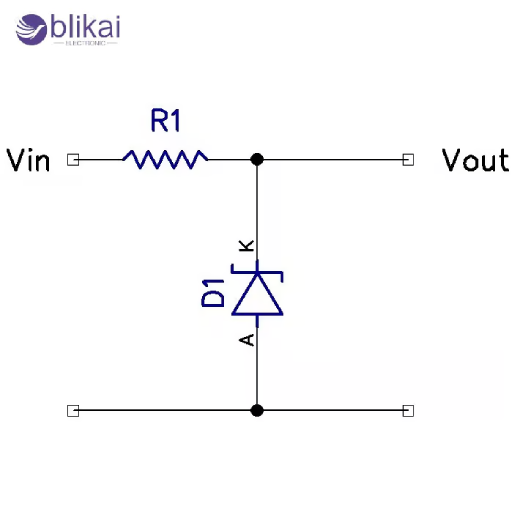
A linear voltage regulator circuit is an electronic circuit that is used to maintain a constant output voltage by varying the conduction of a series pass element that dissipates any extra energy in the form of heat, and unlike switching regulators that switch the pass element on and off at high frequencies to control the flow of energy, linear regulators operate in a continuous conduction mode and have lower noise and complexity compared to switching regulators, making them suitable for supplying power to sensitive electronic components such as sensors, RF modules and microcontrollers that require a constant output voltage.
Basic Definition and Function
The main purpose of a linear voltage regulator circuit is to maintain a constant output voltage despite variations in the input voltage or load current, and this is done through a feedback loop that compares the output voltage against a very accurate reference voltage, and then varies the conduction of a pass element to keep the loop in balance.
Key Components in the Circuit
The linear regulator circuit is made up of a reference voltage source, an operational amplifier, a pass transistor and a feedback loop to detect any change in the output voltage and adjust the pass transistor such that the output voltage is maintained at the desired level, regardless of the electrical load.
How It Differs from Switching Regulators
Instead of using inductors, capacitors and high-frequency switching elements to efficiently convert a higher input voltage to a lower output voltage, like switching regulators, linear voltage regulators dissipate power as heat, resulting in lower efficiency, but also lower output noise and design complexity.
How a Linear Voltage Regulator Circuit Works
The linear voltage regulator circuit is a feedback control system where the output voltage is sampled and compared to a fixed reference voltage, and the difference between the two is amplified, then used to drive the pass element to adjust for changes and maintain a constant output voltage, allowing it to operate stably over a range of load conditions.
Feedback Control Mechanism
The feedback network samples the output and compares it to a fixed reference voltage, and the difference is amplified and fed to the pass element to correct any fluctuations in the output and regulate the output voltage.
Role of Series Pass Element
The series pass element, often a transistor, functions as an adjustable resistor that drops the voltage in excess of the output and, by varying its resistance, controls the output voltage to the load.
Voltage Reference and Error Amplifier Operation
The output is set by means of a voltage reference, and the error amplifier compares the reference voltage with the output to generate a control signal to set the resistance of the pass element and control the output voltage.
Types of Linear Voltage Regulator Circuits
There are various types of linear regulators, tailored to different performance characteristics, power ratings and use cases.
Series Voltage Regulators
Series regulators are the most common type and use a pass transistor in series with the load to regulate voltage, offering good performance and stability for most applications.
Shunt Voltage Regulators
These regulators work by shunting (or bypassing) current away from the load and are commonly used for low-power or reference purposes because they are less efficient.
Low Dropout (LDO) Regulators
Low dropout regulators have a low input-to-output voltage drop that is necessary to maximise the efficiency of battery-powered devices.
Fixed vs Adjustable Regulators
Fixed regulators have a fixed output voltage, while adjustable regulators can be set to a desired output voltage by the designer through external resistors and provide flexibility and design freedom.
Key Design Considerations
To achieve an efficient and stable linear voltage regulator (LVR) circuit, it's important to consider electrical and thermal characteristics to achieve the required performance and lifetime.
Input Voltage and Dropout Voltage
In the case of linear voltage regulators, the input voltage must be higher than the output by at least the dropout voltage (the minimum difference between input and output for regulation).
Output Voltage and Current Requirements
The regulator should be selected to have the needed output voltage and current in order to have stability and avoid thermal issues.
Power Dissipation and Thermal Management
Power dissipation is an important factor, and it is the product of the voltage drop across the regulator and the load current, so heat sinks or PCB pad arrangement are required to dissipate power.
Stability and Capacitor Selection
Output capacitors are essential for stability and help to reduce noise and oscillations in the feedback loop.
Efficiency Limitations
Linear regulators are generally less efficient than switching regulators due to heat being wasted, especially when the input voltage is much greater than the output voltage.
Linear Voltage Regulator Circuit Design Example
A practical understanding of linear regulator circuits can be gained by examining common design implementations used in real-world applications.
Simple 5V Regulator Circuit
A simple 5V regulator can be designed using a fixed regulator IC to provide a regulated output for microcontrollers and digital logic.
Adjustable Regulator Design
Variable regulators provide an output voltage adjustable through a resistor divider network, allowing for easy setting of different output voltages.
Component Selection and Calculation
Resistors, capacitors and thermal management must be selected to ensure proper operation and performance.
Advantages of Linear Voltage Regulator Circuits
Linear regulators provide low noise, quick response to changes in output current and load, simplicity, low electromagnetic interference and high reliability, making them suitable for analog and radio frequency (RF) circuits.
Disadvantages of Linear Voltage Regulator Circuits
However, linear regulators are inefficient, particularly when the input to output voltage difference is large, and they also dissipate heat, which must be dissipated, so they are not used for high-power applications.
Applications of Linear Voltage Regulator Circuits
Linear voltage regulator circuits are commonly used in many applications because of their stability and operation in noisy environments.
Analog and RF Circuits
They supply glitch-free power to accurate amplifiers, sensors and RF modules.
Microcontrollers and Embedded Systems
They provide a constant voltage to digital ICs and processors that can cause glitches.
Power Supplies and Adapters
They are often used as post-regulation stages to refine the output of switching power supplies.
Automotive and Industrial Electronics
They are used in sensors and other circuits where voltage stability is essential for safe and proper functioning.
Linear vs Switching Regulators: Which to Choose?
The selection of either linear or switching regulators is application-specific, as linear regulators are selected for low noise and simplicity, but switching regulators are selected for efficiency and power.
Real Linear Regulator IC Comparison
To gain a better understanding of component selection in designing circuits containing linear voltage regulators, it is helpful to compare actual low-dropout regulator ICs from Richtek Technology Corporation, as various types are ideal for particular voltage, current, and noise specifications needed in today's electronic systems.
RT9080N-08GJ5 vs RT9078-18GJ5
The table below shows a comparison of two popular Richtek LDO regulators that are typically used in small and low-noise circuit designs:
|
Parameter |
||
|
Output Voltage |
0.8V (Fixed) |
1.8V (Fixed) |
|
Output Current |
300mA |
500mA |
|
Dropout Voltage |
~250mV @ full load |
~220mV @ full load |
|
Quiescent Current |
~25µA |
~30µA |
|
PSRR |
High |
High |
|
Output Noise |
Ultra-low |
Low |
|
Input Voltage Range |
2.5V – 5.5V |
2.2V – 5.5V |
|
Stability |
Requires output capacitor |
Stable with ceramic caps |
|
Package Type |
SOT-23-5 |
SOT-23-5 |
|
Thermal Protection |
Yes |
Yes |
|
Applications |
RF, sensors, MCU cores |
MCU, IoT, digital |
Key Differences and Design Insights
The RT9080N-08GJ5 is best used for very low noise and low voltage applications such as RF and analog front ends that require very low noise and signal integrity, while the RT9078-18GJ5 offers higher current output and a more common voltage level, making it optimal for powering digital systems and microcontrollers, and so designers need to consider load current, noise, and voltage level when choosing between these two regulators for a linear voltage regulator circuit.
When to Use Each Regulator in a Circuit
The RT9080N-08GJ5 is ideal for applications where extremely low noise and tight voltage regulation are critical, such as analog and RF front ends, while the RT9078-18GJ5 is more suited to general applications that need higher current output and a stable 1.8V output for microcontrollers and digital systems.
Common Mistakes in Circuit Design
Factors like thermal management, improper capacitor selection, operating below the dropout voltage and improper PCB layout can cause the regulator to become unstable, underperform or even fail.
Tips for Optimizing Linear Regulator Performance
Optimizing performance involves proper PCB layout, minimizing trace resistance, placing capacitors close to the regulator, ensuring adequate thermal management, and selecting components that match the electrical requirements of the system.
Future Trends in Linear Voltage Regulation
The next step in linear regulators is to improve performance in terms of low noise, increased integration in power management ICs, thermal performance, and special designs tailored for new applications in the Internet of Things (IoT), wearables, and precision measurement systems.
FAQ
What is dropout voltage in a regulator?
Dropout voltage is the smallest difference between the input and output voltages of the regulator to keep it operating.
Why do linear regulators generate heat?
They heat up because the excess voltage is wasted as heat across the pass transistor.
Conclusion
Linear voltage regulator circuits are still very important in the world of electronics because of their simplicity, stability, and low noise, and by knowing how they work, the design considerations, and how to choose an IC in practice (such as an IC from Richtek Technology Corporation), engineers can design efficient and stable power conversion systems for a variety of applications.
Some images are sourced online. Please contact us for removal if any copyright concerns arise.





