


What Is an In-Line Voltage Regulator? Full IC Guide
 85
85Introduction to In-Line Voltage Regulators
A critical electronic part is an in-line voltage regulator, a device used to stabilize the output voltage in a power line directly within a power line, ensuring the output of devices downstream remains stable and safe under any conditions. Voltage stability is a critical performance, life cycle, and safety concern in modern electronics, which includes embedded systems and IoT devices, automotive modules, and industrial controllers. They are a convenient and highly used option in both low-power and high-reliability systems because they are placed in-line with the power path, which means that they provide real-time correction without requiring complex rerouting of circuit design.
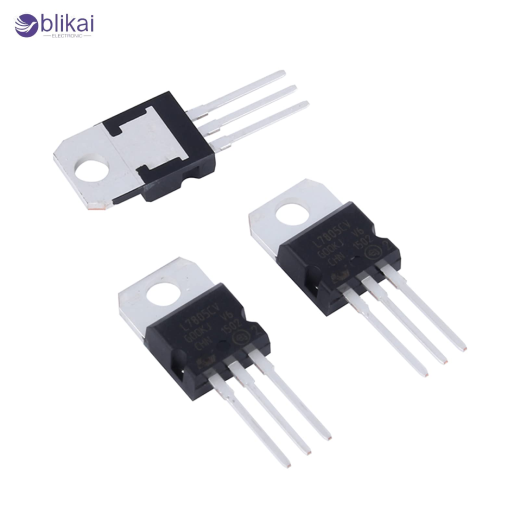
What Is an In-Line Voltage Regulator?
An in-line voltage regulator is a voltage regulation device or IC that is installed in series with the power supply line to control and stabilize the amount of voltage before it reaches sensitive components. Unlike centralized systems of regulating power, in-line regulators are located at the point of use, and provide localized control of the voltage conditioning and reducing the effects of voltage drops, noise, and transients on long traces or cables. These regulators may be implemented with linear or switching technology and are commonly packaged in compact formats that permit designers to easily incorporate them into wiring harness systems, printed circuit boards or in modular power distribution systems.
How an In-Line Voltage Regulator Works
The operating principle of an in-line voltage regulator is as follows: It continuously measures and adjusts the output voltage via feedback control circuits, which compare the output to a reference voltage, and dynamically corrects any deviations using internal circuitry.
𝑉𝑜𝑢𝑡=𝑉𝑟𝑒𝑓(1+𝑅2/𝑅1)
In linear regulators, excess voltage is dissipated as heat using a pass transistor in its active region and switching regulators utilize high-frequency switching elements, inductors and capacitors to efficiently step voltage up or down with the least loss of power. In both instances, the in-line arrangement can provide an instant response to changes in voltage and enhance the power integrity at the load end.
Types of In-Line Voltage Regulators
Linear In-Line Voltage Regulators
Linear in-line voltage regulators are appreciated because of their simplicity, low noise output and the ease of implementation, making them ideal in analog circuits, RF modules, and precision sensors where clean voltage is needed, albeit less efficient in high voltage-drop applications due to power dissipation.
Switching In-Line Voltage Regulators
By converting voltage, typically by pulse-width modulation and by energy storage elements, in-line regulators (also known as DC-DC converters) can have much higher efficiency, making them suitable in battery-powered devices and high-current applications, although with increased design complexity and electrical noise.
Adjustable vs Fixed Regulators
Fixed regulators deliver a fixed output voltage and are simple to use, whereas adjustable regulators permit a designer to use external resistors to set the output voltage and are easy to operate.
Key Features and Specifications
In choosing an in-line voltage regulator, a number of parameters must be taken into account, including input voltage range, output voltage accuracy, dropout voltage, maximum output current, line and load regulation, quiescent current, thermal resistance and built-in protections such as overcurrent limiting and thermal shutdown, all of which directly affect system reliability and efficiency.
Key Specifications of In-Line Voltage Regulators
|
Parameter |
Description |
Typical Range |
|
Input Voltage |
Voltage range the regulator can accept |
2V – 40V+ |
|
Output Voltage |
Regulated voltage output |
1.2V – 24V |
|
Dropout Voltage |
Minimum difference between input and output voltage |
0.1V – 2V |
|
Output Current |
Maximum current supply capability |
100mA – 5A+ |
|
Efficiency |
Ratio of output power to input power |
40% – 95% |
|
Quiescent Current |
Current consumed internally by the regulator |
µA – mA range |
|
Thermal Protection |
Prevents overheating |
Yes (common) |
|
Short-Circuit Protection |
Protects against output faults |
Yes (common) |
Common ICs Used as In-Line Voltage Regulators
Several popular integrated circuits are available in forms that can make effective in-line voltage regulators, such as the LM7805, which is available in 2 types: one with a fixed 5V output and the other with adjustable regulation, and the AMS1117, with low-dropout applications and available in 2 types: one with a fixed 5V output and the other with adjustable regulation.
Applications of In-Line Voltage Regulators
In-line voltage regulators are applied in a wide range of applications, including automotive electronics (where they stabilize voltages to ECUs and sensors) as well as in IoT devices (where consistent voltages are important to control accuracy and system reliability) and embedded systems (where microcontrollers and communication modules require consistent voltages) and consumer electronics (where chargers and adapters need consistent voltages) and industrial automation systems (where uniform voltages are important to both control accuracy and system reliability) are also important.
Advantages of In-Line Voltage Regulators
The major advantages of in-line voltage regulators are ease of integration, localized voltage control, reduced noise susceptibility, enhanced reliability, and minimal design overhead, which make them less suitable for simple electronic systems but more appropriate for complex electronic systems.
Disadvantages of In-Line Voltage Regulators
But they can be subject to such shortcomings as dissipation in linear types, lower efficiency than switching regulators, and inability to operate with very high power levels, which must be carefully considered during design.
RT9169-33GVL vs RT9013-18GB vs RT9078-28GJ5 Comparison Table
|
Parameter |
|||
|
Regulator Type |
LDO Linear Regulator |
LDO Linear Regulator |
LDO Linear Regulator |
|
Output Voltage |
3.3V (Fixed) |
1.8V (Fixed) |
2.8V (Fixed) |
|
Max Output Current |
300mA |
500mA |
300mA |
|
Input Voltage (Max) |
~5.5V |
5.5V |
5.5V |
|
Dropout Voltage |
~200–300mV |
0.4V @ 500mA |
0.25V @ 300mA |
|
Quiescent Current (Iq) |
~25µA |
25–50µA |
2–4µA |
|
PSRR |
~60dB |
50dB+ |
75dB |
|
Package |
SOT-23-5 / SOT-223 |
SOT-23-5 |
TSOT-23-5 |
|
Enable Pin |
Yes |
Yes |
Yes |
|
Protection Features |
OCP, Thermal Shutdown |
OCP, Thermal Shutdown |
OCP, Thermal Shutdown |
|
Operating Temperature |
-40°C to 85°C |
-40°C to 85°C |
-40°C to 85°C |
|
Typical Application |
3.3V digital rails |
RF / portable devices |
Ultra-low power IoT |
Key Differences Explained
The RT9169-33GVL is best suited for stable 3.3V rails in general-purpose embedded systems, offering balanced performance between power consumption and output capability. The RT9013-18GB stands out with its higher 500mA current capacity and ultra-low noise characteristics, making it ideal for RF, wireless, and analog-sensitive applications. In contrast, the RT9078-28GJ5 is optimized for ultra-low power designs, featuring extremely low quiescent current (as low as a few microamps) and high PSRR, which makes it highly efficient for battery-powered IoT and portable devices.
How to Choose the Right In-Line Voltage Regulator
System requirements such as variability of input voltage, desired output voltage, load current, thermal conditions, efficiency goals and space constraints, as well as the relative importance of low noise or high efficiency must be considered to ensure that the chosen regulator not only meets the electrical and environmental requirements of the application but also fulfills its objective of providing the desired output voltage at the lowest possible energy cost.
Design Considerations and Best Practices
The PCB layout is one of the key considerations in the implementation of an in-line voltage regulator that will be used to achieve stability, a low-level of parasitic resistance and inductive coupling, as well as consideration of electromagnetic interference, especially on switching design, all of which will lead to the realization of a reliable and long-lasting circuit operation.
Troubleshooting Common Issues
Common faults with in-line voltage regulators are: unstable output voltage because of insufficient capacitance, overheating because of excessive power dissipation, unexpected shutdown because of thermal protection and incorrect output levels because of improper selection of the resistor in adjustable regulators, and these problems can often be diagnosed by having a multimeter or oscilloscope to measure the voltage levels and stability of waveforms.
Conclusion
In-line voltage regulators are important to modern electronics because they provide efficient, localized voltage regulation directly across the power path, whether realized using linear or switching technologies.
FAQ
Can an in-line voltage regulator improve power efficiency?
Yes, especially when changing regulators, but linear types are easy and noise-free, and not efficient.
Where are in-line regulators commonly used?
They are commonly employed in automotive, embedded, IoT, and power distribution circuit applications.
What happens if a voltage regulator fails?
Failure may cause overvoltage, undervoltage or total loss of power, which may damage connected components.
Some images are sourced online. Please contact us for removal if any copyright concerns arise.





