


RT9161 Linear Voltage Regulator IC: Features & Applications
 62
62Introduction to RT9161 Linear Voltage Regulator IC
The RT9161 is a low-dropout (LDO) linear voltage regulator integrated circuit (IC) that offers a constant output voltage from an input supply. RT9161 is commonly used in consumer, industrial and telecommunication applications because of its low noise, stability and minimal external components. As the demand for low-power, efficient and smaller power supplies in electronic equipment grows, the RT9161 is an economical and effective low-power voltage regulator.
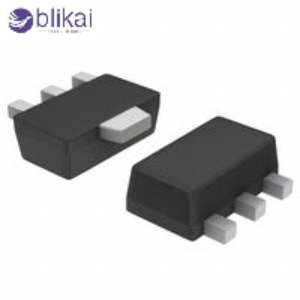
What Is RT9161 Voltage Regulator IC?
The RT9161 is a fixed-output low-dropout (LDO) linear regulator, which can step-down DC input voltage to DC output voltage. It uses feedback control to keep the pass transistor constant to give a constant output. The output has low noise, so this IC is suitable for use in analog and RF applications where a regulated power supply is required.
Key Features of RT9161 IC
The RT9161 has a number of features, such as low dropout, low quiescent current and high accuracy. The low dropout feature enables it to maintain the output voltage when the input voltage is close to the output voltage. The low quiescent current allows it to be used in battery-operated applications and it has safety features such as thermal shutdown and current limiting.
RT9161 Pin Configuration and Package Types
The RT9161 is usually packaged in small surface-mount devices (SMD) such as SOT-223 and SOT-23 so that it can be used on small PCBs. The primary pins are input (VIN), ground (GND) and output (VOUT). The straightforward pinout simplifies the design process and allows it to be readily integrated with other components.
Electrical Characteristics of RT9161
The electrical specifications of RT9161 include a broad range of input voltage, fixed output voltages and a moderate output current (depending on the package). It provides good load and line regulation, delivering stable output even with changing loads. It has low dropout voltage for more efficient regulation in low headroom conditions.
How RT9161 Linear Regulator Works
RT9161 works by comparing the output voltage to the internal reference voltage with the error amplifier. An error signal controls a pass transistor to control the current between the input and the output. This feedback mechanism ensures a constant output voltage despite variations in input voltage or load, thus providing a reliable output.
Design Considerations for RT9161 Circuits
In RT9161 circuits, the choice of input and output capacitors is critical for stability and dynamic response. Layouts should avoid high trace resistance and thermal issues for the best results. High-power applications require thermal management to avoid thermal shutdown and enhance product reliability.
Typical Application Circuit of RT9161
Consumer Electronics
RT9161 is commonly used in mobile phones, tablets and digital audio players, where low-power and stable power supplies are required for audio, sensors and microcontrollers.
IoT and Embedded Systems
RT9161 is used to supply wireless communication, microcontrollers and sensor interfaces with power in IoT devices to ensure efficient data transmission and processing.
Industrial Control Systems
RT9161 is used in industrial automation to power control boards, PLCs and analog signal processing boards that require stable power supplies.
Communication Equipment
The low noise of the RT9161 can help RF components, routers and signal processing units to have a clean signal with less distortion.
RT9161 vs RT9163 vs RT9169 Comparison
|
Parameter |
|||
|
Output Current |
Medium (up to ~300mA class) |
Higher load capability |
Lower to medium load |
|
Dropout Voltage |
Low |
Very low |
Moderate |
|
Quiescent Current |
Low |
Ultra-low |
Low |
|
Noise Performance |
Low noise |
Very low noise optimized |
Standard low noise |
|
Package Size |
Small SOT-23 |
SOT-23 / DFN |
SOT-89 / SOT-23 |
|
Best Use Case |
General LDO applications |
Battery ultra-low power systems |
Cost-sensitive designs |
Common Problems and Troubleshooting
The main problems with the RT9161 circuits are a decrease in output voltage under load, overheating (due to thermal management) and instability (due to wrong capacitor values). We can overcome this issue by using the correct component values, a good design layout and maintaining an input voltage in the recommended range.
Advantages of RT9161
The RT9161 has various advantages, such as ease of circuit design, low output noise, low cost, and reliable performance. It has a few external components, making it a good choice for small PCBs. Its low dropout feature improves the efficiency of battery-powered devices.
Disadvantages of RT9161
The RT9161 has the usual drawbacks of linear regulators. It's less efficient than switching regulators, especially with large differences between input and output voltages. There are also losses in the form of heat, which can be problematic in high-power applications.
Why RT9161 is Still Widely Used in Modern Designs
Even with the advent of switching regulators, RT9161 is still commonly used because of simplicity and noise characteristics. Switching regulators are avoided in some designs where switching noise may affect analog or radio frequency (RF) circuits. It is also cheap and simple, so can be used in mass market consumer and embedded systems.
FAQs About RT9161
Does RT9161 generate heat?
Yes, it is a linear regulator and it is wasteful (dissipates heat, excess voltage) particularly under load.
How is RT9161 different from switching regulators?
RT9161 is a linear regulator, which is quiet but inefficient, whereas switching regulators are efficient but noisy.
What capacitors should be used with RT9161?
The input and output can be made stable by low ESR ceramic capacitors.
Conclusion
The RT9161 linear voltage regulator IC is stable, low noise and cost-effective. The small size, low-dropout and stable output of the device make it ideal for use in modern electronic systems. Although it may not be as efficient as switching regulators, its simplicity and low noise performance make it essential in analog, RF and precision electronic circuits. When designed correctly, the RT9161 will provide excellent performance in consumer, industrial and embedded systems and remain one of the most popular LDO regulators in the RT series.
Some images are sourced online. Please contact us for removal if any copyright concerns arise.





