


How to Choose the Right Female Spade Connector Fast
 501
501What Is a Female Spade Connector?
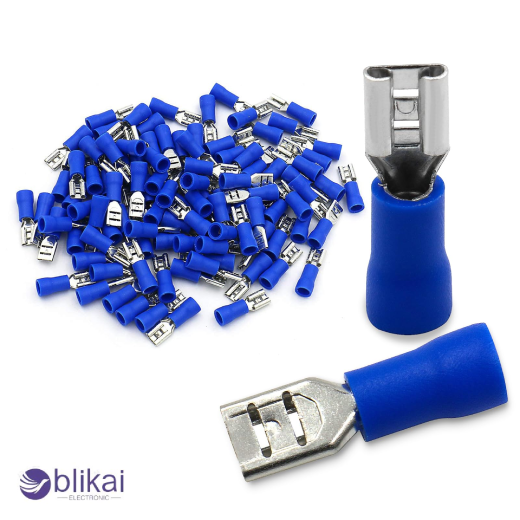
A female spade connector, female spade terminal, or quick-disconnect terminal is a crimped electrical connector that fits over a flat male tab in order to form a secure electrical connection. The connector is usually metal and is a receptacle that grasps the blade on the male connector and a crimp barrel that grips a wire. They are commonly used due to the fact that female spade connectors can be assembled and disassembled quickly without the need to use soldering, thus they are very useful in maintenance, repairs and modular wiring systems in electronics and electrical devices.
Key Factors to Consider When Choosing a Female Spade Connector
When selecting an appropriate female spade connector, it is possible to consider a number of technical factors, including the evaluation of the wire, electrical load, and environmental conditions. Knowledge of these parameters will make sure that the connector is fitted correctly, that it can take the necessary current safely, and that it will be reliable during the life of the product.
Wire Gauge Compatibility (AWG Size)
Among the selection factors is matching the connector to the appropriate wire gauge, which is among the most important. Female spade connectors are designed to crimp onto specific wire sizes, usually defined using the American Wire Gauge (AWG) system. Crimping a large conductor with a connector intended to engage a larger conductor can result in poor crimps and non-reliable electrical connections, whereas using a connector that is relatively small can cause any conductor to not fit the connector.
Spade Width and Tab Size
The width of the male tab, to which the connector has to be attached, is another critical aspect. The common sizes of spade terminals are 2.8 mm, 4.8 mm and 6.3 mm, but there are other sizes in specific equipment. The female connector should be exactly half the size of the male tab to be sure that mechanical contact and electrical contact are made.
Current and Voltage Rating
When choosing a connector, there should also be considerations of the requirements of the electrical load. The terminal in question is rated for current and voltage according to the material, thickness and contact design. Excessive heating and eventual breakdown (particularly in high-power circuits) can be the result of using a connector that is not rated to pass the necessary current.
Insulation Type
There are a number of insulation choices offered on female spade connectors based on the environment. Non-insulated connectors are normally used in controlled industrial assemblies, in which further insulation may be added later, whereas PVC and nylon insulated connectors provide fast short-circuit protection. Heat-shrink insulated connectors provide extra sealing and strain relief in harsh environments.
Material and Plating
Mat and plating of the connector determine the conductivity, durability, and corrosion resistance. The majority of the high-quality connectors are manufactured with the help of brass or copper alloys, which are plated with the help of tin so that oxidation is reduced and conductivity is increased. In environments exposed to moisture or chemicals, corrosion-resistant plating helps maintain reliable electrical contact over time.
Types of Female Spade Connectors Explained
Many different kinds of female spade connectors can be used to fit into different electrical systems, conditions of installation, and safety needs. Knowledge of these variations can assist engineers and technicians in selecting the most suitable connector to be used in a certain application.
Fully Insulated Connectors
All-insulated female spade connectors have an insulated sleeve that is molded to wrap around the entire metal terminal, leaving only the sleeve hole in which the male tab is inserted. This design provides maximum electrical protection and reduces the risk of accidental contact with live conductors.
Partially Insulated Connectors
Partially insulated connectors include a protective sleeve around the crimp barrel but leave part of the metal terminal exposed. This is a design that offers the simplest insulation with ease of inspecting the crimp connection during installation or maintenance.
Non-Insulated Terminals
Non-insulated female spade connectors are commonly used in industrial equipment or professional wiring assemblies where additional insulation or protective housings are added later. These connectors are a little more flexible to install and are frequently used in the automation of manufacturing.
Quick-Disconnect Spade Connectors
Quick-disconnect connectors are created with the purpose of being installed into an application that requires components to be removed or changed in a fast manner. It has been designed to fit easily on a male tab and, at the same time, provides easy removal without using specialized tools, which is why it is used in appliances and serviceable equipment.
Step-by-Step Guide to Choosing the Right Connector Fast
The decision to select the right female spade connector may be made easier since it involves a fast assessment procedure that takes into account the most significant parameters in a rational sequence. The initial step would be to select the gauge of the wire to make sure that the crimp barrel is the same size as the conductor. Then, determine the width of the male connector that fits into the receptacle so that the connector attaches to the receptacle. Then check the present and voltage currents needed by the circuit to ensure the connector will safely run the circuit. After which, take an appropriate kind of insulation, based on the environment's environmental factors such as moisture, heat or vibration. In the end, consider the quality of the material and resistance to corrosion to ensure that the connection will not fail in the future.
Common Mistakes to Avoid When Selecting Female Spade Connectors
The connector selection mistakes are simple and can be prevented with special attention to the specifications quite easily, which results in many electrical problems. Among the most common errors is the selection of connectors by appearance alone without any check of gauge compatibility of wires or the size of the tabs. Disregarding existing ratings is another common problem resulting in overheating and early breakdown. Another frequent problem is the use of the wrong crimping tool since the wrong crimping decreases mechanical strength and conduction capabilities. Also, a loose connection and an untrustworthy electrical performance may occur due to a mixture of metric and imperial connector sizes.
Female Spade Connector Size Chart (Quick Reference)
A standard female spade connector size chart is correlated with the range of wire gauge, standard tab widths, and common current capacity. Smaller connectors like those that fit 22-18 AWG wire are commonly employed in low-power electronics and signal wiring, whereas larger connectors (typically 16-14 AWG or even 12-10 AWG wire size) are employed in low-power automotive and industrial power circuits. It is best to consult a size chart prior to installation in order to make sure that the wire, connector, and terminal tab are compatible.
Crimping Tips for Reliable Connections
Proper crimping is essential for achieving a reliable electrical connection when using female spade connectors. The insulation around the wire must be cut off till the conductor is inserted completely in the crimp barrel with no excessively long exposed wire. A crimping tool of high quality that fits into insulated or non-insulated terminals is required in order to provide a consistent load during the installation process. Once the crimping has been done, a simple pull test can be done to ensure that the wire has been firmly fixed and that the connection will not be lost during use.
FAQs
Can spade connectors handle high current?
Yes, but did it match the requirements of the electrical load, that is, when the connector size and material and the wire gauge are matched to the requirements?
Are female spade connectors reusable?
They can also be reused in numerous instances, provided that they are not damaged and that the correct spring tension is always maintained, although recurrent interchange could lead to a decrease in reliability.
How do I identify the connector size quickly?
The quickest way is to take the width of the male tab and the gauge of the wire that the conductor is made of, and match them to a connector size chart.
Conclusion
Female spade connectors offer an easy and effective way of designing removable electrical connections in a large variety of electronic and electrical systems. Through proper attention to compatibility of wire gauge, tab size, current carrying, type of insulation and connector material, engineers and technicians can easily find the right connector to use in their application. Crimping should be done properly, and they should not commit the usual errors during the selection, and the connection would be safe, reliable and durable as long as the equipment is in operation.
Some images are sourced online. Please contact us for removal if any copyright concerns arise.





