


RG6 vs RG59: Which Coaxial Cable Is Better?
 432
432Introduction
Coaxial cables have become a basic building block in modern electronic and communication systems and are commonly used in the transmission of radio frequency (RF) signals, video, and broadband data. The most commonly compared types of coaxial cables are RG6 and RG59 out of the many in the market. They are both 75 ohm coaxial cables and might seem similar on the surface, but do not share many similarities in the way they operate, their construction and the manner of their best application. Being aware of the variations between RG6 and RG59 is vital in the process of selecting the appropriate cable for use in TV systems, CCTV systems, satellite connections or broadband networks. This paper compares each of these features in a side-by-side approach that will enable you to determine which coaxial cable is superior in your particular usage.
What Is a Coaxial Cable?
A coaxial cable refers to an electric cable that is used to transmit high-frequency signals that have a small amount of interference or signal loss. It is made up of a central conductor, an insulating dielectric layer, a metallic shield, and an outer protective jacket. The concentric design is such that the signal is well-shielded against external electromagnetic interference (EMI), and this has made coaxial cables the best in RF transmission, video and broadband communication.
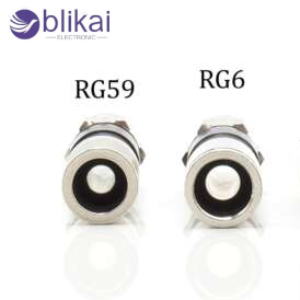
What Is RG6 Coaxial Cable?
RG6 is a new and high-performance coaxial cable, a 75 ohm cable with high-frequency and long-distance signal transmission. It typically features an 18-AWG center conductor, thick dielectric insulation, and advanced shielding such as foil plus braided shielding or quad-shield construction. RG6 is considered to be used in satellite TV, digital cable TV, HDTV, broadband internet and RF distribution systems supporting frequencies up to about 3 GHz. RG6 is better to use in the majority of contemporary residential and commercial applications because of its lower attenuation and better noise tolerance.
What Is RG59 Coaxial Cable?
RG59 is a more aged and thinner form of 75- ohm coaxial cable that is mostly used in transmitting signals of lower frequencies that are also short. It usually contains a smaller 20–23 AWG center conductor and lighter shielding compared to RG6. RG59 normally operates up to approximately 1 GHz, and is normally required in CCTV camera systems, baseband analog video, and older video equipment. Although it is still applicable in particular low-bandwidth applications, RG59 is not normally recommended in long cable runs or high-definition signal applications.
RG6 vs RG59: Key Differences Explained
The most important differences between the RG6 and RG59 are the physical structure and electrical properties. RG6 has a higher center conductor diameter, is heavier in shielding and consequently, incurs less signal loss and is more resistant to interference. RG59, being thinner and more flexible, is easier to route but suffers from higher attenuation, especially at higher frequencies. The result of these differences is a direct impact on the signal quality, the maximum transmission distance, and the ability to be compatible with modern electronic systems.
RG6 vs RG59 Specification Comparison
Both RG6 and RG59 maintain a standard impedance of 75 ohms, ensuring compatibility with most video and RF equipment. The bigger conductor and better shielding of RG6, however, enable it to carry higher frequency signals with much lower attenuation. The greater signal loss of RG59 limited its utility and diminished its utility in HD, 4K or broadband.
|
Parameter |
RG6 |
RG59 |
|
Impedance |
75 Ohms |
75 Ohms |
|
Center Conductor |
18 AWG |
20–23 AWG |
|
Outer Diameter |
Thicker |
Thinner |
|
Shielding |
Foil + Braid (Quad optional) |
Single/Double Braid |
|
Frequency Range |
Up to ~3 GHz |
Up to ~1 GHz |
|
Signal Loss |
Lower |
Higher |
|
Max Distance |
Long runs |
Short runs |
|
HD/4K Support |
Excellent |
Limited |
|
Common Uses |
Satellite TV, Cable, Internet |
CCTV, Legacy Video |
Which Cable Is Better for Different Applications?
In the case of cable TV, satellite TV, and broadband internet, RG6 is obviously the best option as it is capable of supporting high frequencies and long cable distances without any significant signal degradation. RG59 can also be tolerable and economical in CCTV and security camera systems whose cable distance is quite short. In the case of outdoor installation, RG6 is better due to the fact that most of it is readily available with weather-resistant jackets and the best shielding. RG6 will be superior in long-term value and compatibility in installations that may need future upgrades, such as in modern installations.
Signal Quality and Performance Comparison
The area where RG6 has a clear advantage over RG59 is the quality of the signal. RG6 has less attenuation per length unit, and so, the signal strength is greater at longer distances. The improved shielding of the EMI and radio frequency interference (RFI) is particularly important in settings with numerous pieces of electronic equipment. RG59, being suitable for short distances, is subject to noise, ghosting and distortion of signal outside the recommended range of distance or frequency.
Installation Considerations
RG59 is slimmer and less rigid, and thus it is easier to pass through claustrophobic areas. The larger diameter of RG6 is, however, compensated for by the better performance. Also to be considered is the compatibility of the connector, with RG6 generally employing an F-connector, and RG59 generally a BNC connector in CCTV applications. RG6 might be a little higher in cost, but the performance advantages normally offset the price increase.
Can RG6 Replace RG59?
RG6 can, in most instances, replace RG59 easily, as long as the right connectors are utilized. It is also highly advised by many installers that when you renovate a system, to upgrade it from RG59 to RG6 so that the signals can be better and so that it can be compatible with the modern equipment. RG59 only needs to be used in systems that are designed to transmit video over short distances at low frequencies.
Pros and Cons of RG6 Coaxial Cable
RG6 has good signal quality, low attenuation, high EMI, and universal application ability. Its key drawbacks include a bit higher price and a lack of flexibility in comparison to RG59.
Pros and Cons of RG59 Coaxial Cable
RG59 is cheap, flexible, and lightweight; therefore, usable in short-run and legacy applications. Nonetheless, its superior signal loss and frequency support are limited, which makes it useless in modern high-definition and broadband applications.
RG6 vs RG59: Which One Should You Choose?
The RG6 cable is better than the RG59 cable in terms of future-proofing, performance, and signal reliability in most applications. RG59 is limited to low-bandwidth, limited-range applications of limited scope. RG6 is practically compulsory in all new installations.
FAQ
Is RG6 better than RG59 for CCTV systems?
RG6 is mainly preferred to RG59 in cases where the system is characterised by an extended cable run and with HD and IP-based cameras. It is less attenuated and well shielded, such that it facilitates the quality of the video over long distances, whereas the RG59 supports only short runs of analog CCTV systems.
Does RG59 support HD or 4K video signals?
RG59 is only capable of supporting HD video over very short distances. In contemporary installations, it cannot be conveniently used in the HD or 4K signal transmission because of its greater signal attenuation and restricted frequency range.
Why is RG6 recommended for modern TV and internet systems?
RG6 has been suggested due to its capability to support high frequencies, provide superior EMI shielding, and provide consistent performance of digital TV, satellite, cable broadband and 4K video.
Is RG59 still used today?
RG59 is not only obsolete in new and upgraded systems, but in some applications still used in CCTV; it remains in use in legacy systems, and in short-distance analog video, where RG6 is slowly supplanting it.
Conclusion
While both RG6 and RG59 are 75-ohm coaxial cables, their performance differences are significant. RG6 has a high quality of signals, increases transmission distance, and is more compatible with the current electronic systems. RG6 is the obvious winner for the majority of users.
Some images are sourced online. Please contact us for removal if any copyright concerns arise.





