


RT6150AGQW Buck Converter IC: Features & Applications
 61
61What Is the RT6150AGQW?
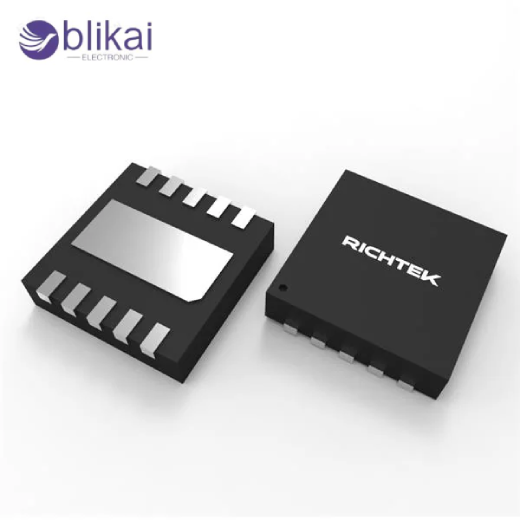
The RT6150AGQW is a high-performance step-down, DC-DC switching regulator IC that is capable of delivering a lower stable output voltage from a higher input voltage with high efficiency. The RT6150AGQW is a high-frequency switching regulator, which is much more energy efficient than linear regulators, which convert excess energy into heat. This makes the device particularly ideal for battery-based systems, embedded platforms and portable electronics where optimizing power consumption is crucial.
Key Specifications
The RT6150AGQW is designed to work with a broad range of input voltage from a variety of DC power sources like adapters, lithium battery packs and industrial power rails. It offers adjustable output voltage, high switching frequencies for small external component selection and high load current for powering processors and communication modules. Its compact package design helps reduce PCB space usage while improving thermal dissipation and simplifying system integration in modern electronic products.
Pin Configuration and Functions
The RT6150AGQW includes several important pins that enable stable operation and accurate voltage regulation. The VIN pin accepts the input supply voltage, while the SW pin connects to the switching node and the external inductor. The FB pin monitors the output voltage through a resistor divider network to maintain regulation accuracy. The power management startup and shutdown control signals are available as the EN pin, while the GND pin offers system grounding. The key to minimising switching noise, electromagnetic interference and increasing converter efficiency is proper PCB layout around these pins.
Main Features of RT6150AGQW Buck Converter IC
High Conversion Efficiency
The RT6150AGQW is further designed to be as efficient as possible in converting power, thereby reducing the power consumption and heat generation during its operation. The efficiency is significant for portable electronics and battery-operated applications, as it directly impacts the battery life as well as the thermal reliability. Efficient switching operation also lowers cooling requirements and enables more compact electronic product designs.
Wide Input Voltage Support
The RT6150AGQW can accept a wide input voltage range, and engineers can employ the IC in many battery-powered, DC adaptor-powered, and industrial power rail-powered electronic systems. The flexibility allows the device to be used in consumer electronics, networking equipment, automotive electronics or embedded industrial applications where input voltage conditions can fluctuate widely.
Compact and Space-Saving Design
With an RT6150AGQW package that is compact, designers can minimize PCB space and still achieve robust power conversion performance. The fast switching frequency of the IC also allows for the use of smaller external components, enabling manufacturers to design thinner, lighter and more compact electronic products without compromising electrical performance.
Fast Transient Response
Another key requirement of the RT6150AGQW is fast transient response, as modern digital systems are prone to rapid load current fluctuations—from CPUs, wireless modules and communication interfaces. The IC quickly changes the switching pattern to preserve the output voltage during these load changes so that the system will be reliable and not affected by output voltage instability.
Protection Features
The RT6150AGQW combines a number of protection features such as overcurrent, thermal shutdown, under-voltage lockout and short circuit. The ICs are designed to be suitable for demanding industrial and consumer electronic applications due to these safety features, which prevent damage resulting from overload conditions, high temperatures or unstable power input.
How the RT6150AGQW Works
Basic Operating Principle of a Buck Converter
A buck converter has a switch with an internal MOSFET that puts the DC voltage into two states: high and low, and an external inductor is used to store the energy. In operation, the switching element switches ON and OFF at a high frequency, thereby enabling the converter to finely control the output voltage. The capacitors are used to help condition the voltage wave shape, as well as the inductors to store and release energy to ensure current is maintained to the load.
PWM Control Mechanism
RT6150AGQW is controlled by pulse-width modulation (PWM) to accurately control the output voltage. The principle of PWM is that the duty ratio of the switching signal is modulated based on the load and the measurement of the feedback voltage. If the output voltage falls short of a desired voltage, the IC raises the duty cycle of the switching to provide greater energy to the output. When the voltage exceeds the set value, the duty cycle will be decreased to maintain the voltage.
Typical Circuit Diagram Explanation
The input capacitors, output capacitors, an inductor, and feedback resistors are all included in a standard application circuit for an RT6150AGQW. Noise is removed, and the input capacitors stabilize the input voltage, output voltage is smoothed with the output capacitors, and the transient response is enhanced. The value of the inductor has a direct impact on the current ripple and the efficiency, and the value of the resistor divider attached to the FB pin will determine the final output voltage level.
RT6150AGQW Typical Applications
Consumer Electronics
Because compact, efficient and thermally optimized power supplies are required, the RT6150AGQW has become a popular choice for use in smartphones, tablets, portable gaming systems and wearable electronics. It is also very efficient, so it is suitable for portable electronic products with limited internal space.
Industrial Equipment
The RT6150AGQW is widely applied in automotive headlights, embedded systems, programmable logic controllers (PLCs), industrial automation modules and sensor interfaces to deliver reliable DC power regulation. The IC’s protection functions and wide operating conditions help improve system reliability in harsh industrial environments.
Networking and Communication Systems
Networking devices (routers, switches, wireless access points and communications modules) require well-regulated low-voltage power rails to power processors and RF circuits. The RT6150AGQW can achieve high efficiency voltage conversion and low ripple properties, which will help to improve the stability of the communication system and reduce the generation of communication systems.
IoT and Smart Devices
The Internet of Things devices typically run on batteries or on power that is less than 1 V DC, so energy conversion is often critical. Intended for smart sensors, wireless monitoring devices and home automation products, the RT6150AGQW can help to maximize operational life by reducing power losses and enabling compact circuit design.
Automotive Electronics
In the automotive electronics sector, there are a variety of modules, such as infotainment systems, digital dashboards, camera systems and advanced driver-assistance systems, that demand stable voltage levels across both power-up and power-down. The RT6150AGQW can support these applications in a stable power delivery with built-in protection.
Advantages of Using RT6150AGQW
Improved Power Efficiency
High-efficiency switching operation reduces thermal stress in electronic systems and wasted energy. This enhances the overall device reliability and reduces the power consumption in portable and industrial applications.
Reduced PCB Space
Due to the high switching frequency of RT6150AGQW, designers can take advantage of the smaller inductors and capacitors, thereby shrinking PCB size and creating more compact electronic products.
Reliable System Performance
Dense, accurate voltage regulation and prompt transient response guard against voltage fluctuations that could otherwise impact processors, communications interfaces or sensitive digital parts. This enhances the reliability of the system and the stability of its operation over time.
Cost-Effective Power Solution
The RT6150AGQW makes power supply design easier by combining key power supply control and protection functions in a single IC. Minimizing external component requirements reduces manufacturing costs and makes thermal management easier.
RT6150AGQW vs RT6154AGQW Comparison Table
|
Feature |
||
|
Converter Type |
Synchronous Buck Converter |
Synchronous Buck Converter |
|
Input Voltage Range |
Wide Input Support |
Wide Input Support |
|
Output Current Capability |
Medium-High Current |
Higher Current Capability |
|
Switching Frequency |
High Frequency |
High Frequency |
|
Efficiency |
High Efficiency |
Very High Efficiency |
|
Package Type |
Compact WQFN Package |
Compact WQFN Package |
|
Thermal Performance |
Excellent |
Improved for Heavy Loads |
|
Transient Response |
Fast |
Faster Under Dynamic Loads |
|
Protection Features |
OCP, UVLO, OTP, SCP |
OCP, UVLO, OTP, SCP |
|
Typical Applications |
IoT, Embedded Systems, Portable Electronics |
Industrial Systems, High-Performance Embedded Devices |
|
PCB Space Requirement |
Small |
Slightly Larger Power Layout |
|
External Component Requirement |
Low |
Moderate |
|
Heat Generation |
Low |
Lower at High Current |
|
Best Use Case |
Compact low-to-medium power designs |
Higher power and performance applications |
Common Troubleshooting Tips
Output Voltage Instability
The output instability can be caused by the wrong value of feedback resistors, insufficient output capacitance or bad PCB layout. Make sure feedback network calculations are correct and that capacitors are placed and grounded correctly.
Excessive Heat Generation
Overloading, inadequate ventilation and poor thermal design may cause excessive heating. Reducing output current demand and improving copper heat spreading areas can help lower operating temperatures.
Switching Noise Problems
Switching noise is commonly caused by long switching traces or improper grounding. Careful design of PCBs and the use of good-quality inductors and capacitors can substantially reduce noise.
Startup Issues
When the converter fails to startup correctly, designers should check the voltage of the EN pin, the stability of the input power and that the startup timing specifications are met.
Conclusion
RT6150AGQW Buck Converter IC is an efficient and compact DC-DC power management IC intended for today's electronic systems, which demand stable voltage regulation with minimal power loss. It is highly efficient, has a fast transient response and is equipped with protection features and offers flexibility in application to be used in consumer electronics, industrial systems, IoT devices, networking and automotive electronics. The RT6150AGQW is a reliable, compact performance solution that empowers engineers to build energy-efficient, space-saving electronic products that satisfy today's increased demands for technology.
FAQ
What is the RT6150AGQW used for?
The RT6150AGQW is mainly designed for the efficient and stable step-down DC-DC voltage conversion applications of electronic systems.
Is RT6150AGQW suitable for battery-powered devices?
Yes, the RT6150AGQW's high conversion efficiency does help to keep power consumption down and battery life long in portable electronic applications.
How efficient is the RT6150AGQW buck converter?
The RT6150AGQW is designed to operate with high efficiency and generates significantly less heat than traditional linear regulators.
Some images are sourced online. Please contact us for removal if any copyright concerns arise.





