


RT9163 vs RT9161: LDO Voltage Regulator IC Comparison
 8
8Introduction to RT9163 and RT9161 LDO Regulators
The RT9161 and RT9163 are two low-dropout (LDO) linear voltage regulator ICs that are widely used in today's electronic power management designs, especially in low-power and low-noise systems where stable voltage regulation is critical to the proper operation of sensitive analog and digital circuits. In an era of increasing need for power- and space-saving power management solutions for embedded devices, Internet of Things (IoT) and mobile consumer electronics, these two regulators are frequently compared as they are similar product families but have different trade-offs in load performance, noise and efficiency under various load and line conditions. The key differences between RT9161 and RT9163 are significant for designers and engineers seeking to understand the trade-offs between the dropout voltage, temperature drift and output regulation to decide which regulator to use for their applications.
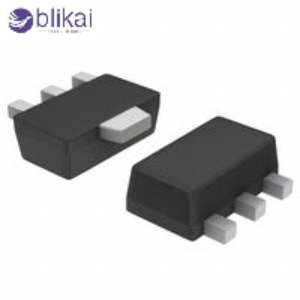
What is the RT9161 Voltage Regulator IC?
Key Features of RT9161
The RT9161 is a low-dropout linear regulator IC that provides a regulated output voltage with a minimum of external components and is suited for cost-effective and space-efficient designs. It will usually have low quiescent current to optimize battery life if used in a mobile application and can have good load and line regulation to ensure the output voltage is maintained over a range of load and input currents. The RT9161 also typically includes protection mechanisms, such as current limit and thermal shutdown, to ensure safe operation in case of fault conditions, and has a low dropout voltage so that it can be used in applications where the input voltage is only slightly higher than the output voltage, such as in battery-powered systems.
Typical Applications of RT9161
The RT9161 is commonly used in portable electronic devices such as mobile phones, digital cameras and handheld audio devices where power efficiency and size are important to device performance. The IC is also widely used in embedded control and communication applications where the regulator supplies a stable voltage for microprocessors, sensors and radio frequency (RF) circuits. Further, the RT9161 is ideal for IoT edge devices and low-power wireless nodes where power efficiency and low thermal dissipation affect the system's stability and the lifetime of batteries.
What is the RT9163 Voltage Regulator IC?
Key Features of RT9163
The RT9163 is another type of LDO regulator IC that is designed to offer slightly higher load current capability and faster transient response than the basic LDO regulator ICs. It provides stable regulation of the output voltage with fast transient response and is suitable for applications with varying load currents. It also provides basic protection mechanisms (thermal shutdown and current limiting) like the RT9161, but it is generally designed for higher load current and better thermal management during continuous operation. The RT9163 also has low noise, which is essential for analog-sensitive applications, and provides good regulation over a wide input voltage range.
Typical Applications of RT9163
The RT9163 is commonly used in industrial control systems, embedded processing units, and mixed-signal circuits where both digital and analog components require clean and stable power rails. It is also popular in IoT devices that need a more stable power supply under varying loads, including smart sensors, gateways and battery-powered monitoring devices. It can also be used for power delivery for applications that require improved load transient response, such as motor drivers and RF front-end circuits.
RT9163 vs RT9161: Key Technical Differences
The main differences between the RT9163 and RT9161 are their electrical characteristics, load regulation and load efficiency. Both are LDO regulators that are ideal for low energy power supply, but the RT9163 is typically superior for a dynamic load and a more difficult environment, whereas the RT9161 is superior for a low power and/or cost-sensitive design. Typically, the RT9161 will have a lower quiescent current, making it more suitable for battery-powered devices that are in standby mode for a long time, while the RT9163 will have better load regulation and faster transient response, making it more suitable when there is high variation in load. Dropout voltage and thermal performance are similar between the two devices since they are both LDO regulators, but generally, the RT9163 has better output stability under higher thermal conditions due to its improved structure.
RT9161 vs RT9163 Parameter Comparison Table
|
Parameter |
||
|
Output Voltage Range |
Fixed / Adjustable options (varies by variant) |
Fixed / Adjustable options (varies by variant) |
|
Input Voltage Range |
Low-voltage LDO range |
Low-voltage LDO range |
|
Output Current Capability |
Moderate load current |
Higher load current capability |
|
Dropout Voltage |
Low dropout |
Low dropout with improved load stability |
|
Quiescent Current |
Very low |
Low to moderate |
|
Load Regulation |
Good |
Better under dynamic load |
|
Line Regulation |
Good |
Improved |
|
Thermal Shutdown |
Yes |
Yes (enhanced thermal stability) |
|
Current Limiting |
Yes |
Yes |
|
Noise Performance |
Low noise |
Low noise (optimized for stability) |
|
Application Focus |
Ultra-low power systems |
Balanced performance and load handling |
Efficiency, Power Consumption, and Thermal Behavior
In terms of efficiency, both the RT9161 and RT9163 are linear regulators, so they produce more heat than switching regulators, which can convert the excess voltage. But the RT9161 is more efficient for low current applications due to its low quiescent current, which can save a lot of energy when powering a battery. Conversely, the RT9163 is more efficient for higher load currents and may be more stable when the load current is higher, but the dissipation will be higher during high current loads. This translates to the RT9161 being used to design energy-efficient circuits, while the RT9163 is used when stable operation in higher load currents is needed.
How to Choose Between RT9161 and RT9163
The choice to use the RT9161 or the RT9163 depends on the design and application. If the application is to save power, have longer battery life and efficient power delivery (where little power is wasted as heat), then the RT9161 is usually preferred since it has a low quiescent current and high efficiency at low load. However, if performance in terms of load regulation, transient response and overall performance over a broader current load is more important, then the RT9163 is the better choice. RT9163 is preferred by designers in industrial applications, communication and mixed-signal circuits, whereas RT9161 is more suitable for consumer portable applications and low-power IoT systems.
Application Circuit Considerations
When it comes to real-world applications, both RT9161 and RT9163 need only a few external components, usually input and output capacitors to provide stability and lower the output noise. The capacitors used in the design are critical for loop stability and avoiding oscillations, especially for fast load changes. Trace length and grounding are also critical for performance, as shorter traces and effective grounding minimise noise and improve the dynamic response. In both cases, heat dissipation is critical (especially for RT9163 with higher load currents) as the design should provide adequate copper area and thermal paths to improve reliability.
Advantages and Disadvantages of RT9161 and RT9163
RT9161 and RT9163 have many advantages, such as ease of integration, limited external components, low output noise and protection functions that improve overall system safety. But as with all linear regulators, there are also disadvantages, including lower efficiency than switching regulators and heat dissipation in cases of large input-output voltage differences. They also have lower output current than DC-DC converters, which limits their use in high-power designs. Nonetheless, they are still widely used in low-noise and precision voltage regulator applications due to their simplicity and robustness.
Real-World Use Cases in Electronic Design
In practical electronic designs, RT9161 is frequently used in low-power IoT sensor nodes powered by batteries where ultra-low quiescent current is critical for long battery life, whereas RT9163 is often used in more sophisticated embedded systems that require a stable voltage reference for microcontrollers, communication and analog signal processing circuits. Both regulators are also widely used in RF modules, where low noise performance is critical to maintaining signal integrity, and in portable consumer electronics, where space constraints and thermal efficiency are key design challenges.
FAQ
Can RT9161 and RT9163 be used interchangeably?
RT9161 and RT9163 may be interchangeable in simple low-power applications if the electrical characteristics (output voltage, current consumption, dropout) are the same, but take into account the differences in load response and efficiency.
Which IC is better for battery-powered devices?
RT9161 would be more suitable in battery-powered applications because it has a lower quiescent current, which allows it to save battery life in light-load or no-load situations.
Do RT9161 and RT9163 require external capacitors?
Yes, they both need to include input and output capacitors for stability, noise reduction and optimal regulation performance in real applications.
Conclusion
The analysis of RT9163 and RT9161 demonstrates that both Low-Dropout (LDO) regulators have their unique applications in power management systems. RT9161 is suitable for applications requiring a high efficiency and low standby current, such as ultra-low-power systems, whereas RT9163 is more suited for applications that require better load regulation and transient performance. The choice between the two regulators comes down to a careful consideration of system-level needs such as power efficiency, load dynamics, thermal management and noise, to ensure the best performance and reliability for contemporary electronic applications.
Some images are sourced online. Please contact us for removal if any copyright concerns arise.





