


What Is an Interface Controller? RT1715WSC Deep Guide
 191
191What Is an Interface Controller?
An interface controller is a specialised integrated circuit designed to facilitate communication between electronic interfaces or subsystems, translating signals and enforcing protocol timing rules to maintain compatibility and safe operation. Unlike simple buffers or logic gates, interface controllers actively interpret protocol-defined states and make dynamic decisions about signal routing, device roles, and power direction. For example, in USB Type-C systems like the RT1715WSC, the controller monitors the configuration channel (CC) to detect cable orientation, determine source or sink roles, and negotiate voltage and current limits, providing hardware-based intelligence that reduces firmware workload while ensuring stable and reliable connections.
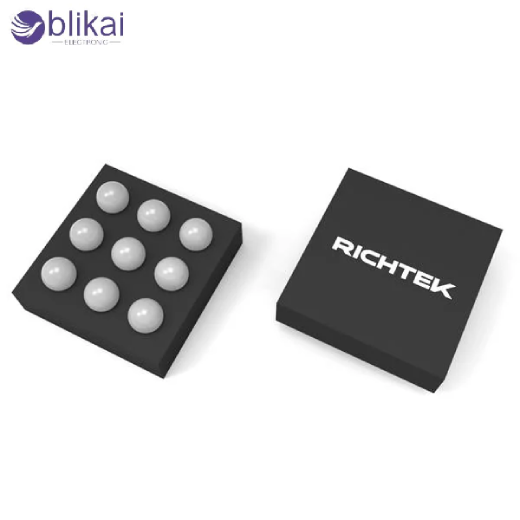
Overview of the RT1715WSC Interface Controller
The RT1715WSC is a very integrated USB Type-C interface controller that can be used to control detection, negotiation and power role management of USB Type-C devices. Its compact WLCSP package, low-power operation, and embedded hardware decision logic enable designers to implement USB-C connectivity with minimal external components. The RT1715WSC is the best solution for devices that need to conduct high-performance interface management, as it is tailored to operate with laptops, tablets, docking stations, and embedded systems with a high power demand, by automatically identifying cable orientation, supporting dual-role power operation, and monitoring connection status.
Key Features of the RT1715WSC
The RT1715WSC incorporates a variety of other functions in a single chip, like automatic cable recognition, dual-role power (DRP) capability, I 2 C configuration controls and built-in over-voltage, over-current and electrostatic discharge protection structures. These characteristics enable the controller to support plug-and-play USB-C connections, and its small size enables space-constrained designs. The RT1715WSC prevents the unstable operation even in harsh conditions by constantly checking voltages, CC signals, and current limits and is more stable in its work and protects the host and peripheral devices.
Specification Comparison Table
|
Parameter |
RT1715WSC Specification |
|
Device Type |
USB Type‑C Port Controller / Interface Controller |
|
Manufacturer |
Richtek |
|
Supported Standard |
USB Type‑C / USB Power Delivery |
|
Operating Voltage |
3.0 V – 5.5 V |
|
Communication Interface |
I²C |
|
Role Support |
DRP (Dual Role Power) |
|
Protection Features |
OVP, OCP, ESD Protection |
|
Cable Detection |
Automatic CC Detection |
|
Power Role Control |
Source / Sink Negotiation |
|
Package Type |
WLCSP |
|
Operating Temperature |
-40°C to +85°C |
|
Applications |
Laptops, Mobile Devices, Docking Stations, Embedded Systems |
Working Principle of an Interface Controller
An interface controller operates by continuously monitoring input signals and protocol-defined states to configure outputs dynamically for safe communication and power transfer. In USB Type-C systems like the RT1715WSC, the controller detects resistor configurations on CC pins to identify cable orientation and determine the power role. Once a valid connection is established, the controller configures internal switches and communication parameters to ensure correct voltage and current delivery. It is a hardware-based level of intelligence that enables the system to run independently, eliminating the possible failures in case of a hot-plug event, as well as minimising the need to interfere with firmware.
USB Type-C Interface Control and Signal Negotiation
USB Type-C also adds support for both power and data transfer in both directions and requires intelligent negotiations between devices. The RT1715WSC monitors the configuration channel to identify the devices connected, cable orientation and create a valid connection, and then it sends power. This kind of negotiation will ensure that USB Type-C is compliant with standards, voltage and current limits are safely managed and that it can operate in dual-role power mode. The RT1715WSC allows these detection and negotiation operations to be automated so that a device can be easily interoperable with a broad spectrum of USB-C devices, without the need for any additional intervention by a microcontroller.
Power Role Management in RT1715WSC
The RT1715WSC can act as either a power source or sink, defined as the dual-role power (DRP) capability that enables a device to avail itself to either a power source or a power sink based on the connection environment. The controller alternates between the source and sink detection states automatically until some correct negotiation has occurred, after which it sticks to the appropriate role. This enables some devices, such as laptops or docking stations, to both supply and demand power on the same USB-C connection, and this makes a device more designable and easy to use, besides ensuring that power delivery is safe in any situation.
Communication Interface and System Integration
The RT1715WSC communicates with host processors via an I²C interface, enabling firmware to configure operational parameters, read status registers, and respond to connection events without direct handling of low-level CC signals. This separation allows designers to focus on system logic while the controller manages time-sensitive electrical interactions internally, improving system responsiveness and simplifying embedded software development. Voltage, current, and role status can be monitored in real-time using the I2C interface, giving complete control and diagnostics of the system.
Protection Features and Reliability Enhancements
There should be high reliability of interface controllers in the face of inconsistent user behavior such as frequent cable insertions, ESDs and voltage variation. The RT1715WSC has over-voltage protection (OVP), over-current protection (OCP) and high-performance electrostatic discharge (ESD) management to protect the devices to which it is connected. Constant surveillance is also used to ensure that abnormal electrical conditions are detected to cause protective reactions, and therefore, the system is not damaged, and the total life of the product is enhanced. These characteristics are needed in consumer and industrial applications where plugging and unplugging more than once are required or power conditions vary.
Applications of RT1715WSC Interface Controller
The RT1715WSC is widely used in laptops, tablets, portable gaming consoles, docking stations, embedded systems, and industrial controllers requiring USB-C connectivity. Its compact footprint, low power consumption, and hardware-managed negotiation features make it suitable for space-constrained and high-reliability designs. The RT1715WSC has automatic cable detection, dual-role power management, and protection capabilities built in, eliminating external circuitry and firmware, allowing a developer to develop faster and create a device with more resilience.
Design Considerations When Using Interface Controllers
pcb layout, signal integrity and power routing. When adding an interface controller, PCB layout, signal integrity, and power routing should be paid attention to. Placement near the USB-C connector reduces noise and improves detection accuracy, while proper resistor selection ensures reliable CC line monitoring. Power supply stability and thermal management are also critical for maintaining reliable operation under high-current conditions. Firmware developers should leverage the controller’s I²C interface to monitor real-time status while avoiding excessive polling to maintain system efficiency.
Interface Controller vs Traditional Discrete Interface Circuits
Integrated interface controllers offer a smaller, more stable and standardised answer compared to the discrete circuit boards that used comparators, switches and logic gates as their building blocks. By consolidating detection, negotiation, and protection into a single IC, devices like the RT1715WSC reduce component count, save PCB space, simplify firmware development, and accelerate product development timelines while ensuring compliance with evolving USB Type-C and USB Power Delivery specifications.
Future Trends in Interface Controller Technology
Interface controllers continue to evolve with higher integration, faster communication, and smarter power management capabilities. Future ICs may integrate microcontrollers, enhanced diagnostics, AI-assisted power optimisation, and cybersecurity protections. Designers can expect faster USB-C PD negotiation, higher efficiency in multi-port designs, and improved protection features, enabling safer and more intelligent interface management for next-generation laptops, mobile devices, and industrial systems.
Conclusion
The interface controllers are needed to control the communication between the electronic subsystems, power supply, and protection. The RT1715WSC is an example of a sophisticated USB Type-C interface controller, which facilitates system design with built-in cable detection, dual-role power control, protection capabilities, and I2C communication. The RT1715WSC can allow a designer to introduce stable, small, and standard-compliant USB-C interfaces to the electronic devices they are creating to maintain high performance and safety of the end-users.
FAQ
How does the RT1715WSC manage dual-role power?
It automatically detects whether the device should act as a power source or sink and configures the USB-C port accordingly, allowing safe bidirectional power delivery.
Can the RT1715WSC be used in compact devices?
Yes, its WLCSP package and integrated features make it suitable for space-constrained designs such as ultrabooks, tablets, and portable docking stations.
How is the RT1715WSC configured and monitored?
The I²C interface allows designers to set operational parameters, check the connection status and react to events without working directly with the low-level CC signals.
Some images are sourced online. Please contact us for removal if any copyright concerns arise.





