


Link State Power Management Explained: Boost Speed & Save Power
 330
330Introduction to Link State Power Management
Link State Power Management (LSPM) is a sophisticated power-saving technique that is applied in modern high-speed electronic systems, particularly those that utilize PCI Express (PCIe) architecture, to dynamically lower the power consumption of these systems with minimal impact on performance. It does this by bringing CPUs, GPUs, SSDs and the network controllers into low power states when they do not need to operate at full bandwidth and switching them back to maximum performance when required. Such a compromise between energy efficiency and performance is essential in modern electronics, for which devices are required to have increased computing power, but with reduced thermal output and battery consumption in portable electronics. LSPM has become an essential technology for designing power-aware circuits, and is commonly used in laptops, desktop PCs, servers, embedded industrial controllers, and IoT devices.
How Link State Power Management Works
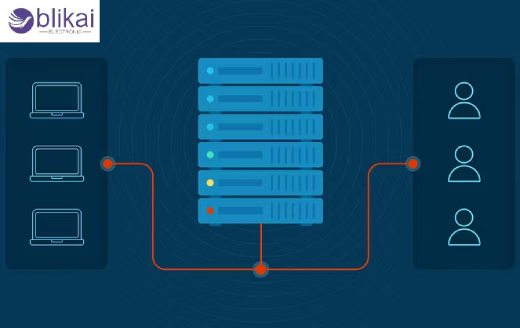
Link State Power Management works at the PCIe link level, instead of the device level. The system switches the PCIe link into one of the reduced power states when data activity is low or idle, reducing signaling activity and voltage consumption. The transitions are synchronized between the operating system and the device drivers/hardware controllers so as to preserve the same amount of functionality during transition when saving power. The link rapidly restores to full-speed operation when more data is required, enabling smooth speed level recovery. This dynamic switching is typically controlled by Active State Power Management (ASP), which specifies the conditions and time under which different power states are to be used and switched to, depending on the workload demands and system policies.
PCIe Power States Explained
The PCIe link power states are specified to enable a fine-grained level of energy control without compromising energy responsiveness. The L0 state is the highest level of active communication, with the link running at full speed and bandwidth, and is usually employed during large data transfers or when processing data in real time. The L0s state is a low-power mode to save power in short idle periods, and can recover back to the L0 state extremely quickly, which is suitable for workloads characterized by bursts of activity. The L1 state offers greater power savings by turning off more components of the link, but has a longer wake-up time than the L0 state. Advanced systems will even add support for L1 Substrates like L1.1 or L1.2, which further lower power consumption by shutting down additional circuitry and clocking functions to give energy-efficient systems in modern chipsets or high-density systems.
Advantages of Link State Power Management
Link State Power Management's main benefit is that it can dramatically lower the power usage of electronic systems without them turning off completely or dithering speeds. This can lead to better battery performance in laptops, tablets and mobile computing devices and is particularly useful in portable electronics. LSPM is also being used in desktop systems and servers to help decrease the total amount of heat produced, potentially having an effect on the cooling needs and system stability. Moreover, it can help reduce the energy footprint of enterprise-class data centers, where a few watts saved per link can add up to significant operational savings. Furthermore, LSPM can dynamically modify power consumption according to the needs, thereby supporting sustainable and efficient operation of electronic systems in line with the modern targets of green computing.
Disadvantages of Link State Power Management
While Link State Power Management is beneficial, it does come with some drawbacks, such as in systems with extremely low latency or maximum stability requirements. A frequent problem is the latency required to wake up the part from a low-power state to normal operation, which can be a problem for real-time systems or data transfer applications. There can also be compatibility issues due to older or less optimized hardware, which can cause instability, disconnections, or fluctuations in performance. Users may turn off LSPM in high-performance gaming computers or workstations to reduce micro-latency without reducing power consumption. Hence, LSPM works in most cases, but it relies largely on the quality of the hardware, the optimization of the drivers, and the type of workload.
Link State Power Management vs Traditional Power Saving
Link State Power Management is much more granular than traditional power-saving methods that include turning devices off or putting components into deep sleep states. It selectively cuts back the amount of power used on the communication link, not the whole device, and thus can recover much faster and smoothen the performance transitions. This allows LSPM to be more efficient for systems that frequently switch between idle and active states. Typical sleep modes typically offer greater total power savings, but also come with longer wake-up time and the possibility of impact on system responsiveness. LSPM strikes a balance: it provides moderate to high energy savings while keeping latency low, especially in performance-sensitive environments.
|
Feature |
Link State Power Management |
Traditional Device Sleep Modes |
|
Power Control Level |
PCIe Link Level |
Entire Device |
|
Wake-Up Speed |
Fast |
Slower |
|
Energy Savings |
Moderate to High |
High |
|
Performance Impact |
Low |
Medium to High |
|
Typical Usage |
Active Systems with Idle Periods |
Long Idle or Standby Devices |
Common Electronic Components Supporting LSPM
A variety of state-of-the-art electronic components—powered by PCIe communications—back Link State Power Management. They include the PCIe roots of CPUs and chipsets, graphics processing units (GPUs), high-speed controllers for solid-state disks (SSDs), and network interface controllers—including Ethernet and Wi-Fi modules. Another way in which embedded processors commonly incorporate LSPM is when they are used in energy-efficient power systems for systems running 24 hours a day. Also, motherboard chipsets come with ASPM to manage the power state of multiple devices that are connected, which guarantees system-wide optimization. The ability of LSPM is highly reliant on the design and synchronization of these components in the system architecture.
Power Management IC Comparison: RT5750BHGJ5 vs RT5796CHGJ5
Power-efficient ICs are important to enabling system-level technologies, such as LSPM, in practical electronic design. There are two popular synchronous buck converters: Richtek's RT5750BHGJ5 and RT5796CHGJ5, both of which are synchronous buck converters, but are suitable for different applications and power levels.
|
Attribute |
||
|
Device Type |
Buck DC-DC Converter |
Buck DC-DC Converter |
|
Input Voltage |
2.5V–6V |
2.5V–5.5V |
|
Output Current |
1A |
1.5A |
|
Switching Frequency |
~1.5MHz |
1MHz |
|
Control Mode |
ACOT control architecture |
Synchronous PWM control |
|
Package Type |
TSOT-23-5 |
TSOT-23-5 |
|
Efficiency Focus |
Ultra-compact low power systems |
Higher load efficiency designs |
|
Application Focus |
Mobile, IoT, handheld devices |
Industrial, embedded, mid-power systems |
The design of the RT5750BHGJ5 is more suitable for compact applications with lower current systems where power delivery efficiency and size are important; RT5796CHGJ5 is designed for slightly higher current systems needing more powerful power delivery. Both help to improve the efficiency of the overall system and complement Link State Power Management by lowering the base power consumed at the regulator.
Applications of Link State Power Management
The flexibility and efficiency of Link State Power Management make it a popular choice in various sectors and applications. In consumer electronics, it is used to improve battery longevity for laptops and cell phones in idle mode. LSPM is involved in the continuous operation of embedded controllers and monitoring systems in the field of industrial automation, thus helping to optimize the use of energy. It reduces power consumption so that sensors and processing units can communicate over long distances in IoT devices, which is crucial for long-term deployment in remote locations. LSPM's role in data centers and cloud computing infrastructure is significant, as it can help to optimize power usage for thousands of high-speed PCIe connections and to reduce operational costs. In the automotive sector, it is also becoming a popular choice for energy-efficient solutions such as vehicle systems and battery management applications.
Troubleshooting Link State Power Management Problems
Overall, LSPM enhances system efficiency, but it can lead to various problems, including sporadic disconnections, performance lags, or conflicts between the LSPM and some types of SSDs, GPUs, or network adapters. The issues can be associated with firmware or driver restrictions that are not sufficient to support high-power state changes. In such instances, device driver or firmware updates can resolve stability problems. Disabling LSPM for individual devices can sometimes help to reduce issues, particularly in enterprise or other mission-critical environments. The first step in diagnosing an LSPM-related problem is to check system logs, test various power setups and determine if latency or power transitions are related to the instability.
Future Trends in Link State Power Management
Link State Power Management's future will depend on the evolution of PCIe standards like PCIe 5.0 and PCIe 6.0, which will further boost data transfer speeds and introduce the need for more efficient power control mechanisms. New technologies have come in that are looking to even more granular levels of power states, and that will adapt dynamically to changes in workload in real time. AI is also projected to be used in predictive power management, which involves systems' ability to foresee when and how power will be used and adjust accordingly. Moreover, with the growing trend of edge computing and IoT, low-power communication standards will grow in significance to support sustainable and efficient distributed computing systems.
FAQ About Link State Power Management
Does Link State Power Management improve battery life?
Indeed, it does help conserve battery power by lowering power consumption on PCIe links during low activity or idle times, particularly for laptops and portables.
What is the difference between ASPM and LSPM?
ASPM is a more general term for the power-saving functioning of PCIe, and LSPM is used for the LSPM transitions.
Can Link State Power Management reduce SSD performance?
For some drives, especially those that are not optimized for the job, there can even be a slight degradation in latency, but the modern drives, in rarer cases, perform LSPM efficiently without that much degradation in performance.
Conclusion
Link State Power Management is a vital technology in today's electronic systems to help manage power and performance on PCIe links. It intelligently shifts between active and low power modes, thereby maximizing energy savings, thermal efficiency and battery life while minimizing impact on system responsiveness. It can cause a slight delay in certain situations, but its energy-saving and system-optimizing features make it an indispensable attribute for the laptop, desktop, workstation, server and embedded systems. With the continuing evolution of electronic components, LSPM will continue to play a major role in sustainable and high-performance computing architectures.
Some images are sourced online. Please contact us for removal if any copyright concerns arise.





